
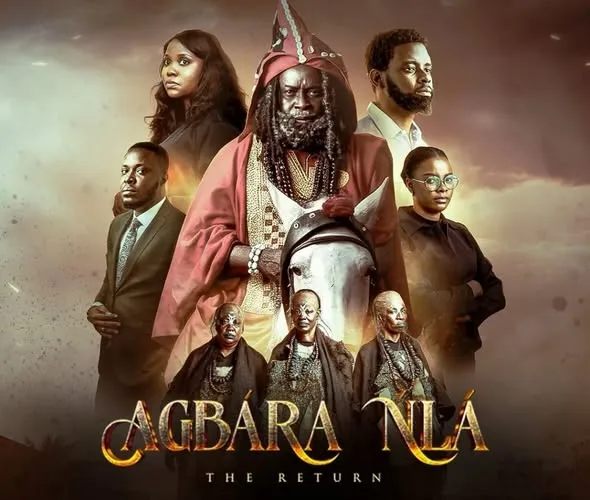
Agbara Nla: The Return, the modern cinema adaptation of Mount Zion Film Productions’ 1993 Christian classic, has made a strong early impact at the Nigerian box office after recording more than ₦71 million from single-day preview screenings.
The film’s performance was announced as it began its nationwide cinema run, with distributor Nile Entertainment describing the result as a landmark achievement for the production and faith-based Nigerian cinema.
According to Nigerian Box Office, the film generated about ₦70 million from 12,134 admissions during its preview period between September 25 and October 1. The platform reported that the admissions figure represented the biggest first-day admissions tally recorded in Nigeria in 2026, while the gross was the biggest first-day earning recorded for a Nollywood title.
Nile Entertainment separately reported that the film’s single-day preview earnings had exceeded ₦71 million, describing the result as the biggest single-day preview gross recorded in West Africa. The distributor also said the film achieved the biggest opening for a faith-based film and the biggest first-day gross for a Nollywood title.
The early box-office performance comes more than three decades after the original Agbara Nla was released in 1993. The original film, written and produced by veteran Christian filmmaker Mike Bamiloye, became one of the best-known productions associated with Mount Zion Film Productions.
The new version brings the story to a modern cinema audience while retaining the central storyline of the original. It follows events in Muwonleru, where two believers, Olaboye and Olatomi, leave their city lives to take the Christian message to a community under the influence of the powerful herbalist Isawuru.
Damilola Mike-Bamiloye and his brother, Joshua Bamiloye, directed the new production, with their father, Mike Bamiloye, returning to portray Isawuru.
Damilola previously explained that the idea of revisiting Agbara Nla had been discussed several years earlier. He and Joshua had initially approached their father about remaking some of his older productions, but the project did not immediately move forward. The remake eventually took shape after further discussions with producer Chris Odeh.
According to Damilola, the new production was designed to preserve the story and major characters of the original while presenting them in a form suited to contemporary audiences.
The filmmaker has also reflected on the personal significance of seeing his father return to the character of Isawuru. He recalled watching the original production as a child and later recreating scenes from the movie with his siblings.
The new film represents a generational transition for the Bamiloye family, with Mike Bamiloye’s sons taking on the directorial responsibilities while their father reprises one of his most recognisable roles.
The production is a collaboration involving Mount Zion Film Productions, Sozo Films and Circuits, with Chris Odeh serving as producer and Nile Entertainment handling theatrical distribution in Nigeria.
The film officially entered the Nigerian cinema market in October 2026. Cinema listings confirm screenings in locations including Abuja, Lagos and Kaduna, with the production currently showing nationwide.
Beyond Nigeria, the film is also scheduled for theatrical releases in the United States, United Kingdom and Canada, according to its distributor, with further international release details expected to be announced.
For Damilola and Joshua Bamiloye, the early response represents more than a strong commercial opening. In a statement reported by The Guardian, the directors said the response was particularly meaningful because the original story already held a special place in the lives of many viewers who grew up watching it.
The strong preview figures have also placed Agbara Nla: The Return within the broader conversation about the commercial potential of faith-based Nigerian films in the theatrical market.
With the movie now in cinemas, its performance over the coming weeks will provide a clearer picture of how far the early momentum can carry the modern remake of one of Mount Zion’s most recognisable productions.




Reader Comments (0)
No comments yet. Be the first to share your perspective on this report.