

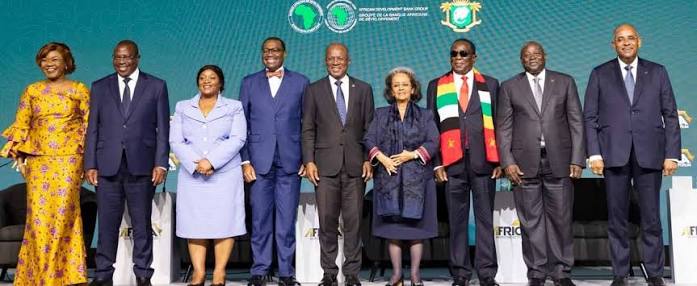
African policymakers, development finance institutions and business leaders have called for closer coordination between governments, investors and technology stakeholders as the continent seeks to build stronger and more inclusive digital economies.
The call was made at the Forward Africa Leaders Symposium (FALS) Global Conversations 2026, held at the Harvard Club in New York on September 21, during the high-level week of the 81st United Nations General Assembly.
The gathering was convened in partnership with the African Peer Review Mechanism (APRM) under the theme, “Building the Next Frontier of Africa’s Digital Economy.” The organisers said the discussions were designed to examine how digital transformation, market access, strategic infrastructure and investment can contribute to Africa’s economic competitiveness.
Seychelles President Patrick Herminie, who addressed the gathering, stressed the importance of ensuring that digital transformation produces practical benefits for citizens.
Herminie highlighted inclusive access to technology, digital connectivity, infrastructure and markets, arguing that digital development should help expand opportunities rather than benefit only a limited section of society. Seychelles has also emphasised digital government and digital payments as tools for improving access to services and economic opportunities.
Governance and the rapid development of artificial intelligence were also central to the discussions.
APRM Continental Secretariat CEO Marie-Antoinette Rose-Quatre called for governance frameworks that can keep pace with artificial intelligence and other emerging technologies. The discussions focused on ensuring that technological innovation contributes to sustainable development, creates employment and allows African economies to capture more value from their digital industries.
The event brought together senior African policymakers, development finance executives and private-sector leaders. Participants included African Union Deputy Chairperson Selma Malika Haddadi, AU Commissioner for Infrastructure and Energy Lerato Dorothy Mataboge, African Development Bank Senior Vice President Marie Laure Akin-Olugbade, UBA Group Managing Director Oliver Alawuba, Africa Finance Corporation Executive Director Banji Fehintola and Kosmos Energy Senior Vice President Joe Mensah, among other participants.
A major issue raised during the discussions was how Africa can move beyond policy declarations and create projects capable of attracting financing.
The organisers said participants examined ways to build investable digital ecosystems, improve market access, strengthen regional trade and create more economic opportunities for young people. Discussions also considered migration governance, digital connectivity and financing models for strategic infrastructure.
The Forward Africa Leaders Symposium Executive Director, Hannah Awuku, said Africa's challenge was increasingly about connecting leadership, capital and implementation.
“Africa does not lack leadership, ideas or ambition,” Awuku said, stressing the need for stronger alignment between governance, capital and implementation.
Regional integration featured prominently in the conversations, with participants considering how digital platforms, stronger connectivity and harmonised governance systems could make it easier for African businesses to operate across borders.
The organisers' stated objectives include exploring fintech, digital identity, platform economies and e-governance as ways of strengthening market access, while also examining how trade corridors and digital platforms can support greater intra-African integration.
The symposium is also expected to contribute to further policy and research work. According to the organisers, the discussions will inform a forthcoming APRM study on technological diffusion, adoption and innovation in Africa, being developed in collaboration with the African Union Commission's Department of Infrastructure and Energy.
The meeting is also expected to feed into the FALS Investment Playbook 2026, alongside policy recommendations on digital transformation and infrastructure, partnership frameworks and proposals for stronger cooperation between governments, investors and development partners.
The broader discussions reflect a growing focus among African institutions on making digital transformation an economic development tool rather than treating technology as an isolated sector.
For many African economies, the challenge now involves expanding reliable connectivity, improving digital skills and infrastructure, creating appropriate regulatory systems and attracting the capital needed to scale technology-driven businesses. The New York meeting placed these issues within the wider questions of investment, trade, governance and regional integration.
Reporting by TalkNaijaMedia



Reader Comments (0)
No comments yet. Be the first to share your perspective on this report.