

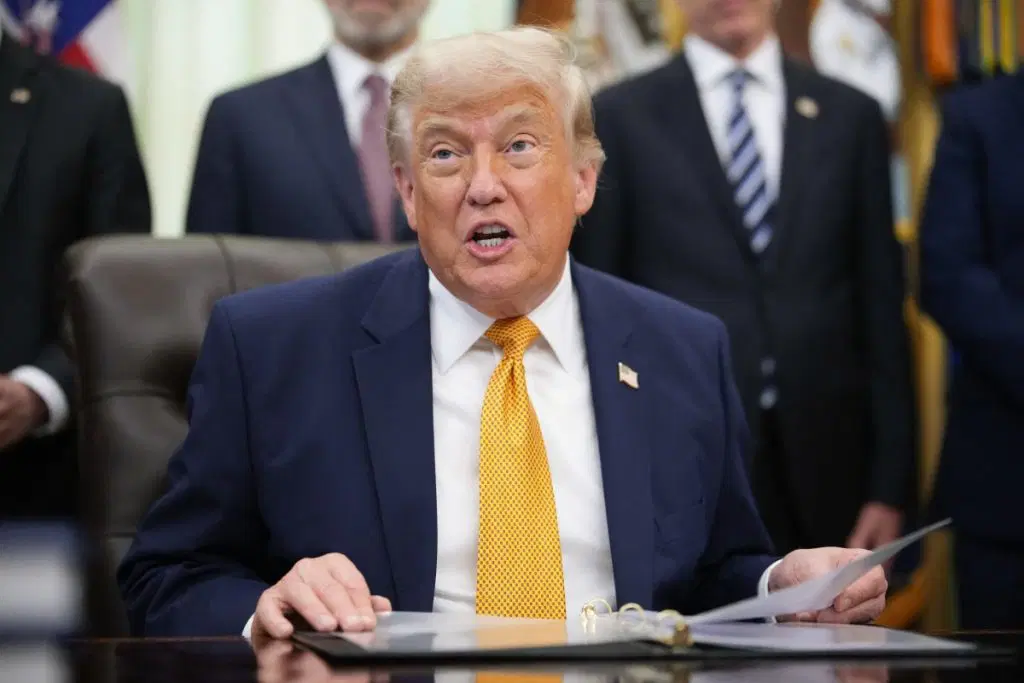
US President Donald Trump has called on Congress to introduce tougher criminal penalties for people convicted of defrauding federal benefit programmes, including Medicare, Medicaid and Social Security.
In a video posted on Truth Social on Saturday, Trump urged lawmakers to establish mandatory minimum prison sentences for people convicted of stealing from the programmes, saying probation should no longer be available for such offences.
Trump said the proposed penalties should become more severe as the amount involved increases. He also proposed that people convicted of fraud who commit another offence should face a doubled prison sentence.
The proposal, however, is not currently law. Trump was calling on Congress to enact the measures, and his remarks did not provide specific sentencing ranges or explain the precise legislative language that would be used.
Trump also proposed a separate measure aimed at state and local elected officials.
Under his proposal, officials who know that fraud is taking place, have the authority to intervene and deliberately fail to act could potentially be held personally responsible for the resulting financial losses.
The president did not specify the legal test that would determine whether an official had sufficient knowledge of fraud or whether they had the authority and ability to prevent it.
The proposals form part of the Trump administration's broader campaign against alleged fraud, waste and abuse involving government-funded programmes.
In March 2026, Trump signed an executive order establishing a Task Force to Eliminate Fraud, with a mandate to coordinate federal efforts against fraud, waste and abuse across federal benefit programmes, including programmes administered in partnership with state and local governments.
The administration has subsequently announced investigations, prosecutions and administrative actions involving suspected fraud in healthcare and other federal programmes. The White House says federal agencies have identified billions of dollars in suspected or prevented fraud, although those figures represent a mixture of investigations, administrative actions, estimated losses and criminal enforcement rather than money recovered in every case.
The Department of Justice has also pursued individual cases involving alleged Medicare and Medicaid fraud. For example, the White House reported in October that federal prosecutors had charged 17 defendants in a Social Security fraud scheme involving about $1.3 million.
The administration's anti-fraud campaign has also included changes affecting healthcare programmes. In a separate October announcement, the White House said more than 20 million eligible Medicare enrollees would receive a one-time $90 payment from the Medicare Improvement Fund.
Trump's latest proposal would go further by changing the criminal penalties available after convictions for certain types of benefit fraud.
For the proposal to take effect, Congress would have to consider and pass legislation and the measure would have to go through the normal federal lawmaking process. Until that happens, the proposed mandatory sentences and personal financial liability for state and local officials remain policy proposals rather than enforceable new penalties.
The debate is likely to focus on how lawmakers define benefit fraud, determine sentencing levels and establish when an elected official should be personally liable for losses caused by fraud that occurred within a programme under their jurisdiction.
For now, Trump's message to Congress is clear: he wants significantly tougher consequences for people convicted of defrauding federal benefit programmes and additional accountability for officials he believes knowingly allow fraud to continue.
Reporting by TalkNaijaMedia




Reader Comments (0)
No comments yet. Be the first to share your perspective on this report.