


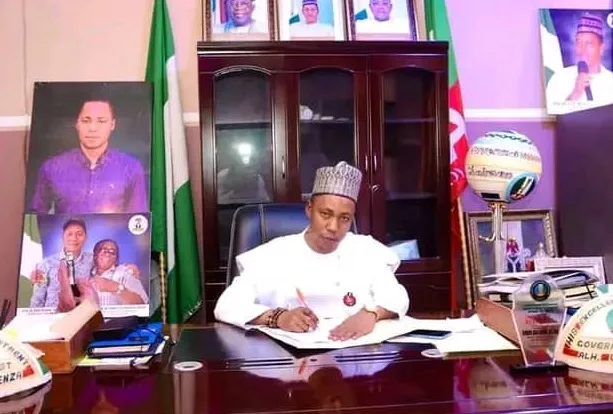
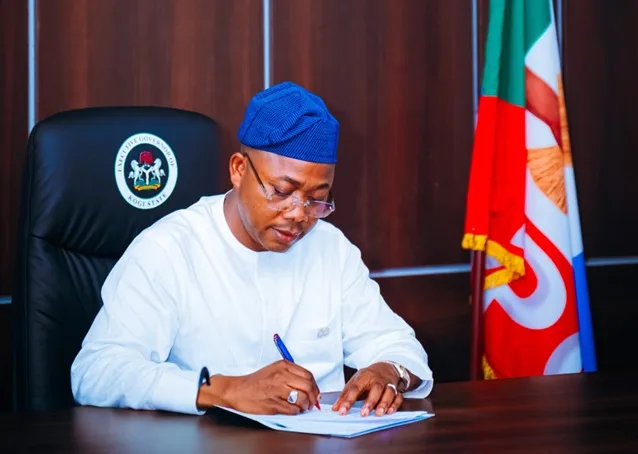
Ododo made the commitment on Tuesday, October 6, when he received stakeholders in the cashew sector at the Government House in Lokoja.
The governor described cashew as a valuable agricultural commodity with the potential to generate foreign exchange, create employment and strengthen the state’s economy. He said the expansion of cashew farming was already providing livelihood opportunities for many young people across Kogi.
According to the governor, legitimate farmers, investors and other participants in the value chain must be protected from practices that could undermine their businesses.
He specifically warned against illegal revenue collection and directed the Kogi State Internal Revenue Generation Service (KGIRS) to address complaints of multiple taxation affecting cashew operators.
Ododo said unauthorised collections not only place additional pressure on businesses but can also deprive the state government of revenue that should properly enter the public treasury. He added that his administration would continue efforts to block revenue leakages and strengthen the state’s revenue collection system.
The governor also expressed optimism that Kogi’s cashew trade could increasingly be conducted in dollar-denominated transactions, arguing that stronger access to international markets would improve the value and competitiveness of the commodity.
He said the government would continue supporting the cashew value chain, covering production, processing, marketing and export.
Kogi has already introduced a Cashew Procurement and Trade Policy, which came into effect in November 2025. The state subsequently launched the 2026 cashew season and began distributing hybrid seedlings to registered farmers as part of efforts to strengthen production and value addition.
The Director-General of the Kogi State Commodity Exchange, Export Promotion and Market Development Agency (KOSCEPA), Adewale Victor Omofaiye, commended the administration’s focus on the sector and acknowledged the importance of developing cashew as an export-oriented agricultural commodity.
The Chairman of the Kogi State Committee on Cashew Export and Investment, Dr Idris Yakubu, also said the sector could create jobs, attract investment and contribute significantly to the state economy.
Yakubu, however, identified security as an important issue requiring continued attention to protect farmers, their farms and investments.
The stakeholders themselves urged the government to intensify efforts against illegal revenue collection and multiple taxation. They called for a system in which only properly authorised government offices and officials collect approved levies from cashew farmers and businesses.
Representing Kogi Central, Abdulkarim Shuaib appealed for improved logistics and infrastructure to help the state maximise the benefits of investments already entering the cashew sector. He also called for better electricity supply in major producing areas to support processing and other activities.
A Kogi East representative, Alhaji Suleiman Mohammed Kabir, raised concerns over multiple taxation, while stakeholders from Kogi West highlighted the widespread presence of cashew farming at the grassroots and called for continued government support.
The latest engagement comes as Kogi continues to position cashew as a major part of its agricultural development strategy. Earlier in 2026, the state said its procurement policy was designed to improve productivity, market access, quality control and value retention within the industry.
For farmers and investors, the immediate focus will now be on how effectively the government’s directive translates into action, particularly in reducing unauthorised collections and improving the infrastructure and security needed to grow the industry.
Reporting by TalkNaijaMedia

Reader Comments (0)
No comments yet. Be the first to share your perspective on this report.