

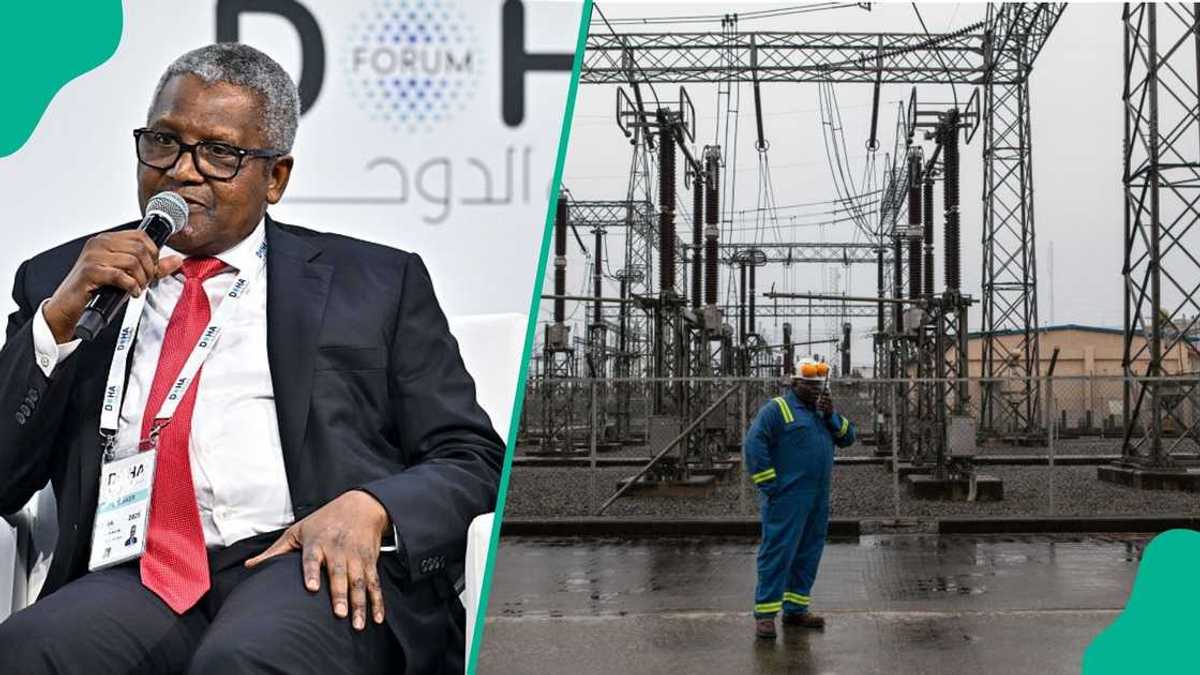
The Dangote Group is planning a 1,000-megawatt power plant as part of its proposed refinery and petrochemical complex in Lamu, Kenya, with about 500MW expected to be supplied to the Kenyan government.
Dangote Group President and Chief Executive Officer Aliko Dangote disclosed the plan during an engagement with Kenyan and East African investors at the Nairobi Securities Exchange on September 29, 2026.
According to Dangote, the planned power facility would be roughly twice the size of the power plant serving the Dangote Petroleum Refinery in Lekki, Lagos.
The Lamu refinery itself is expected to require about 500MW. Dangote said approximately 450MW would be needed for normal refinery operations, while another 50MW would provide additional capacity to accommodate fluctuations in demand.
That would leave roughly 500MW available for external supply. Dangote said the company was negotiating an agreement with the Kenyan government to sell the excess electricity.
The proposed arrangement could also make Lamu more attractive to manufacturers and other businesses seeking to establish operations around the refinery. Dangote said companies locating in the area could potentially avoid the need to develop their own large-scale power-generation facilities because of the additional electricity expected from the project.
The power plant is part of a much larger industrial development planned for Lamu. The Dangote East Africa Petroleum Refinery is designed to process up to 700,000 barrels of crude oil per day and is expected to include petrochemical facilities such as polypropylene and base-oil production.
The project is estimated to cost between $15 billion and $16 billion and is targeted for completion around 2030. Construction officially broke ground in Lamu on September 30, 2026. The Kenyan government says the project is expected to strengthen energy security, create employment and stimulate wider economic activity in Lamu and the region.
Dangote has also described the refinery as the potential centre of a broader industrial ecosystem. He said the project could require more than 60,000 workers and encourage suppliers, manufacturers and service companies to establish businesses around the facility.
The expected availability of additional electricity is a key part of that vision. Reliable power has long been an important consideration for industrial investors across Africa, and the Dangote Group believes the planned excess capacity could help attract businesses to the Lamu area.
The project is also being positioned as a regional energy investment rather than a facility serving Kenya alone. The refinery is expected to supply petroleum products to Kenya and other East African markets, while the proposed power infrastructure could support industrial activity around Lamu.
The scale of the investment has attracted interest from across the region. Dangote has said African investors could participate in the project, while reports indicate that the company plans to eventually list the Lamu refinery on the Nairobi Securities Exchange after construction, commissioning and stabilisation.
The development nevertheless faces challenges. A Kenyan court has been involved in a land dispute concerning the refinery site, with local residents raising concerns over ancestral land and compensation. Dangote has maintained that the project will proceed, while reports indicate that the legal issues could affect some site activities.
For Dangote, the Lamu project represents an expansion of the group’s refining and industrial ambitions beyond Nigeria. If completed as planned, the refinery and its associated power plant would become major pieces of energy and industrial infrastructure in East Africa, while the proposed 500MW electricity supply could provide additional power for Kenya’s economy.
Reporting by TalkNaijaMedia





Reader Comments (0)
No comments yet. Be the first to share your perspective on this report.