

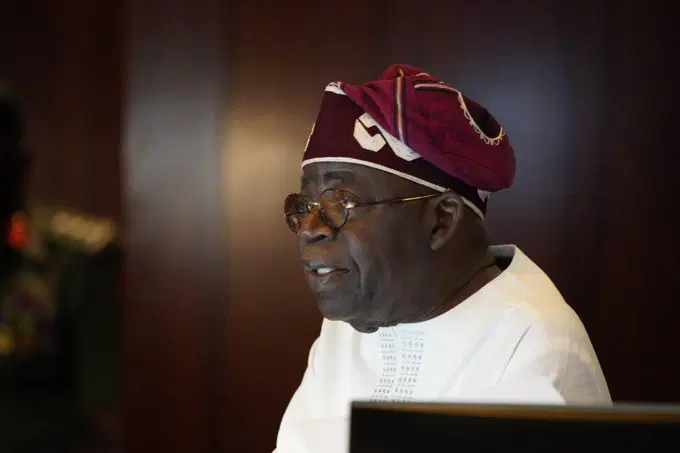
President Bola Ahmed Tinubu has urged Nigerians to increase production, expand agricultural activity, build globally competitive businesses and create more economic opportunities as his administration shifts its focus from economic reforms to what he described as an “age of prosperity.”
Tinubu made the call in his Independence Day address to Nigerians on Thursday, October 1, 2026, as the country marked its 66th anniversary of independence.
The President said the next phase of his administration’s economic agenda would place greater emphasis on production, enterprise, industrial expansion and productive employment. He said the objective was to build an economy in which more Nigerians produce goods and services, businesses expand and young people have opportunities to participate meaningfully in economic activity.
According to Tinubu, Nigeria’s large and youthful population represents a significant economic opportunity if the country can channel its energy, talent and ambition into productive activities.
He said his administration would therefore make jobs, enterprise and industrial growth central to its policies, with particular attention to sectors capable of generating employment and strengthening domestic production.
The President identified gas-powered industries, factory revival, digital connectivity and skills development among the areas where government intends to support economic expansion.
He also called for greater participation by Nigerian businesses in international markets, expressing his desire to see locally produced goods compete beyond Nigeria and more young entrepreneurs build technology companies capable of reaching global markets.
Tinubu said lowering the cost of living would remain a major priority, arguing that reducing the cost of producing and transporting goods could eventually translate into lower prices for consumers.
To support that objective, he highlighted efforts to expand mechanised irrigation and dry-season farming, improve access to seeds and fertiliser, increase agricultural mechanisation and strengthen storage and transportation.
He also pointed to road, rail and port projects as important links between farms, factories and markets.
The President argued that lower production costs, reduced post-harvest losses, more reliable electricity for manufacturers and faster transportation could help businesses operate more efficiently and potentially reduce the prices consumers pay for goods.
Agriculture featured prominently in his vision for the next phase of the economy. Tinubu said Nigeria has the land and human resources required to increase domestic food production while supplying raw materials to local industries.
He also linked agricultural expansion to employment, saying greater productivity across the farming and processing value chain could create additional opportunities for Nigerians.
On industrialisation, Tinubu said government would continue using Nigeria’s gas resources to support new industries while encouraging businesses seeking to reopen or expand factories in the country’s industrial centres.
The administration also plans to expand digital connectivity and invest in skills that employers require, according to the President.
The digital economy has increasingly become part of the Federal Government’s economic strategy. In September, the State House announced the implementation phase of the Digital Free Zones initiative, which it said was designed to help Nigerian technology and service companies attract global capital, create jobs and compete internationally.
Tinubu also acknowledged that millions of Nigerians continue to face economic difficulties, including challenges with food, school fees, healthcare expenses and transportation.
He said those difficulties did not begin with the reforms introduced by his administration, attributing them to structural problems that had accumulated over several decades.
The President maintained that the government could not eliminate those problems immediately but could change the direction of the economy through sustained reforms and investment.
He cited several indicators that he said showed improvement in the economic outlook, including economic growth of more than four per cent in 2026, contributions from both the oil and non-oil sectors, lower oil theft, declining inflation from its peak, rebuilt foreign reserves and greater stability in the foreign exchange market.
Tinubu also said Nigeria generated more than $6 billion in non-oil export revenue in 2025. These figures were presented as part of the President’s assessment of the reforms and their economic impact.
The administration is also maintaining programmes aimed at supporting Nigerians who remain vulnerable while broader economic changes take effect.
Tinubu highlighted the National Social Register, the Nigerian Education Loan Fund and the Nigerian Consumer Credit Corporation as part of that support framework.
He said NELFUND was helping students from low-income households access higher education, while CREDICORP was designed to give working Nigerians access to consumer credit for assets such as vehicles, solar systems and digital devices.
The President said these interventions should not be viewed as substitutes for broader prosperity, but as measures to support Nigerians while the economy undergoes structural transformation.
Tinubu also maintained that government would continue working with state and local authorities to strengthen primary healthcare, basic education and other essential public services.
Looking ahead, the President said the ultimate objective was to create millions of productive opportunities and build an economy in which prosperity is reflected in everyday life rather than only in macroeconomic statistics.
For Tinubu, that means an economy where farmers can produce safely and profitably, factories have dependable power, businesses can access credit, young people can find productive employment and families can afford essential goods and services.
His declaration that Nigeria has entered an “age of prosperity” marks the administration’s stated transition from the reform and stabilisation phase to a stronger emphasis on production, jobs and economic expansion.
Whether that transition produces the broad improvements outlined in the address will depend on how effectively the policies translate into increased productivity, stronger businesses, employment and reduced costs for households.
Reporting by TalkNaijaMedia


Reader Comments (0)
No comments yet. Be the first to share your perspective on this report.