

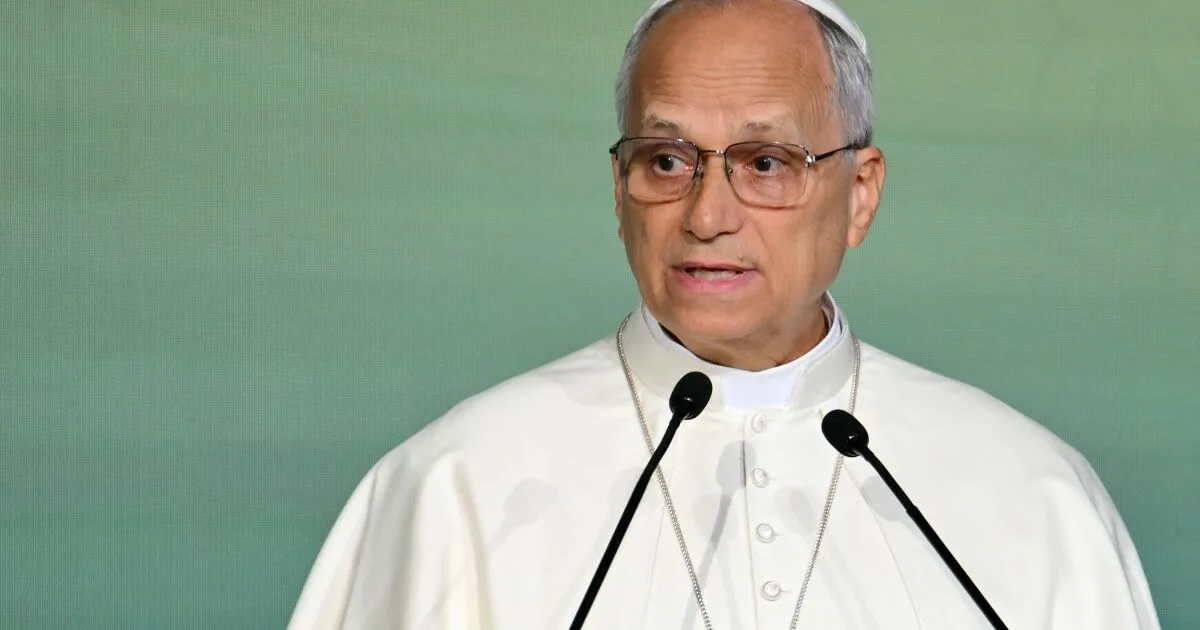
Pope Leo XIV has warned that relations between countries are becoming increasingly hostile and marked by dishonesty, calling on Europe to help restore respect, dialogue and trust in international affairs.
The Pope made the remarks on Monday in Metz, near France’s border with Germany, as he concluded a four-day visit to France.
Speaking alongside French President Emmanuel Macron, Leo avoided directly naming any world leader but criticised what he described as a growing willingness among states and political actors to abandon honesty and mutual respect.
“Relations between individuals and states are becoming increasingly uncivilised. The value of keeping one’s word is dismissed. Instead, people boast of lies and deceit,” the Pope said.
He argued that Europe could help reverse the trend by drawing on its experience of promoting respect and cooperation between nations.
Pope Calls for Courageous Negotiations
A major theme of Leo’s address was the need for greater diplomatic efforts to end conflicts, particularly in Europe.
The Pope called for what he described as “courage in negotiation” and a willingness by opposing sides to compromise for the sake of peace.
His remarks came as Russia’s war against Ukraine continues, with the conflict having entered its fifth year.
“Today, sadly, war has returned, even to Europe: a new ‘senseless slaughter,’ claiming countless civilian lives every day,” Leo said.
He urged governments to embrace patient dialogue and diplomacy rather than allowing conflicts to become prolonged struggles in which civilians continue to bear the greatest burden.
“We need to commit ourselves to patient dialogue, to show courage in negotiation and to be willing to give up some positions for the greater good of peace,” he added.
Leo Calls for a More United Europe
The Pope also appealed for greater unity within Europe at a time when nationalist movements are gaining political strength in several countries.
He urged European nations to remain committed to cooperation and warned against allowing political divisions and hostility toward outsiders to undermine the continent’s unity.
Leo said Europe was entering a new phase shaped partly by the arrival of people fleeing war and persecution.
He called on European countries to respond by welcoming and integrating migrants while also recognising the cultural changes taking place across the continent.
“We must grasp the historical significance of what is taking place, namely an unprecedented encounter between peoples and cultures,” he said.
According to the Pope, the changing demographic landscape provides Europe with an opportunity to rediscover its roots while learning from other cultures.
Macron Echoes Call Against Nationalism
French President Emmanuel Macron also used the occasion to call for a stronger and more united Europe.
Macron said Europe needed to rediscover the courage demonstrated by the continent’s founding generation and strengthen its role as a force for peace, independence and democracy.
He warned against what he described as a return to nationalism and political isolation.
Macron said Europe should not give in to “withdrawal, to hatred of others” or nationalisms capable of dividing the continent.
Pope's Peace Message Shaped by Family History
Leo has repeatedly made peace a central theme of his papacy, a position that has also been linked to his family history.
His father, Louis Marius Prevost, served in the US Navy and witnessed the horrors of the Second World War, including the Allied D-Day landings in Normandy on June 6, 1944.
The Pope’s repeated calls for diplomacy and peaceful conflict resolution have therefore carried a personal dimension.
A Warm Reception in Metz
Leo’s visit to Metz generated considerable public interest, with hotels reportedly reaching capacity and restaurants experiencing increased demand.
Residents also described a positive atmosphere surrounding the Pope’s visit.
The city, which has a population of about 120,000, has deep historical connections to European integration.
Metz is closely associated with Robert Schuman, one of the founding figures of the European Union, who is buried near the city.
The symbolism was reflected in Leo’s message about European unity, cooperation and peace.
Archbishop of Metz Philippe Ballot described the visit as particularly significant for a city shaped by three major wars, including two world wars.
Pope Concludes France Visit With Call for Peace
Leo’s four-day visit to France ended with a broad appeal for Europe to embrace dialogue, cooperation and respect at a time of significant geopolitical tensions.
Although the Pope did not name specific leaders in his address, his warning about dishonesty between states and his call for compromise came against a backdrop of wars, migration pressures and renewed nationalist politics across Europe.
His message in Metz was ultimately a call for European countries to use diplomacy and cooperation to help build a more peaceful international order.

Reader Comments (0)
No comments yet. Be the first to share your perspective on this report.