

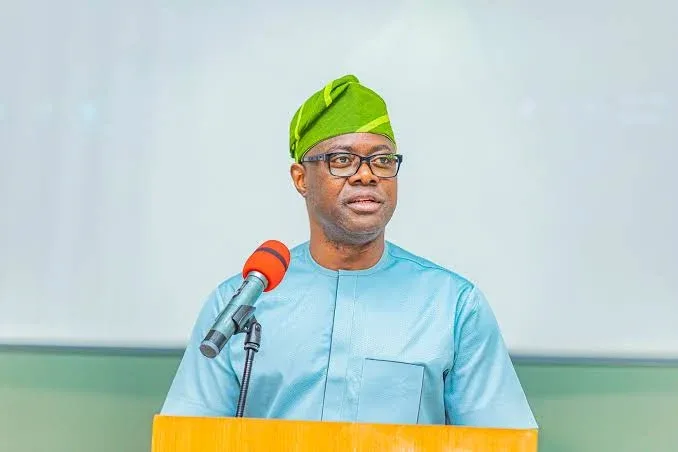
The governor made the remarks in a newsletter published on Thursday, October 15, 2026, in which he compared his administration’s approach to governance in Oyo State with the Federal Government’s economic policies under President Bola Tinubu.
While acknowledging that the removal of the petrol subsidy and the adoption of a more flexible foreign exchange regime were supported by economic arguments, Makinde maintained that the success of such reforms should also be measured by their impact on households, workers and businesses.
He argued that the order in which governments implement policies reveals their priorities and determines who bears the burden of economic adjustment.
According to Makinde, governments often face competing demands and limited resources, making leadership a question of deciding which obligations to meet first and which needs can be addressed later.
Reflecting on his administration’s record since taking office in 2019, the governor said his government prioritised the regular payment of workers’ salaries, pension obligations and inherited gratuity arrears while continuing to invest in infrastructure.
He explained that Oyo State’s development agenda focused on the economy, education, healthcare and security, with an emphasis on balancing public sector obligations with long-term development projects.
Makinde said his administration could have delayed payments to workers and pensioners to free up funds for infrastructure, but chose instead to pursue both objectives.
He added that personnel costs accounted for about 70 per cent of the state’s federal receipts during the four-year period under discussion, creating pressure on available resources and requiring alternative funding arrangements for capital projects.
One approach he highlighted was the Alternative Project Funding Approach, under which contractors financed selected projects upfront, with the state government repaying the costs over an agreed period.
Makinde said the arrangement enabled his administration to continue implementing infrastructure projects while meeting its obligations to public servants and pensioners.
Turning to the Federal Government’s economic programme, the governor argued that reforms should not be judged exclusively by changes in inflation, foreign exchange conditions or other macroeconomic indicators.
He maintained that policymakers must also consider whether reforms are translating into improved employment opportunities, affordable living conditions and better access to essential services.
In the newsletter, Makinde cited estimates suggesting that Nigeria’s poverty rate rose from approximately 56 per cent in 2023 to around 62 per cent in 2026, representing an estimated 23 million additional people living in poverty.
He argued that the figures highlighted the gap between efforts to stabilise the economy and the everyday experiences of many Nigerians.
The World Bank has also reported that poverty remains widespread in Nigeria despite recent economic reforms, with more than 60 per cent of the population estimated to be living below the national poverty line in 2025. Its poverty projections and estimates depend on the poverty measure and underlying economic data used.
Makinde said the Federal Government must take responsibility for the social consequences of its economic decisions, stressing that structural reforms should be accompanied by measures that help people continue to work, earn and support their families.
He argued that governments must address two priorities simultaneously: implementing necessary economic changes and protecting citizens’ ability to participate productively in the economy while those changes take effect.
The Oyo governor also maintained that Nigerians have the right to reject an administration whose policies fail to deliver results they consider satisfactory within its first term.
He linked the argument to his proposed institutional reforms, saying a single presidential term could be sufficient to begin significant changes if a government entered office with a clear agenda, defined priorities and measurable targets.
According to him, his proposed agenda would set out expectations for the first three years of implementation and establish a framework for assessing progress.
Makinde said the next general election would therefore require voters to consider whether they agreed with the government’s approach to leadership and whether its priorities reflected their expectations.
He urged eligible Nigerians to obtain their Permanent Voter Cards and participate in the electoral process.
The Independent National Electoral Commission has scheduled Nigeria’s presidential and National Assembly elections for January 16, 2027, while governorship and State House of Assembly elections are scheduled for February 6, 2027.
Makinde’s comments add to the ongoing debate over the balance between economic reforms, fiscal stability and the immediate welfare of citizens. While supporters of structural reforms argue that difficult policy changes can create conditions for longer-term growth, critics continue to question whether the benefits are reaching households quickly enough.
The central issue raised by the governor is how governments should balance economic restructuring with the responsibility to protect citizens from excessive hardship—and how voters should evaluate that balance when deciding the country’s political future.
Reporting by TalkNaijaMedia



Reader Comments (0)
No comments yet. Be the first to share your perspective on this report.