

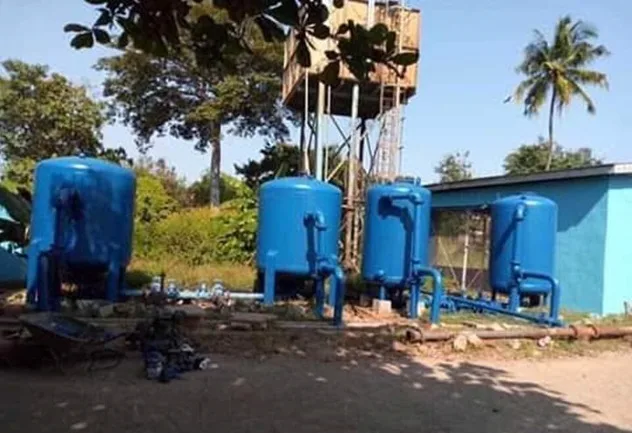
KONGONET said public water facilities are essential assets acquired and maintained with public funds, arguing that any decision to classify their equipment as obsolete, sell it or remove components must be backed by lawful authorisation, independent technical assessments and transparent valuation.
The group cited previous reports from July 2024 concerning a disputed auction of equipment at the Dekina–Anyigba and Ajetachi water facilities. It said the state government had reportedly sought relevant documentation and conducted due diligence on transactions believed to have originated under a previous administration.
The coalition also referenced concerns raised in September 2026 by residents and community representatives over proposed equipment removals from the Isanlu Water Scheme in Yagba East Local Government Area.
In Ankpa, KONGONET pointed to a September 2026 civil society report that cited a Ministry of Water Resources letter dated September 21. The reported disposal schedule allegedly included a 100kVA generator and an overhead tank at Akwu Water Works.
The group further noted that the Ankpa Local Government chairman had reportedly inspected the abandoned waterworks site and called for the protection and recovery of its assets.
However, KONGONET acknowledged that it had not independently verified the original ministry correspondence, equipment inventories, technical assessments, disposal approvals or whether all the reported removals had actually taken place. It stressed that the allegations required investigation and should not be treated as proof of wrongdoing.
The coalition also cautioned against attributing all water supply problems in the affected communities to the reported equipment disposals. It said investigators should consider other possible contributing factors, including electricity interruptions, ageing infrastructure, vandalism, maintenance deficiencies and funding constraints.
According to KONGONET, unreliable public water supply places additional pressure on households, forcing residents to spend more on private water vendors, travel longer distances to obtain water and potentially rely on unsafe sources.
While acknowledging the Kogi State Government’s announcement of emergency rehabilitation work at the Greater Lokoja Water Works, the group called for clear restoration timelines and measurable improvements in water supply across affected communities.
The state government announced on October 13, 2026, that the Greater Lokoja facility had been handed over to Gamji Nigeria Company Limited for emergency electromechanical rehabilitation, with a four-month completion timeline. The intervention is intended to improve potable water supply to Lokoja and surrounding areas.
To address the reported waterworks equipment disposals, KONGONET outlined six demands.
The coalition called for disputed equipment and records at Akwu in Ankpa, Isanlu and Dekina–Anyigba to be secured immediately, with further removals suspended where legally permissible until an independent inventory is completed.
It also asked the state authorities to publish, within 14 days, relevant disposal approvals, engineering reports, valuations, bidding documents, buyers’ details and evidence that any proceeds had been paid into government accounts.
The group urged the Kogi State House of Assembly to organise a public hearing involving independent engineers and auditors to inspect the affected facilities, consult community representatives and determine whether serviceable equipment had been wrongly classified as scrap.
On restoring access to safe water, KONGONET called for interim supplies to vulnerable communities and a funded rehabilitation plan to be published within 30 days. It said the plan should include site-specific targets, water-quality testing and monthly progress reports covering Ankpa, Isanlu, Dekina–Anyigba and Greater Lokoja.
The coalition further urged authorities to refer any evidence of forged records, unlawful disposal, collusion or diversion of proceeds to the appropriate law enforcement and anti-corruption agencies for investigation and possible prosecution in accordance with due process.
For long-term accountability, KONGONET advocated a public register of water infrastructure, regular technical audits, publication of water production and service reliability data, and greater participation by residents and civil society groups in monitoring public assets and rehabilitation contracts.
The organisation called on Governor Ahmed Usman Ododo, the State House of Assembly, the Ministry of Water Resources, the Kogi State Water Board and relevant investigative agencies to treat the matter as an urgent issue of public health, financial accountability and access to essential services.
Reporting by TalkNaijaMedia

Reader Comments (0)
No comments yet. Be the first to share your perspective on this report.