

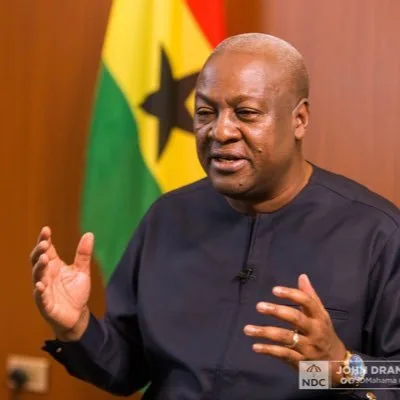
Ghana has taken steps towards joining BRICS after the country’s Cabinet approved a decision to formally apply for membership of the expanding bloc of emerging economies.
Foreign Affairs Minister Samuel Okudzeto Ablakwa announced the decision on Tuesday, October 6, 2026, during a joint briefing in Accra with India’s External Affairs Minister, Dr Subrahmanyam Jaishankar, who was visiting Ghana.
Ablakwa said the decision forms part of President John Dramani Mahama’s economic and foreign-policy strategy, particularly the government’s push to diversify Ghana’s international partnerships and create additional opportunities for investment, trade and industrial development.
The minister stressed that Ghana’s proposed BRICS membership is still at the application stage. Cabinet approval allows the government to move forward with a formal application, but Ghana would still have to secure the support and acceptance of the existing members before becoming part of the grouping.
Ablakwa said Ghana had already approached India for assistance with its application, citing the longstanding diplomatic and economic relationship between the two countries.
India’s External Affairs Minister welcomed Ghana’s interest but made it clear that the final decision would not rest with India alone. Jaishankar said Ghana’s application would have to be considered collectively by the BRICS members.
According to Ablakwa, Ghana sees BRICS as an opportunity to broaden its economic choices rather than replace its existing relationships with traditional development partners.
He said Ghana would continue working with institutions such as the International Monetary Fund and World Bank, as well as African multilateral financial institutions, while developing stronger relationships with emerging economies.
The minister linked the decision to what the Mahama administration describes as its “New Economy” agenda, which focuses on moving Ghana beyond economic stabilisation towards stronger growth, industrialisation, investment and job creation.
Ablakwa also highlighted what he described as the need for greater “resource sovereignty”, saying Ghana wants to increase the value it obtains from its natural resources instead of relying heavily on the export of raw materials.
He said partnerships with countries across the Global South could support Ghana’s efforts to develop local industries and add value to its resources.
India is expected to be an important partner in Ghana’s proposed BRICS bid. The two countries already maintain longstanding diplomatic ties, while their economic relationship covers areas including trade, agriculture, technology and other sectors.
During Jaishankar’s visit, Ghana and India also discussed expanding cooperation in areas such as pharmaceuticals, health, mining, defence, railways and digital technology. Ghanaian and Indian officials also announced agreements covering agricultural cooperation and science and technology.
Ablakwa pointed to the growth of Ghana-India trade as one reason for strengthening the relationship. He said bilateral trade had increased substantially in recent years, although the figures cited by officials refer to different measures of trade and should not be treated as a single independently verified total.
BRICS originally emerged as BRIC, comprising Brazil, Russia, India and China. South Africa subsequently joined, giving the group the BRICS name.
The bloc has expanded considerably in recent years. Its full members now include Brazil, China, Egypt, Ethiopia, India, Indonesia, Iran, Russia, Saudi Arabia, South Africa and the United Arab Emirates, according to Ghana News Agency's account of the current membership.
The group has also created a partner-country category, with countries including Nigeria among those participating in that arrangement rather than as full BRICS members. Ghana's proposed application is therefore a bid for membership and should not be confused with an existing BRICS affiliation.
For Ghana, the proposed membership comes as the government seeks to widen its economic and diplomatic options at a time when countries across the Global South are pursuing greater cooperation and a larger role in international economic governance.
Ablakwa said Ghana's existing relationships would remain intact, stressing that the BRICS initiative was intended to add new partnerships rather than abandon established ones.
For now, Ghana's next step is to submit its formal application and seek the backing of BRICS members. India's support could be significant, but Jaishankar's comments make clear that Ghana's eventual admission would depend on the wider grouping.
The development therefore represents the beginning of Ghana's BRICS membership process, not confirmation that the country has already been admitted into the bloc.
Reporting by TalkNaijaMedia

Reader Comments (0)
No comments yet. Be the first to share your perspective on this report.