

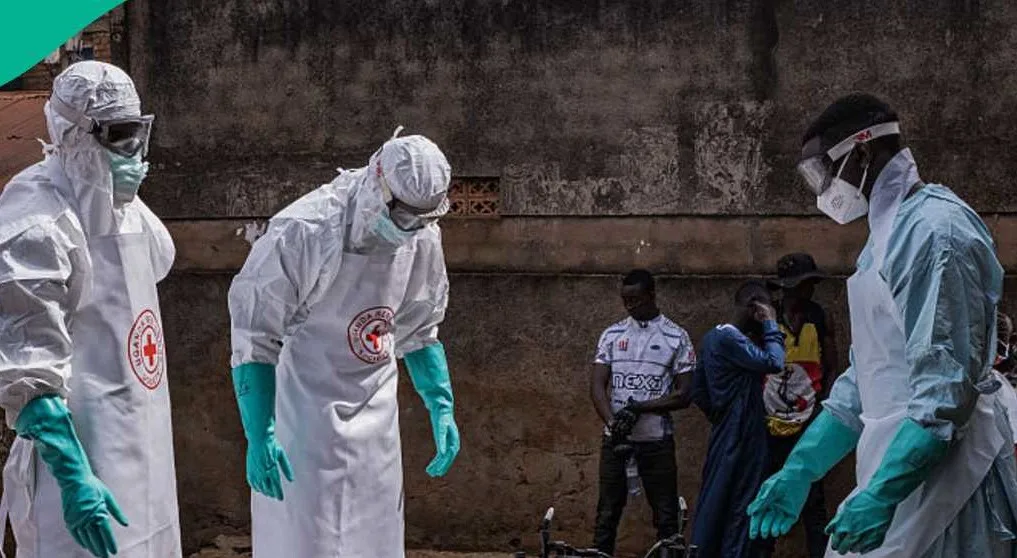
The Nigeria Centre for Disease Control and Prevention (NCDC) has reviewed the country’s preparedness for a possible Ebola importation following confirmation of a case of Bundibugyo virus in Kenya.
The agency said that, as of October 6, 2026, Nigeria had not recorded any confirmed Ebola case linked to the current outbreak.
In a statement issued by NCDC Director-General, Dr Jide Idris, the agency said the development in Kenya underscored the possibility of international spread through travel and population movement, including the potential introduction of the virus into Nigeria.
Bundibugyo virus is one of the viruses that can cause Ebola disease. It was first identified in Uganda’s Bundibugyo District and has previously caused outbreaks in parts of East and Central Africa.
The NCDC said it has been working with the Federal Ministry of Health and Social Welfare, Port Health Services, state health authorities and other partners to strengthen Nigeria’s ability to detect and respond to a possible imported case.
The preparedness measures include surveillance, early detection, isolation, laboratory diagnosis, infection prevention and control, contact tracing and measures to protect healthcare workers.
The agency also said Nigeria had conducted a national Ebola preparedness tabletop simulation exercise to test how relevant authorities would respond if an imported case were detected.
The latest concern follows confirmation of a Bundibugyo virus case in Kenya involving a Kenyan citizen who had been living in the Democratic Republic of Congo, where an outbreak of the virus is ongoing.
According to the World Health Organisation Regional Office for Africa, the patient travelled by road from the Democratic Republic of Congo to Kampala, Uganda, before continuing by air to Nairobi.
The individual developed symptoms after arriving in Kenya and subsequently tested positive for Bundibugyo virus at Kenya’s National Virology Reference Laboratory and the Kenya Medical Research Institute.
The patient later died and was buried under Kenya’s safe and dignified burial procedures, according to WHO.
The case has increased attention on the possibility of cross-border transmission because of the movement of people between countries affected by the outbreak and neighbouring states.
The Democratic Republic of Congo remains at the centre of the current outbreak. WHO has reported thousands of confirmed and probable cases and deaths since the outbreak was detected, although figures have changed as investigations and laboratory confirmations have progressed.
Uganda, which had also reported cases linked to the outbreak, declared its outbreak over in August after completing the required monitoring period without recording additional transmission. The Kenyan case, however, demonstrates the continuing importance of regional surveillance.
The NCDC said it would continue monitoring developments in Kenya, the Democratic Republic of Congo and other countries affected by the outbreak, while adjusting Nigeria’s preparedness measures as new information becomes available.
For travellers returning to Nigeria from affected areas, the agency advised increased attention to their health during the 21-day period following possible exposure.
Anyone who develops symptoms consistent with Ebola during that period should limit contact with other people and immediately contact public health authorities, while clearly providing information about recent travel and possible exposure.
Healthcare workers have also been advised to maintain a high level of suspicion when treating patients who develop symptoms compatible with Ebola and have travelled to or from affected areas within the previous 21 days.
For the general public, the NCDC continues to recommend basic infection-prevention measures, including regular handwashing and avoiding contact with the body fluids of people who are sick or deceased.
The agency's warning does not mean that Nigeria is currently experiencing an Ebola outbreak. Rather, it reflects the country's effort to strengthen surveillance and response capacity because international travel can allow infectious diseases to cross borders before cases are identified.
Nigeria has previous experience responding to Ebola. The country successfully contained the 2014 Ebola outbreak after the virus was introduced through an infected traveller, with the response widely cited as an example of coordinated outbreak control.
The current preparedness review therefore allows health authorities to assess existing systems and identify potential gaps before a suspected case occurs.
With Nigeria's extensive travel connections with other African countries, health authorities are expected to continue working with airports, border officials, laboratories and state health agencies to maintain surveillance and ensure that any suspected case can be identified and managed promptly.
At present, the NCDC's position remains that no confirmed Ebola case has been recorded in Nigeria in connection with the current outbreak, while preparedness and surveillance activities continue.
Reporting by TalkNaijaMedia




Reader Comments (0)
No comments yet. Be the first to share your perspective on this report.