

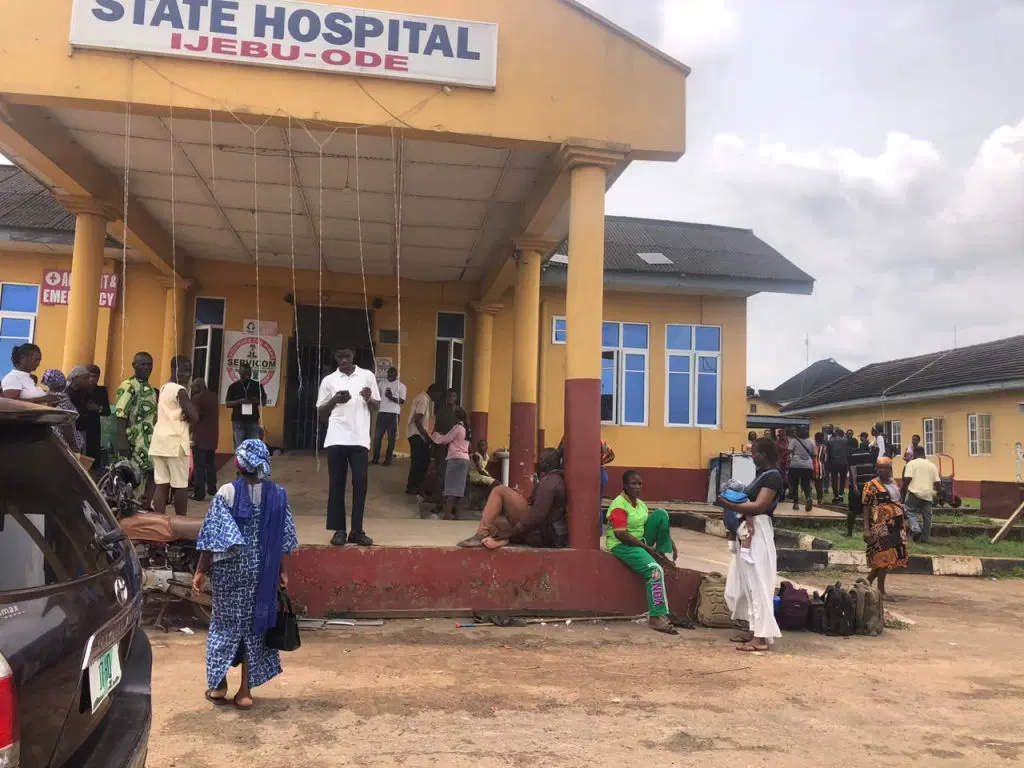
Affected students were taken to the State Hospital in Ijebu-Ode, the General Hospital in Ijebu-Igbo and other healthcare facilities for treatment.
Schools reportedly affected included Ijebu-Igbo Girls Grammar School, Anglican Girls Grammar School in Ijebu-Ode and Itamerin Comprehensive High School in Ago-Iwoye. Some schools in Ago-Iwoye reportedly suspended activities as the situation worsened, while worried parents rushed to collect their children.
A teacher at one of the affected schools said the incident began at about 10 a.m., with students and staff struggling to breathe. Some reportedly fainted and were taken to hospitals.
The development triggered renewed concern among parents, teachers and residents, particularly because similar incidents have been reported in the Ijebu area since April 2026.
Ogun State Commissioner for Environment, Ola Oresanya, said the government was responding to the latest occurrence. The state’s environmental assessment team visited the affected areas and healthcare facilities to examine the situation and gather information about the source of the emissions.
In an update reported by the media, the state government said more than 30 students had received medical attention at the Ijebu-Ode hospital. Some required oxygen to stabilise their conditions, while others received less intensive treatment. Most had been discharged by the time the assessment team left, although a few remained under medical observation.
The total number of students treated across all affected hospitals was not independently confirmed.
Kehinde Bello, a senior special assistant to Governor Dapo Abiodun and general manager of the Ogun State Environmental Agency, linked the latest occurrence to earlier underground gas emissions recorded in the area. He said the government was working towards a lasting solution.
The latest episode follows previous incidents that raised concerns about the safety of students and staff in the affected communities. Reports from earlier occurrences indicated that about 40 students were affected in April, more than 120 were reportedly hospitalised in May, and another 69 students were reportedly taken for medical attention during a June incident.
Following the earlier cases, Governor Dapo Abiodun said the state government was collaborating with the Ministries of Environment and Health, relevant petroleum regulatory authorities and geological experts from Olabisi Onabanjo University to determine the cause.
The governor previously stated that gas analysers had been installed in affected schools to establish the nature and concentration of the emissions. At the time, preliminary findings pointed to methane and possible geological factors, including underground fractures associated with fault lines.
However, the precise source of the latest emissions and the reason the incidents continue to recur have not been conclusively established in the reports reviewed.
The state government has said investigations are continuing, while officials have urged residents to remain calm. The repeated incidents have nevertheless intensified calls for a transparent, conclusive investigation and effective measures to protect schools and surrounding communities.
Residents and school authorities are awaiting clearer findings on the source of the emissions and the steps required to prevent further exposure. Anyone experiencing breathing difficulties or other symptoms after exposure to an unusual gas or odour should move away from the suspected area when it is safe to do so and seek prompt medical assistance, following instructions from emergency responders and health authorities.
Reporting by TalkNaija Media



Reader Comments (0)
No comments yet. Be the first to share your perspective on this report.