

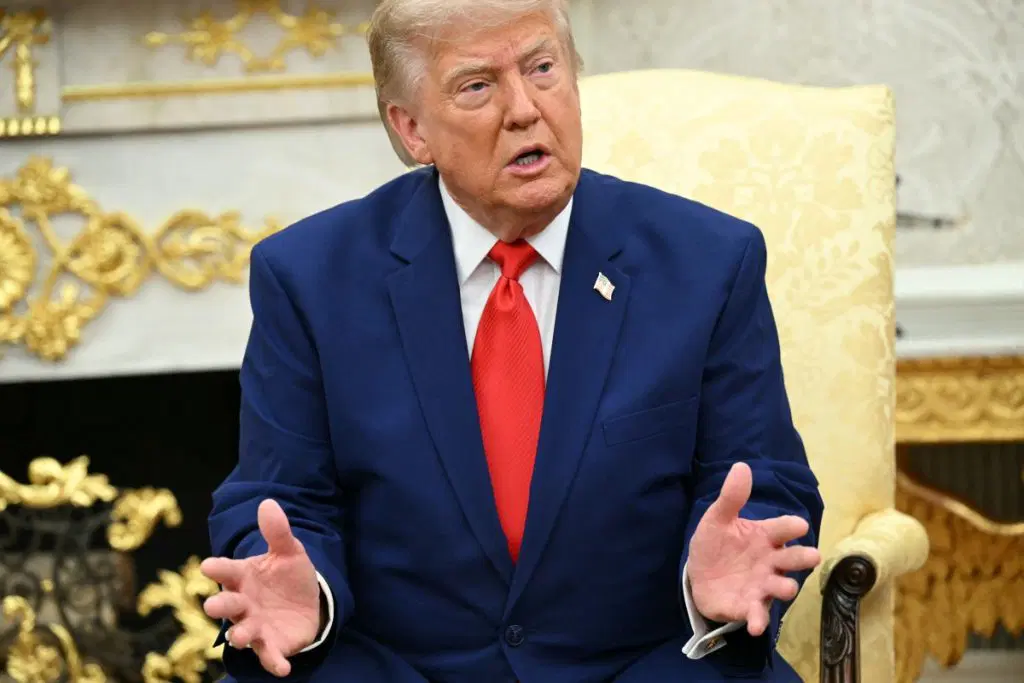
“I’m the one that said, ‘Do it,’” the president said, acknowledging his role in the decision to pursue the legal action.
The lawsuit, filed in federal court in Alaska on Thursday, centres on the presence of another candidate named Daniel J. Sullivan Jr. on the ballot. The Justice Department argues that voters could confuse him with the incumbent Republican senator, potentially affecting the outcome of the closely watched contest.
Senator Dan Sullivan is facing Democratic challenger Mary Peltola, a former member of the US House of Representatives. The race is attracting national attention because its outcome could influence the balance of power in the Senate.
In its filing, the Justice Department alleges that Daniel J. Sullivan’s candidacy could divert votes from the incumbent and create uncertainty over the result. It is asking the court to prevent certification if the Republican senator loses and an assessment suggests that votes cast for the other Sullivan could have changed the outcome.
However, Daniel J. Sullivan has denied being part of a scheme to mislead voters, while Democrats have rejected the allegations against him. He is listed on the ballot without a party designation, while the incumbent is identified as the Republican candidate and sitting senator.
The legal dispute follows earlier attempts to remove Daniel J. Sullivan from the ballot. Alaska election officials initially sought to exclude him, but a lower court ruled in his favour, and the Alaska Supreme Court subsequently upheld that decision.
The lawsuit has drawn criticism from Democrats, who argue that the federal government is attempting to interfere with a state-administered election before voters have had their say.
Peltola described the move as corruption in a post on X, while other critics warned that the action could undermine public confidence in the electoral process.
The controversy has also renewed concerns about whether the Trump administration would accept an unfavourable outcome in the November elections. Trump previously challenged the outcome of the 2020 presidential election, which he lost to Democrat Joe Biden.
Attorney General Todd Blanche has said the Justice Department does not intend to improperly interfere with elections or state certification procedures. However, before the Alaska lawsuit was filed, he declined to rule out federal intervention under what he described as an extreme or “doomsday” scenario.
Legal experts have questioned whether the department’s argument provides a sufficient basis for blocking certification. Election law scholar Derek Muller has described the case as weak, arguing that the law cited by the government may not authorise the requested intervention.
The US Constitution gives states a central role in administering elections, although federal laws also regulate aspects of elections for national office. Whether the Justice Department can obtain the order it is seeking will ultimately depend on the court’s assessment of its legal arguments.
Alaska’s Senate contest is particularly significant because Democrats are seeking to gain seats in both chambers of Congress. A Democratic victory in the House of Representatives would give the party greater power to scrutinise the Trump administration, while the Senate race could influence which party controls the upper chamber.
The November 3 election will determine the outcome of the contest, but Alaska’s ranked-choice voting system could mean that the final result takes time to emerge.
As the legal battle continues, the central question is whether the Justice Department can persuade a federal court to delay certification based on its concerns about possible voter confusion. The lawsuit remains a legal claim, not a court finding that the election has been compromised.
Reporting by TalkNaijaMedia



Reader Comments (0)
No comments yet. Be the first to share your perspective on this report.