

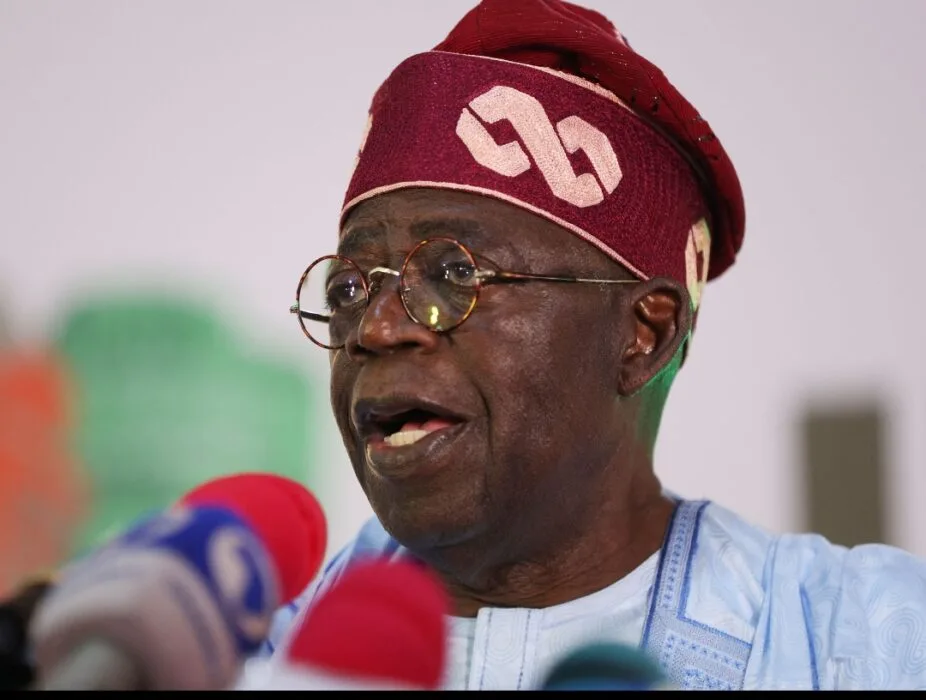
As Nigeria marks its 66th Independence anniversary, attention is once again turning to the infrastructure and housing projects being pursued across the country under President Bola Ahmed Tinubu’s administration.
Housing, road construction, urban renewal and improved connectivity have featured prominently in the Federal Government’s development agenda, with projects spread across different parts of the country.
One of the most visible initiatives is the Renewed Hope Cities and Estates Programme of the Federal Ministry of Housing and Urban Development. Official ministry records show that 14 active construction sites have accounted for 10,112 housing units, including 12 estates of 250 units each and larger Renewed Hope City developments in the Federal Capital Territory, Lagos and Kano.
The programme includes the 3,112-unit Renewed Hope City in Karsana, Abuja, while major developments are also being pursued in Lagos and Kano. The ministry has described the programme as part of its broader effort to increase housing supply and create more affordable pathways to homeownership.
The Federal Government has also expanded its use of public-private partnerships in housing delivery. According to the Housing Ministry, the Karsana project is supported by a ₦100 billion bankable offtaker guarantee facilitated through the Federal Mortgage Bank of Nigeria, with developers mobilising additional financing for construction.
Beyond new housing construction, the administration’s housing programme includes mortgage financing, rent-to-own arrangements and outright purchase options. The official Renewed Hope housing platform now provides listings across all 36 states and the FCT, although the availability and pricing of individual properties vary by location and project.
The housing programme is also being linked to urban renewal. The Federal Ministry of Housing and Urban Development says its National Urban Renewal and Slum Upgrade Programme is targeting improvements such as roads, drainage, water supply, sanitation and solar street lighting in communities across the country.
Infrastructure remains another major component of the administration’s development agenda.
Across the states, federal road projects include rehabilitation, reconstruction and expansion of important transport corridors intended to improve movement between major cities, agricultural communities, industrial centres and ports.
Among the projects highlighted in the development programme are the Lagos–Calabar Coastal Highway, Kano–Maiduguri corridor, Abuja–Kaduna–Zaria–Kano route, East–West Road and several other strategic highways.
The Lagos–Calabar Coastal Highway has attracted particular attention because of its planned connection across several coastal states and its potential role in improving movement along Nigeria’s southern corridor.
Similarly, the Sokoto–Badagry Superhighway has been presented by the Federal Government as a major north-to-south transport corridor, although the project remains a long-term undertaking requiring substantial construction and financing.
Other road interventions are focused on regional connectivity. In the South-East, projects around the Enugu–Onitsha and Enugu–Port Harcourt corridors are intended to improve transportation and trade, while road projects in the North-East include sections of the Kano–Maiduguri route and other strategic links.
In the Niger Delta, projects such as the East–West Road and Bodo–Bonny Road are particularly important because of their connection to communities, industries and economic activity in the region.
The infrastructure agenda also extends to bridges and coastal communities. Projects such as the Nembe–Brass Road in Bayelsa and bridge interventions in parts of Adamawa and Plateau are intended to improve access to communities that have historically faced transportation difficulties.
Housing projects are similarly being developed in several states. Official Federal Housing Ministry records confirm 250-unit Renewed Hope Estates in states including Abia, Akwa Ibom, Benue, Delta, Ebonyi, Gombe, Katsina, Nasarawa, Sokoto and Yobe, among others, as part of different phases of the programme.
The programme has evolved since its initial launch, and not every project mentioned in development summaries is at the same stage. Some are under construction, some have reached advanced stages, while others remain planned or are being developed through different funding arrangements.
In Abuja, the Karsana Renewed Hope City remains one of the flagship housing projects. The Federal Government says the development comprises 3,112 housing units and is being supported by additional infrastructure, including an access road approved by the Federal Executive Council.
The wider housing programme is also intended to generate employment. The Housing Ministry has estimated that the ongoing Renewed Hope housing projects have created direct and indirect employment opportunities across construction-related professions and trades.
For the administration, the broader objective is not simply to construct houses or roads, but to use infrastructure investment to stimulate economic activity, improve mobility and expand access to housing.
However, the success of these projects will ultimately depend on completion, maintenance, accessibility and affordability. A road project has greater economic value when it remains usable and reduces travel and logistics costs, while a housing project has greater social impact when ordinary Nigerians can realistically afford and access the homes.
The same applies to urban renewal. Improved drainage, roads, water supply and sanitation can significantly affect the quality of life in communities, but their long-term benefits depend on proper maintenance and effective local management.
As Nigeria enters its 67th year as an independent nation, the development conversation is therefore shifting from announcing projects to measuring their actual impact.
The projects across the country represent a substantial pipeline of housing and infrastructure interventions. The next challenge is ensuring that they are completed efficiently, maintained properly and connected to wider economic opportunities.
From housing estates in different regions to major highways, bridges, coastal infrastructure and urban renewal programmes, the Federal Government’s development agenda covers a broad range of projects.
Their lasting significance will ultimately be determined by how effectively they improve transportation, expand homeownership, create employment, support businesses and contribute to better living conditions for Nigerians.
Reporting by TalkNaijaMedia

Reader Comments (0)
No comments yet. Be the first to share your perspective on this report.