

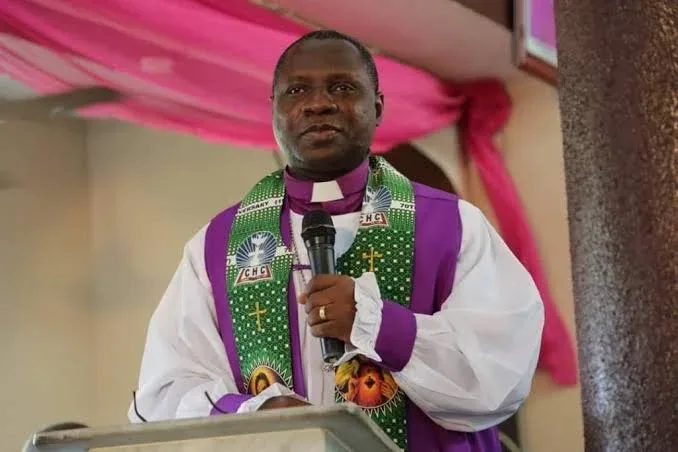
The Christian Association of Nigeria has called on the Federal Government to make lower food, transportation and energy costs a priority as the country marked its 66th Independence Anniversary.
In an Independence Day message signed by CAN President, Archbishop Daniel Okoh, the association said Nigerians who had endured years of economic pressure should begin to see tangible improvements in their daily lives.
CAN said it welcomed the Federal Government’s transition from a period focused heavily on economic reforms to what President Bola Tinubu has described as an era of prosperity. However, the Christian body stressed that the success of those reforms should ultimately be measured by their effect on ordinary Nigerians rather than economic statistics alone.
The association said families should be able to afford basic necessities, young people should have access to decent employment, communities should be safe and children should have meaningful opportunities to build their futures.
It therefore urged the government to make reductions in food, transport and energy costs measurable priorities, arguing that Nigerians who had experienced years of economic hardship deserved visible relief.
CAN also called for stronger social protection for vulnerable Nigerians, including greater support for education, healthcare and access to affordable credit. It stressed that such programmes should be administered transparently and protected from diversion.
According to the association, economic prosperity would remain incomplete if its benefits did not reach ordinary households.
Security was another major concern raised by the Christian body. CAN said Nigerians could not fully benefit from economic opportunities if insecurity prevented them from farming, trading, travelling or going about their daily activities without fear. It consequently urged the government to sustain efforts to protect lives, secure communities and rebuild public confidence.
The association also addressed the approaching 2027 political season, warning political actors against turning religion into a tool for partisan competition.
CAN said no politician should be presented as a messianic figure and maintained that Christians should be free to support or criticise political candidates according to their individual convictions. It also cautioned against using the name of Jesus Christ as a political weapon.
The association reaffirmed its position as a non-partisan moral voice, saying it would continue to commend positive actions, speak up when citizens are facing hardship and demand justice, accountability and compassion from those in authority.
Meanwhile, the Borno State chapter of CAN used the Independence anniversary period to raise broader concerns about the role of religious leaders in Nigeria's development.
The Borno CAN Chairman, Most Rev. John Bogna Bakeni, said religious leaders must accept responsibility for speaking truth to those in authority when policies or actions are harming society. His comments came amid continuing concerns over insecurity and economic hardship in Borno State.
Bakeni has previously described the security situation in Borno as a major concern for residents and recently called for intensified efforts to rescue 78 schoolchildren who were abducted in the state.
Speaking about the responsibilities of religious leaders, Bakeni said both Christian and Muslim leaders should act as voices for truth and justice rather than becoming absorbed in political interests. He argued that religious leaders have a moral responsibility to draw the attention of policymakers to problems affecting citizens and to advocate for equitable management of the country's resources.
He also described the Independence anniversary as a sober occasion for many Nigerians because of the combination of economic hardship and insecurity confronting communities.
On the 2027 elections, Bakeni urged Nigerians to exercise their civic rights based on their own assessment of candidates and their records rather than simply following instructions from religious or political figures.
His comments reinforce the broader position expressed by CAN nationally that religion should not be turned into a weapon for partisan politics.
As Nigeria enters another year of independence, CAN is therefore calling for a phase in which economic reforms translate into tangible improvements in the lives of citizens — from more affordable basic necessities and stronger social protection to safer communities and greater accountability.
For the Christian body, the measure of prosperity ultimately lies in whether ordinary Nigerians can actually feel its benefits in their homes and communities.


Reader Comments (0)
No comments yet. Be the first to share your perspective on this report.