

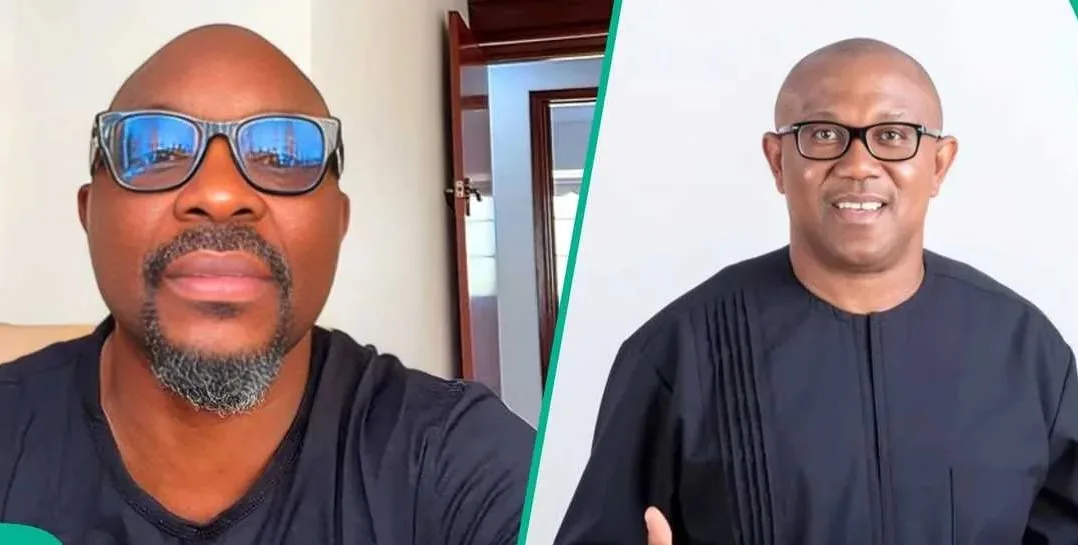
Businessman and social commentator Isaac Fayose has sparked controversy with comments directed at Igbo Nigerians who support President Bola Tinubu’s All Progressives Congress (APC) administration.
Fayose made the remarks in a video that began circulating on social media on October 7, 2026, while discussing Peter Obi’s political relevance and the choices being made by voters in the South-East.
In the video, Fayose criticised Igbo supporters of the APC and used the phrase “wicked Igbo man” to describe those he believes should instead support Obi. The remarks have generated reactions online, with discussions focusing on whether political allegiance should be framed along ethnic lines.
Fayose also compared Obi’s political influence with that of other prominent Igbo figures from recent decades. He argued that, apart from the late Chukwuemeka Odumegwu Ojukwu, he could not identify another Igbo politician over roughly the past 30 to 40 years who had achieved what Obi has accomplished politically.
That assessment is Fayose’s personal political opinion and is not an independently established ranking of Igbo political figures.
The businessman further questioned why some wealthy individuals had not provided stronger financial backing for Obi’s political ambitions. He maintained that the former Anambra State governor could still succeed politically despite the level of financial or organisational support available to him.
Fayose has previously been outspoken about his support for Obi. In July, he reaffirmed his allegiance to the former Anambra governor after a meeting with Seyi Tinubu, son of President Bola Tinubu, and businessman Pascal Okechukwu, popularly known as Cubana Chief Priest.
That meeting had triggered speculation that Fayose might have changed his political position because of his relationship with people associated with the President’s camp.
Fayose subsequently rejected that interpretation, saying his personal relationship with the Tinubu family should not be confused with his political position. He said he remained committed to Obi and described himself as “101% Obidient.”
The businessman later hosted Obi at his residence and described the NDC presidential candidate as Nigeria’s “incoming president”, again publicly reaffirming his support for him.
Fayose’s latest comments therefore come against the background of his continuing public support for Obi as the 2027 presidential contest approaches.
Obi, who was the Labour Party’s presidential candidate in the 2023 election, is now the presidential candidate of the Nigeria Democratic Congress (NDC) for the 2027 election. His political movement continues to attract supporters across different parts of the country, although the extent of his support among voters will ultimately be determined by the election.
Fayose’s comments about Igbo political loyalty have also reopened a broader conversation about the role of ethnicity in Nigerian politics. The country’s political landscape includes supporters of different parties and candidates across ethnic and regional lines, making it difficult to treat the political preferences of any ethnic group as uniform.
The APC also has supporters from the South-East, just as opposition parties have supporters outside the region. Individual political choices can therefore differ significantly within the same ethnic or regional community.
The controversy surrounding Fayose’s remarks comes as political activity builds ahead of the 2027 elections. Parties and political movements are increasingly seeking support across regions, while public figures and supporters continue to debate the records, policies and prospects of competing candidates.
For Fayose, however, his latest intervention is consistent with his previously stated support for Obi. His criticism of Igbo APC supporters has now added another layer to the increasingly heated political conversations surrounding the 2027 presidential race.
The comments have drawn criticism as well as support online, but they remain Fayose’s political position and should not be interpreted as representing the views of Igbo Nigerians generally.
Reporting by TalkNaijaMedia

Reader Comments (0)
No comments yet. Be the first to share your perspective on this report.