

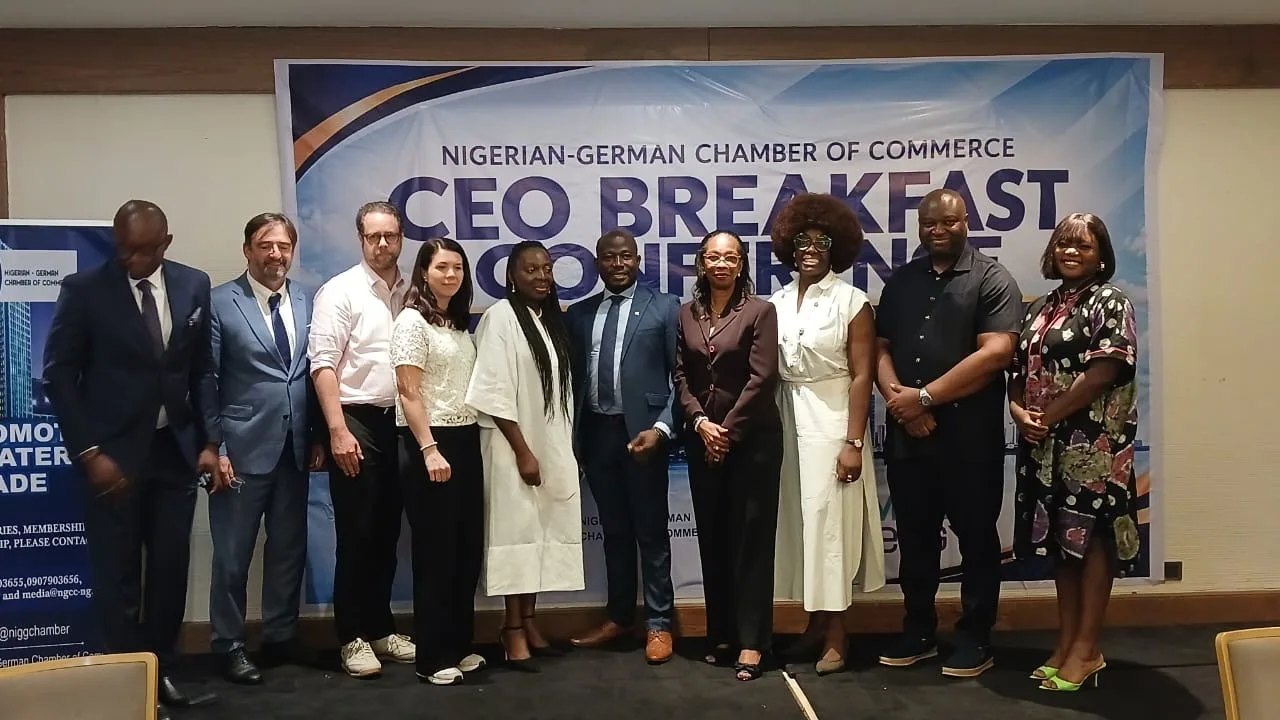
Krull made the remarks at the Nigerian-German Chamber of Commerce CEO Breakfast Conference held in Lagos on Wednesday, November 18, 2026.
He observed that although businesses had recognised the direction of Nigeria’s economic reforms, many households were still struggling to feel their impact because disposable income remained under pressure.
The German diplomat urged the Federal Government to maintain its reform programme while ensuring that the benefits become more visible to ordinary Nigerians and businesses.
He also called for a stronger focus on investment rather than allowing bilateral relations to revolve mainly around trade. According to him, increased investment would help turn existing commercial relationships into long-term economic partnerships.
However, German manufacturers seeking to expand their presence in Nigeria and other Sub-Saharan African markets must address the challenges of affordability and access to financing.
Julia Kors, who oversees Sub-Saharan African markets and export finance at the German Machinery and Equipment Manufacturers Association (VDMA), said German manufacturers had products that could serve African markets but needed to adjust their pricing, products and financing arrangements to local economic realities.
She identified the cost of equipment and limited access to affordable financing as important factors affecting the competitiveness of German companies.
Kors called for more attractive financing programmes from the German government to support exports to African markets, adding that manufacturers must also find ways to make their products more affordable to potential customers.
The VDMA, which represents approximately 3,600 companies, is working to strengthen commercial relationships between German manufacturers and businesses across Sub-Saharan Africa.
Kors acknowledged that German and other European companies were facing stronger competition from international suppliers, noting that some opportunities may have already been missed. Nevertheless, she expressed confidence that businesses willing to adapt could still establish a stronger presence in the region.
Krull also proposed initiatives to improve practical understanding of African markets among young German business professionals.
He encouraged Nigerian companies to offer internship opportunities to young German participants, explaining that direct exposure to local businesses would help them better understand the region’s commercial environment and investment opportunities.
The consul general said he was willing to engage relevant German government ministries to explore possible seed funding for the proposed programme.
He further highlighted improvements in the processing of German business visas, encouraging Nigerian companies and financial institutions to take advantage of stronger connections with Germany.
Krull also pointed to Frankfurt's position as an important international financial centre, suggesting that closer engagement with the city could create additional opportunities for financial and commercial cooperation.
The discussions reflect growing efforts by Nigeria and Germany to strengthen economic relations beyond conventional trade, particularly in manufacturing, technology, finance and industrial development.
However, converting the renewed interest into actual investments will depend partly on how businesses address the challenges of financing, affordability and market competition.
Reporting by TalkNaijaMedia



Reader Comments (0)
No comments yet. Be the first to share your perspective on this report.