

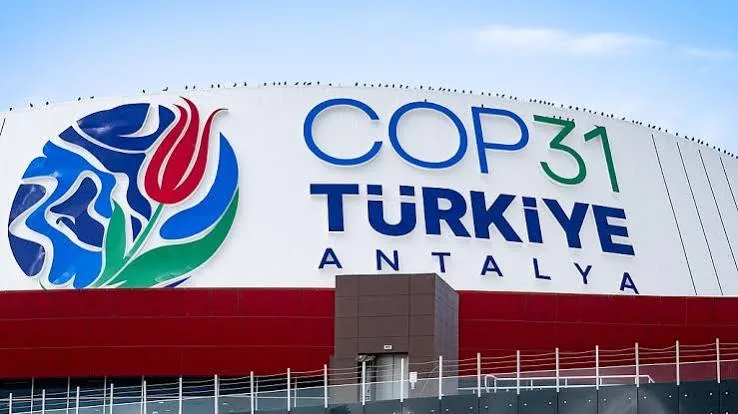
At the centre of the disagreement is a revised draft agreement that removed all references to fossil fuels, a development that has sparked widespread criticism from several participating countries and climate advocates.
The earlier draft had proposed accelerating the transition away from fossil fuels, including oil, gas and coal. However, a subsequent version released on Thursday dropped the references entirely, forcing negotiators to return to the bargaining table.
The European Union criticised the revised document, warning that the changes could undermine the purpose of the climate negotiations. Several European and developing countries, including France, Panama and the Solomon Islands, also called for a clear commitment to move away from fossil fuels.
Panama reportedly threatened to withdraw from the negotiations unless the final agreement addresses concerns surrounding fossil fuel production, climate financing and existing climate commitments.
COP31 President and Türkiye's Environment Minister, Murat Kurum, acknowledged the difficulties facing negotiators, telling delegates that progress had been made but a final agreement was yet to be reached.
The talks are being led by Australia’s Climate Change and Energy Minister, Chris Bowen, who has been engaging different country delegations in an effort to secure compromises before the negotiations conclude.
One of the major proposals under consideration is a global electrification target that seeks to increase electricity's share of final energy consumption to 35 per cent by 2035.
The proposal, championed by Türkiye and Australia, is intended to encourage the replacement of technologies that directly burn fossil fuels with electric alternatives, potentially reducing emissions while improving energy security.
However, some countries have raised concerns that the proposal does not specifically require the additional electricity to come from renewable sources. They argue that electricity generated from coal and gas could also contribute to the target unless a clear clean-energy requirement is included.
Another contentious issue is the proposed expansion of carbon capture technology. While some countries support its inclusion as part of the climate response, others question its cost, effectiveness and potential to prolong dependence on fossil fuels.
Disagreements have also emerged over climate science and the role of the Intergovernmental Panel on Climate Change (IPCC), with countries divided over the timing of future scientific assessments and the language to be adopted on the 1.5-degree Celsius warming threshold.
Climate financing remains another major obstacle. Developing countries have expressed frustration over what they consider inadequate financial commitments from wealthier nations to help vulnerable communities adapt to the effects of climate change.
The removal of a proposed $120 billion climate adaptation financing target from the revised draft has further intensified tensions, particularly among developing nations seeking stronger financial support.
Ghana's Environment Minister, Zanetor Agyeman-Rawlings, expressed frustration over the situation, insisting that developing countries should not have to plead for financial assistance that wealthy nations are expected to provide under international climate commitments.
The negotiations are taking place against the backdrop of increasing climate-related disasters, geopolitical tensions and uncertainty in global energy markets.
With countries still divided over the final wording of the agreement, attention has shifted to the next draft as negotiators attempt to secure a compromise that addresses the concerns of both developed and developing nations.
The outcome of COP31 is expected to be significant for future international climate action, particularly efforts to reduce greenhouse gas emissions, strengthen climate adaptation and mobilise funding for countries most vulnerable to global warming.
Reporting by TalkNaijaMedia




Reader Comments (0)
No comments yet. Be the first to share your perspective on this report.