

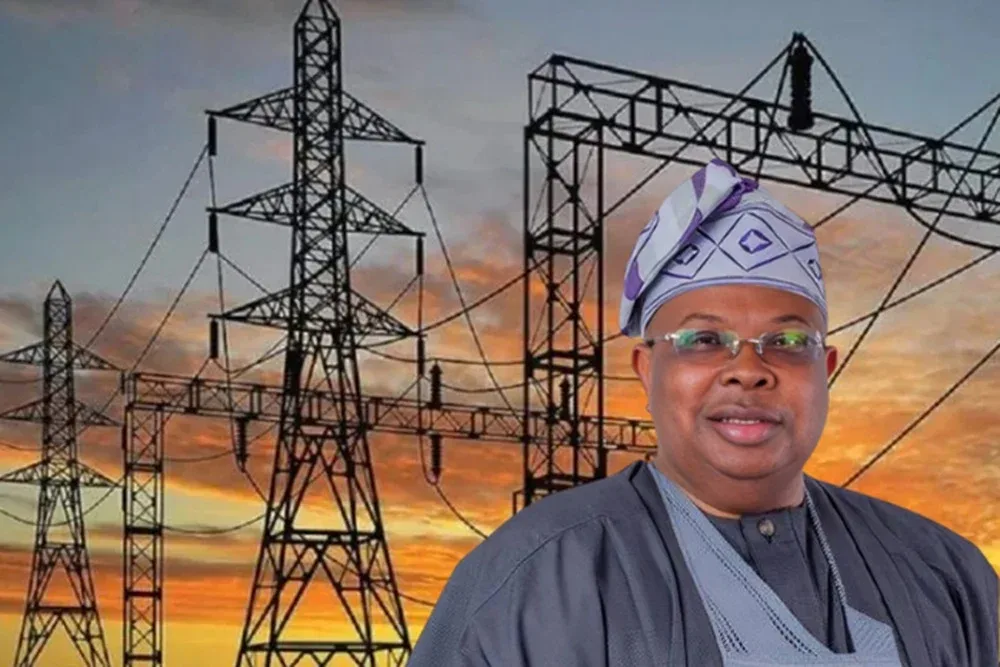
The agreement was reached during a high-level technical session between the Minister of Power, Joseph Tegbe, and Lagos State Governor Babajide Sanwo-Olu at Lagos House, Marina.
The Lagos corridor will serve as the first location for the pilot, which the Federal Government plans to extend to the Abuja–Kaduna–Kano and Enugu–Port Harcourt corridors as part of a broader strategy to improve electricity supply in major commercial and industrial centres.
The initiative was approved by President Bola Tinubu as part of efforts to develop energy zones capable of delivering more dependable electricity to areas with high demand.
Speaking during the meeting, Tegbe said the Ministry of Power had engaged electricity distribution companies operating along the Lagos corridor and secured commitments for them to increase power offtake and improve supply to customers.
The minister said the Federal Government would work with Lagos around four key areas identified as priorities: grid stabilisation, market liquidity, grid expansion, and governance and regulatory harmonisation.
For Lagos residents and businesses, the proposed initiative is particularly significant because the state remains one of Nigeria's most important commercial and industrial centres, with electricity demand driven by households, manufacturers, offices and small businesses.
Sanwo-Olu welcomed the federal government's approach and said Lagos was prepared to collaborate on practical solutions to persistent problems within the electricity market.
The governor also stressed the need to develop a competitive and commercially viable electricity market capable of attracting investment while improving service for consumers.
To move the initiative beyond discussions, the Federal Government announced the formation of a Joint Technical Committee to identify outstanding technical and operational challenges and recommend the next steps for implementation.
The committee will be chaired by the Managing Director of the Nigerian Independent System Operator, with the Permanent Secretary of the Lagos State Ministry of Energy serving as co-chair.
Representatives from the Nigerian Electricity Regulatory Commission, Transmission Company of Nigeria, Rural Electrification Agency, Lagos State Electricity Regulatory Commission, Lagos Independent System Operator, Lagos State Electricity Authority and the Office of the Minister of Power will also participate.
The technical committee will report to a separate Steering Committee chaired by Governor Sanwo-Olu and co-chaired by Minister Tegbe.
Other members of the steering committee include the Special Adviser to the President on Power, the Permanent Secretary of the Federal Ministry of Power and the Lagos State Commissioner for Energy.
The latest development follows earlier engagements between the Federal Government and electricity distribution companies over the proposed energy zones.
The government has said the plan is intended to address challenges across the electricity value chain rather than focusing only on power generation. Issues surrounding transmission, distribution, electricity offtake and market liquidity also need to be addressed if more reliable supply is to reach consumers.
For Lagos, the immediate objective is to turn the commitments into measurable improvements in electricity supply.
The planned expansion to the Abuja–Kaduna–Kano and Enugu–Port Harcourt corridors could eventually provide a model for extending more reliable power to other high-demand areas across Nigeria.
However, the 24/7 Energy Zones remain a pilot initiative, meaning the success of the programme will depend on resolving the technical, commercial and regulatory challenges that have historically affected electricity delivery in the country.
If successfully implemented, the Lagos pilot could become an important test of whether coordinated action between federal and state authorities, regulators, system operators and distribution companies can deliver more dependable electricity to Nigerian consumers.
Reporting by TalkNaijaMedia




Reader Comments (0)
No comments yet. Be the first to share your perspective on this report.