
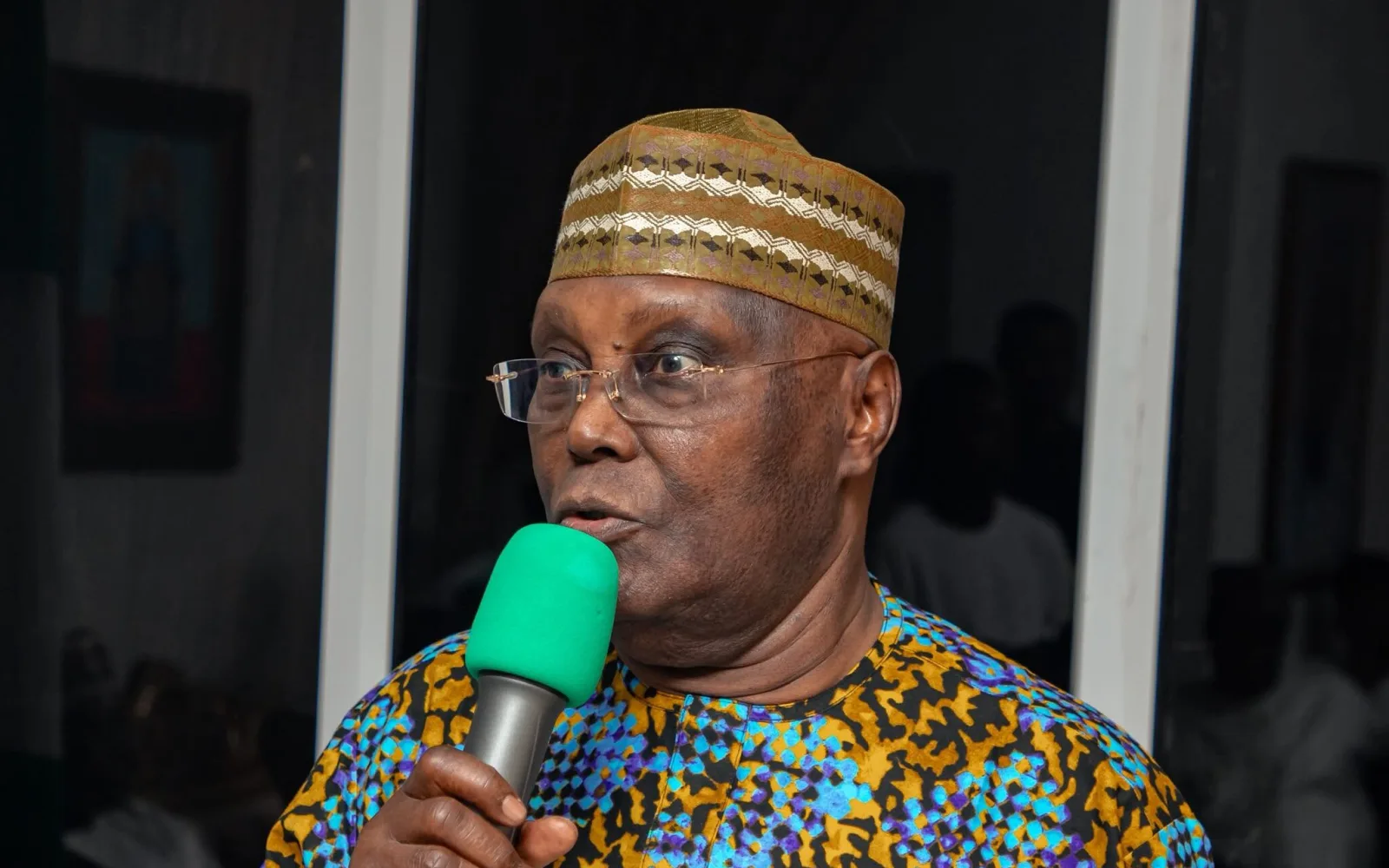
The campaign of African Democratic Congress presidential candidate Atiku Abubakar says the former vice-president remains open to discussions aimed at strengthening cooperation among opposition parties ahead of Nigeria’s 2027 presidential election.
Phrank Shaibu, Director of Strategic Communications for the Atiku Presidential Campaign Council, told Premium Times that the campaign could not confirm reports suggesting that Atiku had rejected a proposal for opposition parties to rally behind a single presidential candidate.
He also said there was no confirmed agreement involving Atiku on either a common opposition candidate or cooperation among opposition parties if the presidential election proceeds to a second round.
Shaibu said the campaign was still examining details of the proposal associated with the G100 opposition initiative, including whether the group had presented polling data or electoral modelling to support its discussions about a possible run-off.
He also cautioned against drawing conclusions about conditional endorsements or reciprocal political commitments before the consultations are concluded.
The clarification followed a report by The PUNCH that the G100 was considering a possible second-round arrangement if opposition parties failed to agree on a common presidential candidate before the election.
According to the report, consultations involving Atiku and Nigeria Democratic Congress candidate Peter Obi were continuing, while neither had indicated that he would withdraw from the presidential race in favour of another candidate.
The reported run-off scenario remains unconfirmed. Premium Times said it had not independently obtained the research or statistics reportedly cited by sources within the G100 as suggesting that the 2027 presidential election could proceed to a second round.
The G100 has been advocating greater cooperation among opposition parties ahead of the 2027 elections. In August, the group and the Minority Caucus of the House of Representatives backed efforts to encourage opposition parties to work towards a common presidential candidate.
On August 31, representatives of several opposition parties attended a G100-organised summit in Abuja. The participating parties included the ADC, Allied Peoples Movement, Nigeria Democratic Congress, a faction of the Peoples Democratic Party, Peoples Redemption Party and Social Democratic Party.
Atiku and Obi were not present at the summit, although the ADC was represented. The parties agreed to establish committees and working groups to develop proposals covering opposition cooperation, a national reform programme and a possible roadmap towards a common presidential candidate.
The initiative has since moved beyond the initial summit. A Central Leadership Committee established by the participating parties held its inaugural meeting in September, with members agreeing that the chairmanship of its meetings would rotate among participating parties in alphabetical order.
The talks have nevertheless faced the challenge of reconciling the ambitions of opposition presidential candidates who are already campaigning for the 2027 contest.
Earlier reports indicated that Atiku, Obi and Allied Peoples Movement candidate Seyi Makinde remained committed to their respective presidential ambitions, although discussions about broader opposition cooperation continued.
More recently, opposition figures have continued meeting with Atiku as part of wider coalition consultations. A delegation involving Peoples Redemption Party leaders and other opposition figures reportedly met with him in Abuja on September 29, with the PRP saying the engagement was part of efforts to strengthen cooperation ahead of the election.
The Atiku campaign's latest position therefore leaves the door open for further negotiations while making clear that no single-ticket or run-off agreement involving the ADC candidate has been confirmed.
The 2027 presidential election is scheduled for January 16, 2027, according to the Independent National Electoral Commission's published timetable. Any eventual opposition arrangement would have to emerge through negotiations among the parties and candidates involved rather than through the G100's consultations alone.
For now, the central issues remain unresolved: whether opposition parties can agree on a common candidate, what framework would govern cooperation among them, and whether candidates who have already secured their party nominations would accept the outcome of such negotiations.
Reporting by TalkNaijaMedia

Reader Comments (0)
No comments yet. Be the first to share your perspective on this report.