

Adeyanju Faults Tinubu’s Order Lifting EFCC Freeze On Osun Accounts, Calls It Unconstitutional
Human rights lawyer Deji Adeyanju has criticised President Bola Tinubu’s directive lifting the EFCC freeze on Osun State government accounts, describing the move as unconstitutional and raising questions about executive interference in ongoing financial investigations.
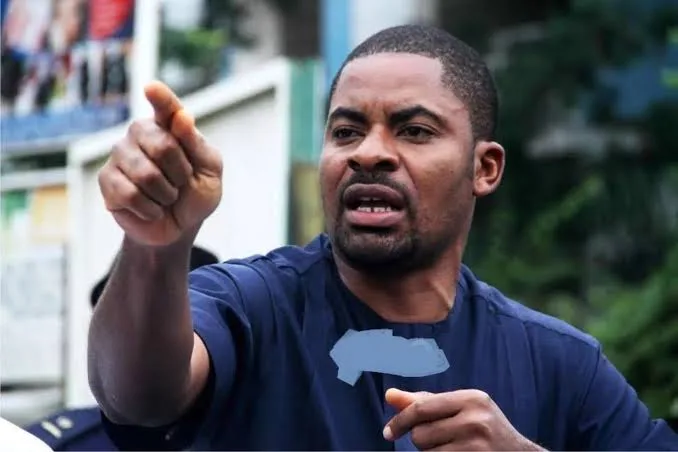
Human rights lawyer and political commentator Deji Adeyanju has criticised President Bola Ahmed Tinubu's decision to direct the Economic and Financial Crimes Commission (EFCC) to lift the restriction placed on Osun State government accounts, describing the order as unconstitutional.
Adeyanju's comments have added a fresh legal dimension to the controversy surrounding the EFCC's investigation into the state's finances and the restriction of access to some government accounts.
The development has attracted attention because of the constitutional and institutional questions surrounding the relationship between the executive branch, anti-corruption agencies and state governments.
### Tinubu directs EFCC to lift restriction
President Tinubu reportedly directed the EFCC to lift the restriction on Osun State government accounts, allowing the state government to regain access to the affected accounts.
The EFCC had previously restricted access to several accounts as part of an investigation into alleged financial irregularities involving the state administration.
The restriction had generated controversy, particularly because it affected the ability of the state government to access funds and carry out its financial obligations.
The President's intervention has now become another point of debate, with critics questioning whether the executive has the constitutional authority to direct an independent anti-corruption agency in relation to an ongoing investigation.
### Adeyanju questions the legality of the order
Adeyanju faulted the President's intervention, arguing that the decision raises constitutional concerns.
According to the lawyer, the President should not directly interfere with the operational decisions of the EFCC, particularly where an investigation is already underway.
He argued that the commission has statutory responsibilities and that decisions relating to investigations and restrictions on accounts should be handled according to the relevant legal procedures.
Adeyanju's position is that the President's directive could undermine the independence of anti-corruption institutions if executive authority is used to determine the outcome of specific investigative actions.
### EFCC's role in financial investigations
The EFCC is Nigeria's principal anti-graft agency responsible for investigating and prosecuting a range of financial crimes.
Its responsibilities include investigating allegations involving fraud, money laundering, public-sector corruption and other economic and financial offences.
In carrying out its mandate, the commission can seek legal orders and take other measures permitted by law during investigations.
Restrictions on bank accounts can form part of an investigation where investigators believe funds may be connected to suspected financial crimes, although such actions remain subject to legal requirements and judicial oversight where applicable.
The Osun controversy has therefore raised questions about how such powers should be exercised and who has the authority to direct the commission once an investigation is underway.
### Why the issue has generated debate
The controversy is not only about the Osun State accounts.
It has also opened a broader conversation about the independence of Nigeria's anti-corruption agencies and the limits of presidential authority.
Supporters of the President's decision could argue that the intervention was necessary to prevent the restriction from disrupting the operations of a state government and affecting public services.
Critics, however, may see the intervention as potentially weakening the independence of an agency established to investigate financial misconduct.
Adeyanju's criticism falls within the latter argument.
### Implications for Osun State
The lifting of the restriction could allow the Osun State government to regain access to funds that had been affected by the EFCC's action.
Access to government accounts is essential for the day-to-day running of a state administration.
State governments require access to funds to pay workers, implement development projects, settle contractual obligations and provide essential public services.
Any prolonged restriction on government accounts could therefore create significant administrative and financial difficulties.
The President's directive could ease some of those immediate concerns, although questions surrounding the underlying investigation remain.
### Investigation and due process
The controversy also highlights the importance of due process when government institutions investigate allegations of financial wrongdoing.
While anti-corruption agencies must be able to investigate suspected financial crimes effectively, individuals and institutions affected by investigations are also entitled to legal protections.
Restrictions on financial accounts can have significant consequences, making transparency and adherence to established legal procedures particularly important.
Adeyanju's criticism is therefore part of a wider debate about how Nigeria can balance effective anti-corruption enforcement with institutional independence and constitutional safeguards.
### A broader question about presidential powers
The disagreement also raises questions about the extent of presidential powers over federal agencies.
The EFCC operates under legislation that defines its powers, responsibilities and institutional framework.
At the same time, the commission remains a federal institution operating within the broader structure of government.
The question raised by critics is whether the President can issue a direct instruction concerning a specific investigative action or whether such decisions should remain within the commission's statutory and legal framework.
Adeyanju believes the President's intervention crosses a constitutional line.
Whether that position would ultimately be upheld would depend on the interpretation of the relevant constitutional and statutory provisions, as well as any judicial proceedings that may arise from the matter.
### Political dimension
The dispute also comes amid a politically charged relationship between the Federal Government and state governments across Nigeria.
Osun State has attracted significant political attention, particularly because of the broader competition between major political parties and disagreements between state and federal political actors.
Against that background, decisions involving federal agencies and state governments are likely to attract heightened scrutiny.
The EFCC's action against state accounts and the subsequent presidential directive have therefore become part of a wider political and institutional discussion.
### What happens next?
The immediate focus will likely shift to the status of the EFCC's investigation and whether it will continue following the lifting of the account restrictions.
The removal of the restriction does not necessarily mean that any underlying investigation or allegation has been conclusively resolved.
Further legal or administrative steps could determine how the matter develops.
For Adeyanju, however, the central issue is the constitutional principle involved in the President directing an anti-corruption agency to reverse a specific action.
His criticism has ensured that the controversy extends beyond the financial affairs of Osun State to questions about institutional independence, executive power and the rule of law.
The debate is likely to continue as lawyers, political actors and members of the public examine the legal basis for the President's directive and the implications it could have for the independence of Nigeria's anti-corruption institutions.
Related News Reports
Politics
Nigeria’s Voter Register Crosses 103 Million as INEC Sets October 9 for PVC Collection
TalkNaija Desk
4 min read
3

Politics
Tinubu Declares Three Days of National Mourning After NAF Aircraft Crash in Ondo
TalkNaija Desk
3 min read
1
Politics
FG Urges Hotels to Maintain Neutrality, Strengthen Security Ahead of 2027 Elections
TalkNaija Desk
5 min read
2
Politics
Abu Micheal Mobilises Ward A Support for Tinubu, Ododo Ahead of 2027
TalkNaija Desk
4 min read
2

Reader Comments (0)
No comments yet. Be the first to share your perspective on this report.