

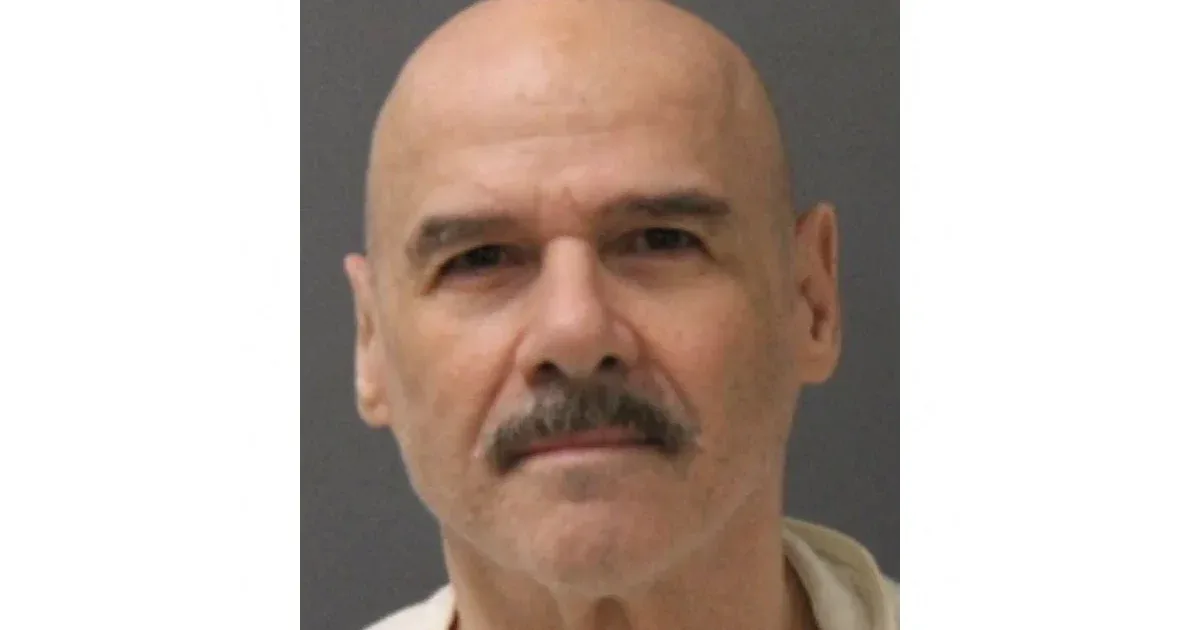
Reports from the execution said the process took more than an hour, partly because prison staff experienced difficulty finding suitable veins for the intravenous lines. Dennes was eventually pronounced dead at 7:08 p.m., about 16 minutes after the drugs were administered.
His spiritual adviser, Reverend Jeff Hood, who witnessed the execution, described the procedure as botched, saying Dennes repeatedly complained that he was experiencing pain.
An Associated Press reporter who witnessed the execution also described it as significantly different from previous executions he had covered, saying Dennes appeared to experience distress during the procedure.
However, the Texas Department of Criminal Justice disputed the allegations.
The department's spokesperson, Amanda Hernandez, said officials followed established procedures and maintained that the execution was successfully completed.
She acknowledged that staff initially encountered difficulties locating suitable veins but said the intravenous lines were eventually established in Dennes's left foot and the left side of his neck.
The department also disputed the timing and location of Dennes's complaints, maintaining that he reported pain before the drugs were administered and in areas where no intravenous lines had been placed.
Dennes was convicted of the murder of Szucs, a Houston jewellery dealer who was killed in January 1996. The robbery involved millions of dollars' worth of diamonds and cash, which were never recovered.
His final legal efforts to stop the execution were unsuccessful. The United States Supreme Court rejected his application for a stay on November 19, clearing the way for the execution to proceed.
The incident has renewed public attention on the administration of capital punishment in the United States, particularly concerns surrounding execution procedures and the use of lethal injection.
Meanwhile, a recent Gallup survey has shown that support for the death penalty among American adults has fallen below 50 per cent for the first time since 1971.
The poll, conducted in October 2026, found that 49 per cent of respondents supported the death penalty for people convicted of murder, while 45 per cent opposed it. Gallup described the level of support as the lowest recorded since 1966.
Reporting by TalkNaijaMedia





Reader Comments (0)
No comments yet. Be the first to share your perspective on this report.