

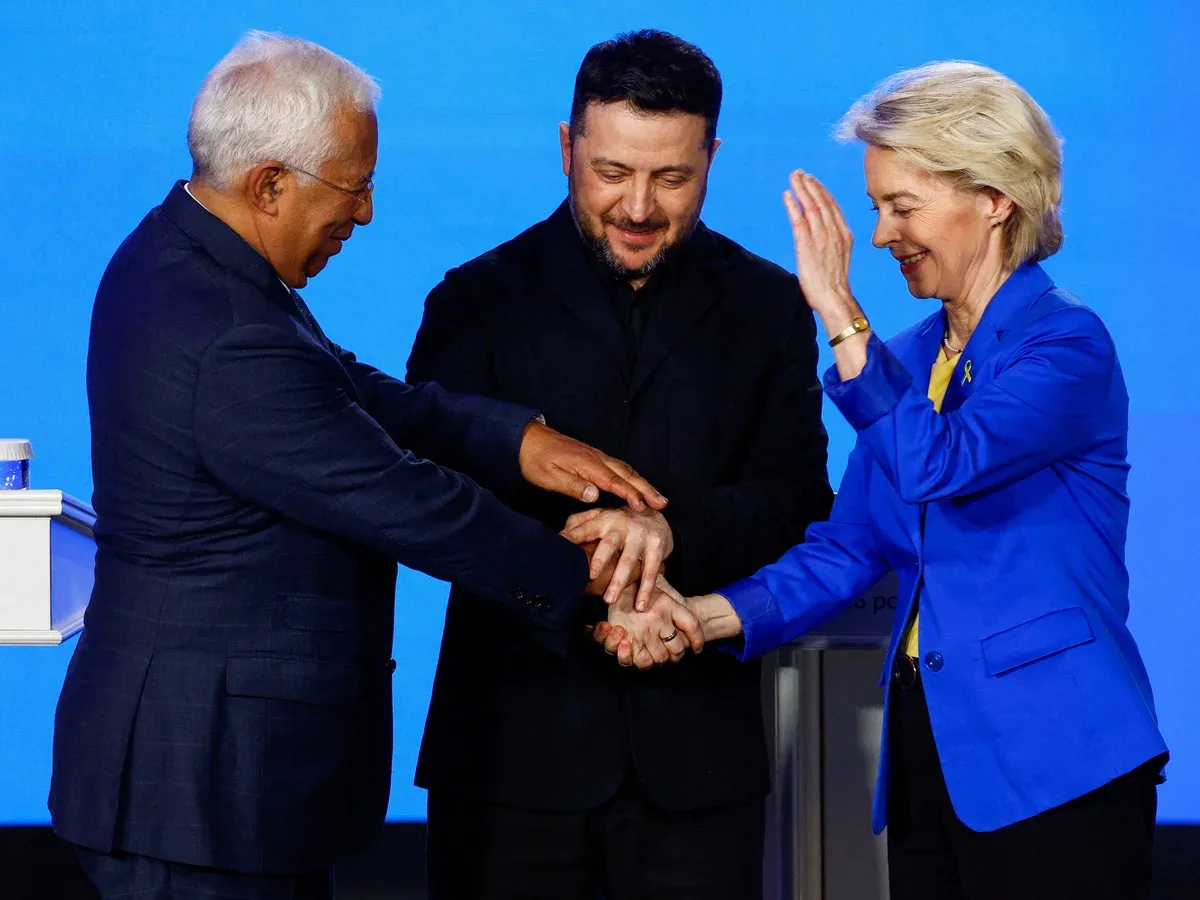
The leaders of Germany, France, the United Kingdom and Ukraine reiterated their determination to sustain international support for Kyiv and increase pressure on Moscow to end the conflict.
Under the European Union's Ukraine Support Loan, €90 billion is expected to be made available for military and financial assistance by the end of 2027. The funding is intended to help cover Ukraine's needs well into that year.
The statement also reaffirmed the commitment of NATO member countries to provide €70 billion worth of military equipment, assistance and training to Ukraine in 2026, with at least an equivalent level of support planned for 2027.
The leaders said continued international backing would help Ukraine withstand Russia's military campaign, insisting that Moscow would not outlast the coalition's commitment to Kyiv.
Beyond financial and military assistance, the coalition agreed to intensify economic pressure on Russia through additional sanctions and measures aimed at limiting its ability to fund the war.
The proposed measures include targeting Russian oil and gas revenues, cryptocurrency transactions and illicit financial flows, as well as disrupting the country's military-industrial complex.
The leaders also pledged to strengthen efforts to restrict Russia's so-called shadow fleet, which has been used to evade existing sanctions. They said they would work to protect maritime security in line with applicable international rules and standards.
The joint statement condemned what the leaders described as an escalation of Russian missile and drone attacks against civilians and civilian infrastructure in Ukraine. They expressed condolences to the families of those affected and reaffirmed Ukraine's right to defend itself.
They further argued that Russia had suffered significant losses while making limited territorial gains during the year, maintaining that attacks on civilian targets would not compensate for its difficulties on the battlefield.
The coalition also condemned alleged Russian hybrid activities in Europe, including sabotage, cyberattacks and information operations, which it said were intended to undermine international support for Ukraine.
Strengthening Ukraine's air defence was identified as another major priority, particularly the provision of systems capable of intercepting ballistic missiles and protecting civilian infrastructure ahead of winter.
The leaders said they would work with other countries to secure additional air-defence capabilities for Ukraine.
On security arrangements after the conflict, the coalition outlined proposals for legally binding guarantees designed to deter further Russian attacks once a ceasefire takes effect.
The proposed arrangements could include continued military, financial and technical support for Ukraine's armed forces, as well as participation in a United States-led ceasefire monitoring and verification mechanism.
They also discussed the possibility of a European-led Multinational Force for Ukraine, with American support, to provide reassurance measures on land, at sea and in the air and help strengthen the country's defence capabilities.
The leaders further proposed a commitment, subject to the required national procedures, for participating countries to take appropriate measures if Russia launches another armed attack against Ukraine.
On diplomatic efforts, the coalition reiterated its support for a comprehensive, just and lasting peace, while acknowledging ongoing diplomatic initiatives involving the United States.
It commended Ukrainian President Volodymyr Zelenskyy for his stated willingness to accept an immediate ceasefire and participate in meaningful negotiations.
The leaders also supported direct engagement between Ukraine and Russia, with the involvement of the United States and European countries.
However, they insisted that any peace settlement must respect Ukraine's sovereignty and territorial integrity, including its right to determine its own security arrangements and alliances.
They maintained that Russia's frozen sovereign assets should remain immobilised until Moscow ends its war against Ukraine and compensates the country for the damage caused.
As part of efforts to reduce hostilities, the coalition called on Russia to agree to an energy ceasefire throughout the winter. It also proposed a separate ceasefire arrangement in the Black Sea to protect maritime movement and ensure the safe passage of food exports.
The leaders said maintaining safe access to the Black Sea was important not only for Ukraine but also for international food security.
The Berlin meeting reflects the coalition's intention to sustain support for Ukraine while pursuing diplomatic efforts, stronger security guarantees and additional economic pressure on Russia.
Reporting by TalkNaijaMedia


Reader Comments (0)
No comments yet. Be the first to share your perspective on this report.