

He urged journalists to scrutinise claims made by politicians across party lines, insisting that neither the ruling party nor the opposition should be allowed to spread falsehoods without challenge.
According to him, political campaigns should focus on policies, governance and issues affecting citizens rather than personal attacks and narratives capable of provoking hostility.
Showunmi also raised concerns about the misuse of artificial intelligence to create misleading content, warning that technology could be exploited to manipulate public opinion and incite unrest if professional safeguards were not maintained.
He argued that journalists must protect the credibility of their profession as social media makes it easier for people to circulate unverified information. He urged media practitioners to distinguish responsible journalism from content designed to mislead or inflame public sentiment.
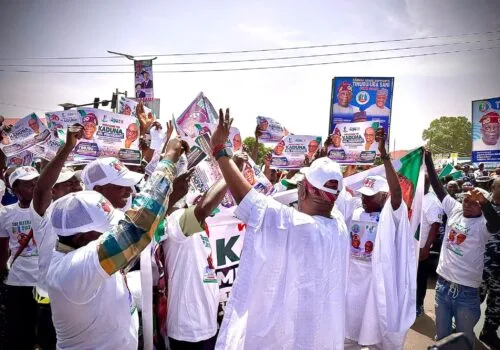
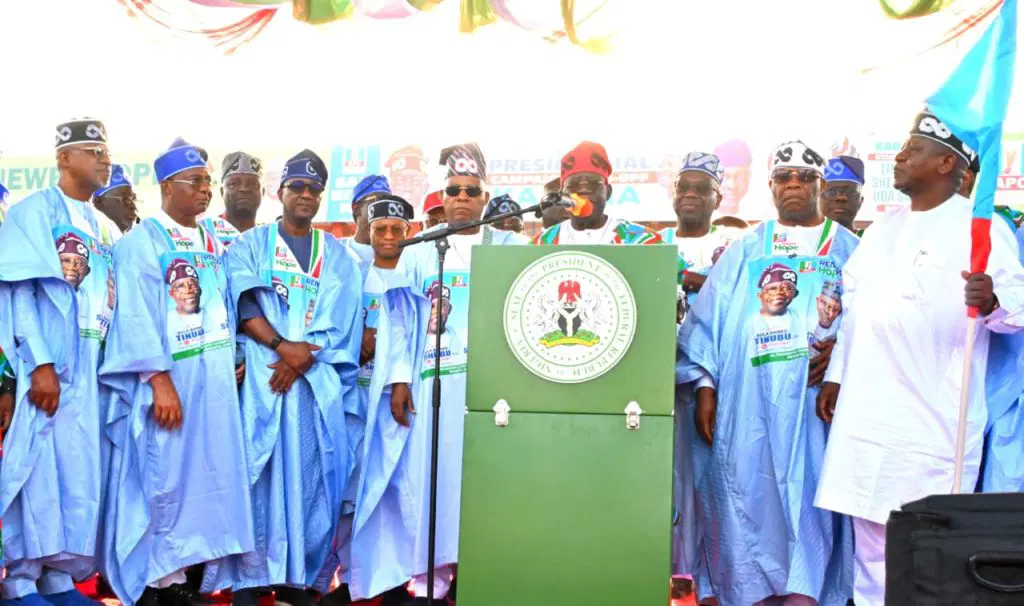
The APC campaign figure also thanked journalists and residents of Kaduna for the reception accorded President Bola Tinubu and his team during their visit to the state on Saturday. He described the atmosphere as peaceful and said the reception challenged reports suggesting the delegation might face hostility.
Showunmi described Kaduna as a culturally diverse state with a long history of interaction among people of different ethnic and religious backgrounds. Recalling his experiences growing up in the state, he said political differences should not destroy relationships built through everyday social and community life.
He urged political actors to avoid rhetoric that could make Nigerians feel unwelcome in parts of the country because of their political affiliations or regional identities.
Beyond media responsibility, Showunmi called on Nigerians to support Tinubu’s re-election bid, arguing that continuity would give the administration an opportunity to consolidate its policies and prepare a new generation of leaders.
He also criticised what he described as the excessive political ambitions of established figures, particularly where their continued pursuit of power could restrict opportunities for younger politicians. He urged leaders to make room for emerging voices and consider the long-term interests of their regions and the country.
Showunmi further advocated political accommodation and a more predictable approach to succession, arguing that greater understanding among Nigeria’s regions could reduce tension surrounding the distribution of political power. His position, however, represents a political argument rather than a constitutional requirement governing future elections.
On governance, he said Nigerians should assess public officials at all levels rather than place responsibility for every national challenge solely on the Federal Government. He called on journalists to investigate the performance of governors and local government chairmen, particularly their use of public funds and delivery of essential services.
He cited education access, wages, pension payments, infrastructure and security among the areas that should feature in public discussions about government performance. He argued that expanding access to higher education could help young people from low-income families improve their circumstances.
Showunmi also praised the work of military personnel, police officers and other security agencies, saying their efforts to confront insecurity deserved recognition. He maintained that tackling poverty, unemployment and insecurity required cooperation between federal, state and local authorities.
However, several claims he made about improvements in wages, pension payments, security and healthcare require independent evidence to establish their scope and impact. His reference to a reduction in dialysis costs from ₦50,000 to ₦20,000, for example, would need confirmation of the locations, facilities and conditions under which the lower price applies.
He urged journalists to examine government policies critically, considering both their stated objectives and their actual effects on ordinary Nigerians. In his view, responsible reporting should neither ignore progress where it is demonstrated nor overlook failures and implementation challenges.
Showunmi also warned against political narratives that portray Nigeria as irreparably divided along ethnic and religious lines. He said the media had a responsibility to challenge such claims and remind political leaders that citizens across the country share common interests.
Towards the end of the meeting, he described his visit as an opportunity to thank journalists, listen to their concerns and receive feedback on political communication and the campaign. He acknowledged the importance of media scrutiny in democratic governance and expressed confidence in the future of Nigerian journalism.
He urged practitioners to defend professional standards, resist political manipulation and ensure that public debate remained centred on issues affecting citizens.
Showunmi concluded with a call for peace and unity in Kaduna and across Nigeria, saying the country’s future depended partly on the willingness of political leaders, journalists and citizens to protect national cohesion while holding those in power accountable.
Reporting by TalkNaijaMedia

Reader Comments (0)
No comments yet. Be the first to share your perspective on this report.