

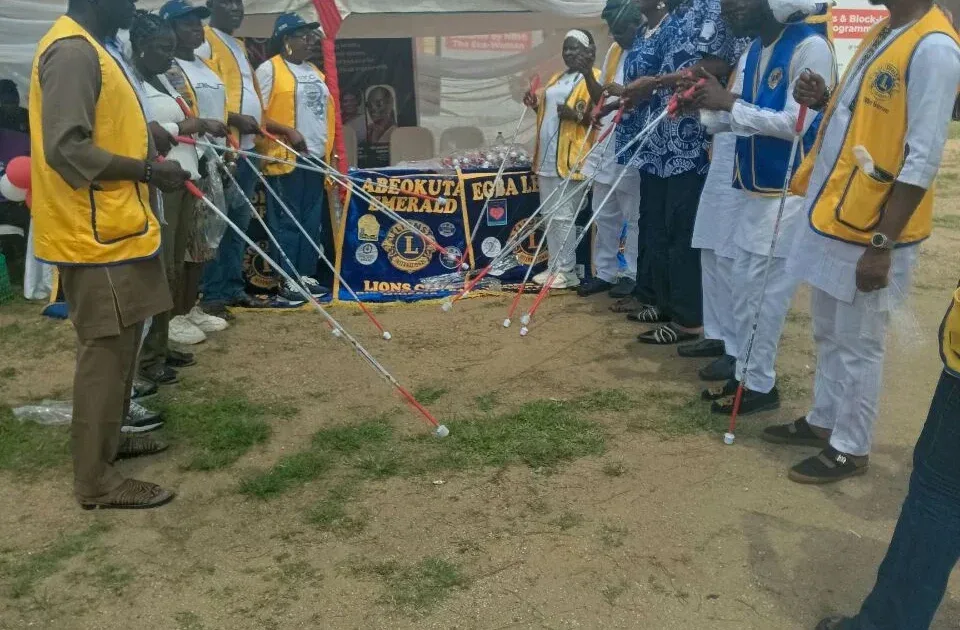
Speaking on the theme, Knights of the Blind in the Modern Era: Championing Mobility, Digital Financial Access and Livelihood Inclusion for Persons with Visual Impairments, he said the greatest challenges facing visually impaired people often stem from inaccessible infrastructure, limited economic opportunities and institutional discrimination.
The legal practitioner urged governments to ensure that persons with disabilities have meaningful representation in decision-making, arguing that their direct participation would help shape policies that address their needs and everyday experiences.
He also called for the full implementation of the Discrimination Against Persons with Disabilities (Prohibition) Act, 2018, signed into law by former President Muhammadu Buhari in January 2019. The law provides protections against disability-based discrimination and establishes accessibility requirements for public infrastructure and services.
Komolafe said distributing white canes would not be enough to guarantee independent movement without safer pedestrian walkways, tactile paving, accessible traffic signals and proper orientation and mobility training.
He appealed to Ogun State Governor Dapo Abiodun to ensure effective implementation of the state’s disability legislation, saying stronger enforcement would improve access to public facilities and enable residents with disabilities to participate more actively in society.
The advocate also raised concerns about barriers to digital financial services, particularly automated teller machines and mobile banking applications that are difficult for visually impaired customers to use independently.
He urged commercial banks to adopt accessible digital platforms, provide appropriate assistive technology and train staff to serve customers with disabilities. According to him, forcing customers to depend on others for routine transactions can put their privacy and financial security at risk.
On economic inclusion, Komolafe called for wider access to vocational training, business financing, employment and sustainable livelihood programmes for visually impaired people. He argued that governments, civil society groups and development partners must do more to address the obstacles that limit their ability to earn a living.
He described the white cane as a symbol of independence rather than pity and encouraged visually impaired Nigerians to continue advocating for equal rights and opportunities.
Earlier, Olatayo Oluwatomisin, chairperson of the Association of the Blind in Abeokuta South, thanked the organisers for supporting the programme and encouraged members to remain confident and pursue their ambitions despite the challenges they face.
Lion Mumeen Akinsanya, chairperson of the Lions Club’s Sight and Vision Programme, said the event was designed to raise awareness of visual impairment and promote greater understanding of the abilities and contributions of affected people.
She explained that the programme included a sensitisation walk and a public lecture, reflecting the organisers’ decision to broaden awareness beyond eye examinations and the distribution of spectacles.
The event renewed calls for practical action to make public spaces, financial services and employment opportunities more accessible, with advocates stressing that inclusion requires both effective laws and consistent implementation.
Reporting by TalkNaijaMedia




Reader Comments (0)
No comments yet. Be the first to share your perspective on this report.