

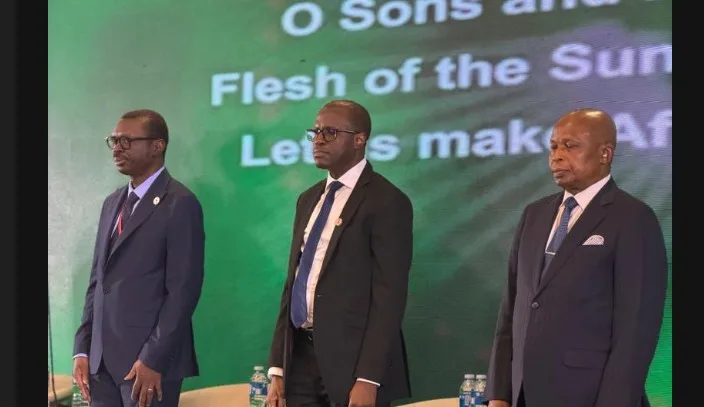
The ICPC chairman, who also leads the Forum’s Interim Steering Council, described asset recovery as an important part of the fight against corruption, noting that funds lost through illicit activities represent resources that could otherwise support development across the continent.
He stressed that African countries must adopt a coordinated and sustained approach to identifying, tracing, freezing, confiscating and recovering illicitly acquired assets. He also called for stronger institutional capacity, improved information sharing and closer cooperation among governments.
Declaring the assembly open, the Attorney-General of the Federation and Minister of Justice, Lateef Fagbemi, described illicit financial flows as a major obstacle to Africa’s economic and social development.
Fagbemi said resources lost through corruption and other illegal financial activities could have been invested in essential services and programmes to improve citizens’ living conditions.
He emphasised that the success of Africa’s anti-corruption commitments should be measured by practical outcomes rather than policy declarations alone.
The Attorney-General also called for effective legal and institutional arrangements to freeze, confiscate and manage recovered assets, while highlighting the need for international cooperation, information exchange and specialised training for practitioners.
The Head of Development Cooperation at the German Embassy, Dr Karen Jansen, also raised concerns about the scale of resources leaving African economies through illicit financial activities.
She said recovering stolen assets was essential to supporting development financing, improving public welfare and rebuilding citizens’ confidence in government institutions. She further highlighted the importance of international partnerships in strengthening the continent’s ability to trace and recover illicit wealth.
Similarly, the Chairperson of the African Union Advisory Board Against Corruption, Kwami Edem Senanu, commended Nigeria for supporting the Common African Position on Asset Recovery (CAPAR).
Senanu said the successful organisation of the inaugural assembly demonstrated the value of continental unity and shared responsibility in addressing corruption-related financial losses.
He urged African governments and relevant institutions to move beyond existing commitments by strengthening cooperation and translating agreed policies into practical measures.
The African Union Commission's Commissioner for Political Affairs, Peace and Security, Ambassador Bankole Adeoye, represented at the opening by a commission official, said the initiative was designed to turn Africa's asset recovery commitments into measurable results.
In the keynote address, Abdullahi Shehu Yibaikwal emphasised that asset recovery procedures must comply with the law and respect due process and the right to a fair hearing.
He noted that transparency and public trust were essential to ensuring that recovered assets were managed legitimately and used for the benefit of affected communities.
Yibaikwal also outlined a four-pillar framework for improving implementation of CAPAR, focusing on identifying illicitly removed assets, recovering and returning them, managing recovered resources effectively, and strengthening cooperation and partnerships.
The African Union adopted CAPAR in February 2020 as a continental policy framework to guide efforts to identify, recover and return assets acquired through corruption and other illicit activities.
The framework was developed to help African countries coordinate their efforts when pursuing assets transferred to foreign jurisdictions and ensure that recovered resources are managed in line with national development priorities.
The scale of the challenge remains significant. Figures cited in the CAPAR policy document estimate that Africa lost as much as $1.8 trillion through illicit financial flows between 1970 and 2008, with annual losses subsequently estimated at up to $150 billion.
A major feature of the Abuja assembly was a high-level panel discussion examining what African countries must do to make CAPAR more effective. The session was moderated by former ICPC Chairman Ekpo Nta.
Participants examined practical challenges affecting asset recovery, including limited institutional capacity, delays in cross-border cooperation, difficulties in sharing information and weaknesses in implementing existing legal frameworks.
The inaugural assembly, convened by the African Union Commission and the ICPC, is also expected to strengthen the Forum's institutional structure and provide a platform for practitioners from across Africa to exchange expertise and develop common approaches.
As African governments intensify efforts to combat corruption and illicit financial flows, participants stressed that the continent must focus on turning policy commitments into concrete results, ensuring recovered assets are properly managed and ultimately benefit citizens.
Reporting by TalkNaijaMedia



Reader Comments (0)
No comments yet. Be the first to share your perspective on this report.