

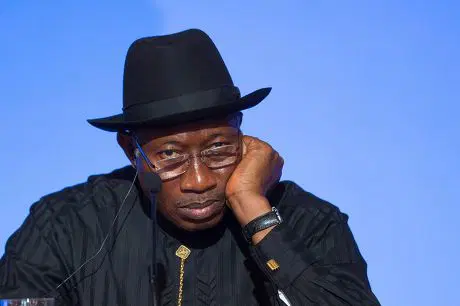
The conference, held at the National Defence College, focused on safeguarding peace and strengthening social cohesion amid growing political competition ahead of the next general elections.
The former president expressed concern over the increasing use of young people as instruments of political violence, stressing that competition for elective positions should not turn political opponents into enemies or create divisions among Nigerians.
He urged political leaders to respect opposing views, tolerate legitimate political differences and recognise the right of every qualified citizen to seek elective office.
Jonathan also raised concerns about conflicting court decisions, particularly rulings by courts of coordinate jurisdiction, warning that such developments could weaken public confidence in the judiciary.
He cautioned that when citizens lose faith in the courts and begin to pursue self-help, the consequences could be dangerous for national stability.
The former president therefore called on political actors and Nigerians to prioritise competence, national interest and public service when choosing leaders rather than allowing ethnic, religious or personal considerations to determine political choices.
Also speaking at the conference, the Chairman of the Independent National Electoral Commission (INEC), Professor Joash Amupitan, warned political parties, candidates and their supporters against engaging in violence, intimidation and inflammatory campaigns.
Amupitan, who was represented by INEC National Commissioner May Agbamuche-Mbu, said political competition naturally involved disagreements and strong debates but insisted that such activities must remain within the boundaries of the law.
He issued a particular warning against harassment, threats or physical attacks on INEC officials and ad hoc election personnel, describing them as public servants carrying out constitutional responsibilities.
The INEC chairman said the commission would work with relevant security agencies to ensure that individuals and groups responsible for promoting or carrying out electoral violence faced the consequences prescribed by law.
Amupitan also identified misinformation, disinformation and the growing use of artificial intelligence to create fabricated videos, images and cloned voices as emerging threats to credible elections.
He warned that misleading digital content could spread rapidly and heighten political tensions if left unchecked.
The commission reaffirmed its commitment to institutional neutrality and the conduct of peaceful, credible and inclusive elections.
In his keynote address, former President of the ECOWAS Commission, Dr Omar Alieu Touray, urged African political leaders to prevent electoral competition from becoming a source of ethnic, religious and regional division.
Touray argued that democracy should provide an opportunity for citizens to debate policies, compare development programmes and hold political leaders accountable rather than encourage exclusion based on identity.
He stressed that disagreeing with an opponent's policies was a legitimate part of democratic participation, while denying people political rights because of their background undermined democratic principles.
In a goodwill message, Minister of Defence, General Christopher Musa (retd.), called on political leaders to demonstrate restraint, maturity and responsibility as political activities intensify ahead of the elections.
Represented by his Special Adviser on Strategic Communication, Mercy Ndi Bala, the minister warned against hate speech, misinformation and divisive narratives capable of worsening existing tensions.
He maintained that national security went beyond military operations and equipment, explaining that public trust, community cooperation and social cohesion were equally important to maintaining stability.
Musa advocated a coordinated approach involving government institutions, traditional and religious leaders, civil society organisations, the media and young people in efforts to strengthen national security.
Earlier, Executive Director of the Goodluck Jonathan Foundation, Ann Iyonu, expressed concern over declining public confidence in Nigeria's electoral process.
She referenced an Afrobarometer survey released on November 11, 2026, which found that only 37 per cent of Nigerians expected the 2027 general elections to be largely free and fair.
The survey also indicated widespread public concerns about possible vote buying, electoral violence and other irregularities during the forthcoming polls.
Iyonu stressed that the credibility of Nigeria's elections carried implications beyond the country's borders because of its economic importance and strategic role in regional peace and security.
According to INEC's published timetable, the presidential and National Assembly elections are scheduled for January 16, 2027, while governorship and State Houses of Assembly elections are expected to take place on February 6, 2027.
Reporting by TalkNaijaMedia


Reader Comments (0)
No comments yet. Be the first to share your perspective on this report.