

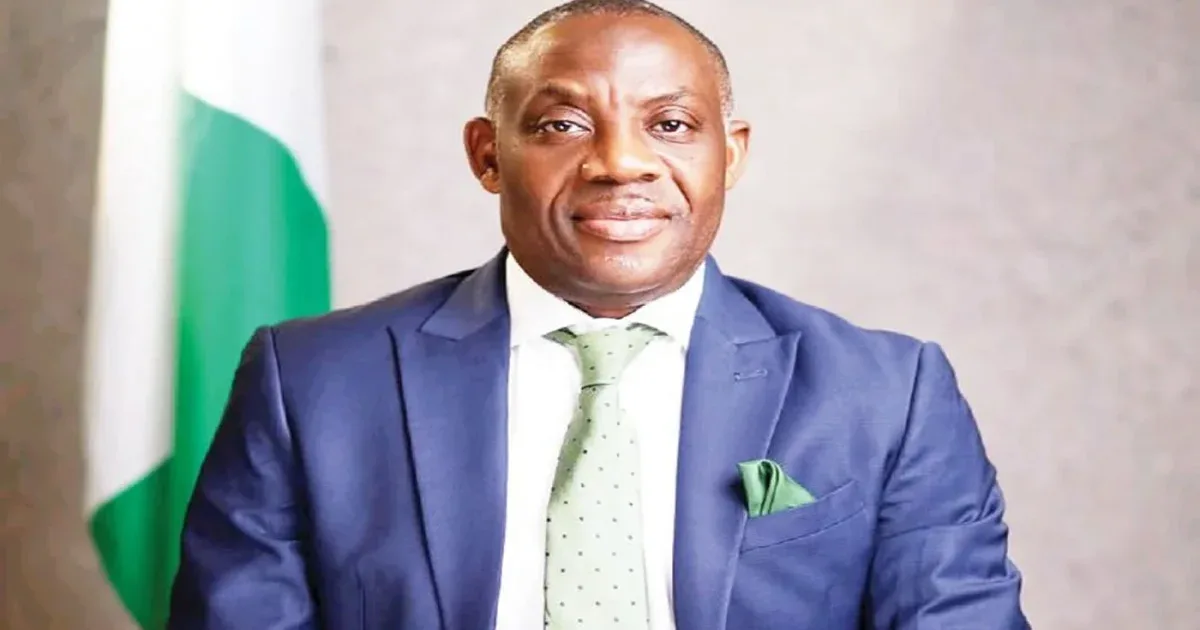
The minister particularly criticised Peter Obi, the presidential candidate of the Nigeria Democratic Congress (NDC), accusing him of misrepresenting aspects of the government’s policies and failing to acknowledge the impact of its interventions.
Responding to Obi’s comments, Alausa said the former Anambra State governor needed to study the relevant legislation before questioning the government’s approach to education financing.
One of the issues addressed by the minister was the four per cent development levy provided for under the Nigeria Tax Act 2025. He explained that the legislation allocates 15 per cent of the proceeds from the levy to the Nigerian Education Loan Fund (NELFUND), which supports the student loan scheme.
Alausa maintained that the arrangement was clearly stated in the law and challenged Obi to examine its provisions before criticising the policy.
The minister also highlighted the government’s investment in tertiary education infrastructure, student financing and efforts to address staffing challenges in universities and other higher institutions.
He argued that the NELFUND initiative had expanded opportunities for students who might otherwise struggle to meet the financial demands of higher education.
According to figures presented by the Federal Government and the APC Presidential Campaign Council, NELFUND had disbursed ₦372.62 billion to students across 319 tertiary institutions. The amount comprises ₦192.89 billion for tuition and institutional fees, while ₦179.73 billion was allocated to students’ upkeep allowances.
Alausa insisted that the administration was more concerned with delivering practical improvements than announcing policies without measurable benefits.
He also disclosed that the Federal Government had developed guidelines aimed at improving governance in universities, particularly the process of appointing vice-chancellors. Committees have reportedly been established to monitor compliance and address concerns such as bullying in schools.
The minister further said the government was monitoring the implementation of recommendations from previous education committees, adding that fresh reviews would not be prioritised until outstanding recommendations had been addressed.
Obi has consistently raised concerns about the state of Nigeria’s education sector, particularly inadequate funding, weak institutional management and the effectiveness of government policies.
In July 2026, he criticised the Federal Government’s proposed changes to the structure separating junior and senior secondary education, arguing that the country’s challenges were more closely connected to poor funding and weak implementation than the existing school structure.
He also questioned the level of funding allocated to education in the 2026 national budget, citing an allocation of 6.17 per cent of total expenditure and comparing it with UNESCO’s recommended benchmark of 15 to 20 per cent.
The Tinubu administration, meanwhile, has continued to present education as a major part of its policy agenda, with programmes covering student loans, technical and vocational training, teacher development, digital learning, basic education and improvements to tertiary institutions.
Alausa maintained that the government’s interventions were already producing benefits for students and institutions, arguing that the administration should be assessed based on the results of its programmes.
His comments come as the APC intensifies its political activities ahead of the 2027 general elections, with the ruling party seeking another term for President Tinubu.

Reader Comments (0)
No comments yet. Be the first to share your perspective on this report.