

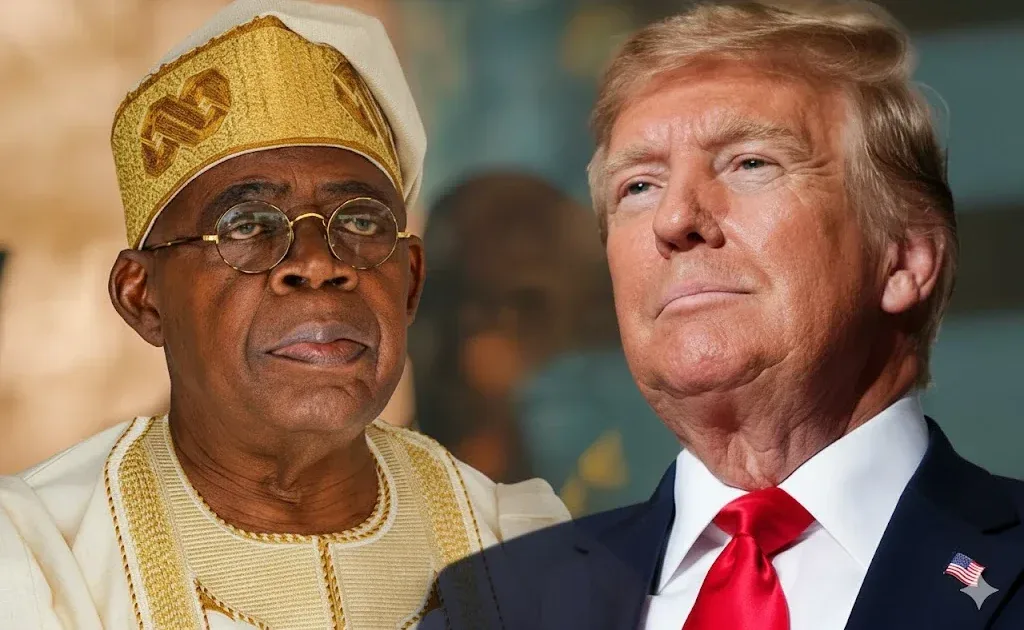
The session will be chaired by Republican Congressman Chris Smith, Chairman of the House Foreign Affairs Subcommittee on Africa, and will review the Nigerian government's response to attacks by extremist groups, the protection of vulnerable communities and possible measures the United States could take to support efforts to tackle the violence.
According to an announcement from Smith's office, the hearing is titled "One Year Later: Assessing Nigeria's Efforts to Protect Christians and Secure the Middle Belt."
The session is scheduled to begin at 11:00 a.m. Washington time, equivalent to 5:00 p.m. in Nigeria, at Room 2172 of the Rayburn House Office Building in Washington, DC. It will also be streamed live.
The hearing will examine allegations of religiously motivated violence by extremist organisations, including Boko Haram and armed groups described in the announcement as Fulani terrorists. Lawmakers are also expected to assess government efforts to prevent attacks, investigate perpetrators and protect Christian and moderate Muslim communities.
The first panel will feature two senior officials from the United States Department of State: Frank Garcia, Assistant Secretary of State for African Affairs, and Riley Barnes, Assistant Secretary of State for Democracy, Human Rights and Labour.
The second panel will include Nina Shea, Senior Fellow and Director of the Centre for Religious Freedom at the Hudson Institute; Ryan Brown, Chief Executive Officer of Open Doors US; and Oge Onubogu, Director and Senior Fellow of the Africa Programme at the Centre for Strategic and International Studies.
Smith's office described the upcoming session as his 14th congressional hearing focused on the persecution of Christians in Nigeria.
The planned hearing comes amid increased scrutiny of Nigeria's security situation by the administration of US President Donald Trump and members of Congress.
In October 2025, Trump redesignated Nigeria as a Country of Particular Concern (CPC) under the International Religious Freedom Act, citing concerns about religious freedom violations and attacks on Christian communities.
The designation attracted strong reactions in Nigeria, with the Federal Government rejecting suggestions that the country's security crisis could be explained primarily as a campaign of religious persecution.
Nigerian authorities have maintained that insecurity is driven by several interconnected factors, including terrorism, banditry, farmer-herder conflicts and other forms of organised criminal violence affecting communities across religious and ethnic lines.
Nigeria was previously designated a Country of Particular Concern in December 2020 during Trump's first administration. The Joe Biden administration removed the country from the list in November 2021.
A CPC designation is made by the US government against countries it determines have engaged in or tolerated particularly severe violations of religious freedom. It can lead to diplomatic engagement and other policy measures under American law.
Security cooperation between Nigeria and the United States has also continued despite disagreements over how the violence should be characterised.
On December 25, 2025, US Africa Command confirmed that American forces had carried out strikes against Islamic State targets in Sokoto State in coordination with Nigerian authorities.
The Nigerian government subsequently confirmed its cooperation with the United States, describing the operation as part of joint efforts to disrupt terrorist networks and prevent attacks.
While Trump publicly linked the strikes to violence against Christians, Nigerian officials stressed that counterterrorism operations were directed at terrorist organisations threatening Nigerians irrespective of religious affiliation.
The November 12 hearing is expected to provide another opportunity for American officials, researchers and advocacy organisations to present their assessments of Nigeria's security challenges and the government's response.
It will also examine possible steps Washington could take to encourage Nigerian authorities to improve the protection of vulnerable communities and strengthen accountability for those responsible for attacks.
However, the hearing's stated focus on violence against Christians and the broader security situation will be important to the debate, particularly given Nigeria's position that terrorism and communal violence affect both Christian and Muslim populations.
The outcome of the congressional session could influence further discussions between Washington and Abuja on religious freedom, security cooperation and the protection of civilians.
Reporting by TalkNaijaMedia



Reader Comments (0)
No comments yet. Be the first to share your perspective on this report.