

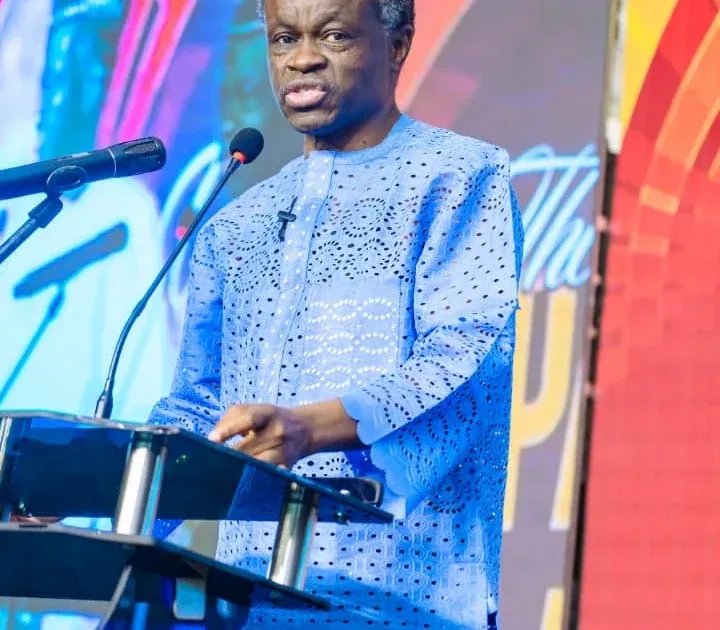
He made the remarks on Thursday in Uyo, Akwa Ibom State, while delivering the keynote address at the maiden Pan-African Awakening Conference organised by the Social Engagement and Reorientation Initiative (SERI).
The scholar argued that African countries must change their approach to development by building indigenous capacity in critical sectors, including healthcare, infrastructure, agriculture, manufacturing and technology.
Using road construction as an example, Lumumba questioned why African countries continued to depend heavily on foreign contractors despite training engineers in their universities.
He also criticised the tendency of African political leaders to seek medical treatment abroad while the continent continues to invest in training doctors, specialists and other healthcare professionals.
According to him, the practice raises questions about the confidence political leaders have in the healthcare institutions and professionals within their own countries.
Lumumba maintained that African governments must demonstrate confidence in their local institutions by improving their facilities, providing adequate funding and allowing indigenous professionals to contribute meaningfully to national development.
He equally expressed concern about Africa's dependence on imported finished products despite its capacity to produce the raw materials required for local manufacturing.
Citing the agricultural and textile industries, he questioned why countries that produce milk and cotton still depend on imported butter, bedsheets and other finished goods.
He also pointed to Africa's leather industry, arguing that locally available materials should be used to develop competitive manufacturing businesses rather than relying heavily on expensive imported fashion products.
The Pan-Africanist urged African countries to study the development experiences of China, India and South Korea, among other nations, while adapting successful ideas to their own economic and cultural realities.
He stressed that foreign knowledge and technology should serve as learning opportunities rather than reasons for abandoning local innovation and expertise.
Lumumba further disclosed that 22 African and Caribbean countries had come together to establish a common platform aimed at challenging what he described as the colonial mindset that continues to influence leadership and development across the continent.
He identified Nigeria as a country that should take a leading role in the movement, citing its population, human capital and natural resources as important advantages.
Addressing Nigerian youths, he urged them to move beyond ethnic and religious divisions and embrace national identity, citizenship and collective responsibility as foundations for building a stronger country.
He maintained that Nigerians have the human capacity to make significant contributions to national development, pointing to the achievements of Nigerian professionals and entrepreneurs in different parts of the world.
Lumumba also commended the Akwa Ibom State Government for its investment in infrastructure, particularly road construction, describing the state's development efforts as an example of what African governments could achieve through commitment and effective resource utilisation.
He, however, argued that Nigeria should set more ambitious economic development targets, given its enormous economic potential and resource base.
Earlier, the Founder and Executive Director of SERI, Engineer Ekemini Amos, explained that the organisation was established to develop a new generation of Nigerian youths united by a shared commitment to national and continental progress, irrespective of ethnic or religious backgrounds.
Amos described the conference as a renewed effort to revive the Pan-African ideals championed by prominent African leaders, including Kwame Nkrumah, Thomas Sankara and Murtala Muhammed.
He called on individuals, organisations and other stakeholders to support SERI's activities, particularly its mentorship and youth development initiatives.
He also highlighted two programmes established by the organisation: the Youth Membership Hub, designed for young people aged 18 to 35, and the Nation Builders Club, targeted at secondary school students aged 10 to 18.
The major highlight of the conference was the unveiling of the SERI Mentorship Programme, the organisation's flagship initiative. Lumumba, who serves as its Chief Adviser and Grand Patron, performed the unveiling.
In recognition of their contributions and participation, Lumumba and his wife were also honoured with the titles Akwa Ujo Africa, meaning the biggest voice in Africa, and Mkpouto Africa, meaning the jewel of Africa, respectively.
The conference reinforced calls for greater African self-reliance, stronger local institutions and investment in indigenous knowledge as essential steps towards reducing external dependence and accelerating sustainable development across the continent.
Reporting by TalkNaijaMedia




Reader Comments (0)
No comments yet. Be the first to share your perspective on this report.