

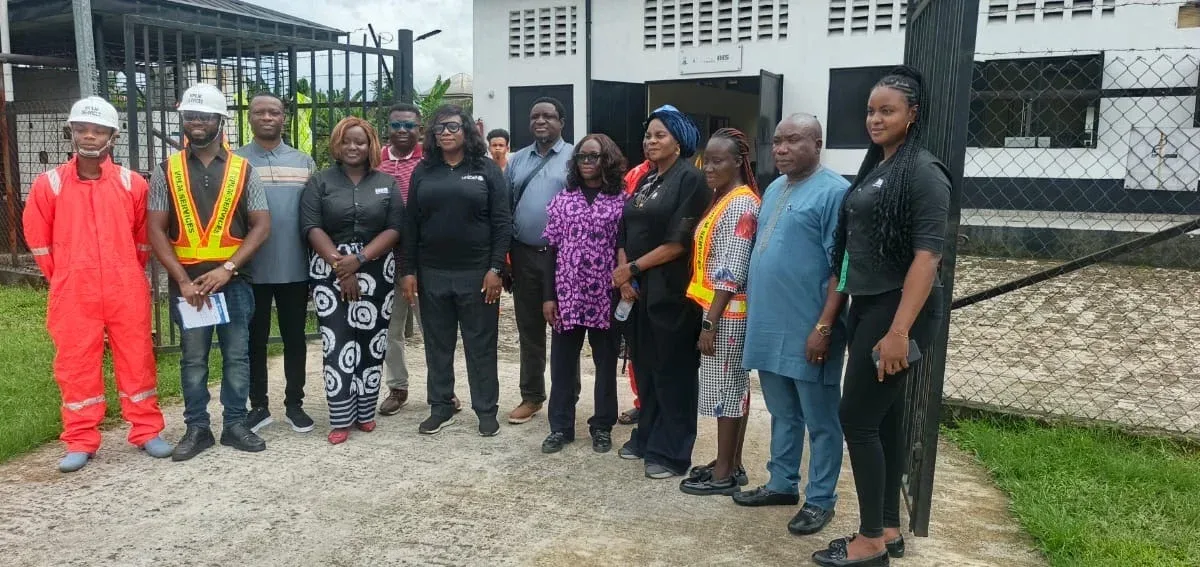
The oxygen plant was established and commissioned in 2023 through a partnership involving the Federal Ministry of Health, the Canadian Government, IHS Towers and UNICEF. The project was designed to improve access to medical oxygen following shortages exposed during the COVID-19 pandemic.
Leading the inspection were Dr Ifeyinwa Anyanyo, a UNICEF health specialist and Head of its Enugu Field Office, and Hajia Fatima Haruna Ibrahim, Associate Director of Sustainability at IHS Nigeria.
Anyanyo commended the Rivers State Government for keeping the facility operational since its establishment. She said the inspection provided an opportunity to assess its performance, understand the challenges facing operators and explore ways to increase production capacity.
She explained that expanding access to medical oxygen remained a major priority, particularly because oxygen is essential in treating patients with severe respiratory illnesses and other medical emergencies.
According to her, UNICEF and IHS Towers would review the findings from the visit and engage the government and other partners on possible measures to strengthen the facility and ensure its long-term sustainability.
The Chief Medical Director of the Rivers State Hospitals Management Board, Dr Bright Ogbonda, also praised UNICEF, IHS Towers and the other partners for supporting the project, describing the plant as an important source of medical oxygen for healthcare facilities in Rivers State and neighbouring states, including Bayelsa and Imo.
However, Ogbonda identified unreliable electricity supply as a major challenge affecting the plant’s performance. He appealed to the project partners to support the installation of solar power and improve the facility’s connection to the national electricity grid.
He said a more dependable power supply would help the plant increase production, reduce operating costs and improve its ability to meet the oxygen needs of hospitals across the region.
Ogbonda also encouraged healthcare facilities to obtain their medical oxygen from the plant, noting that it offered a more affordable option compared with some alternative suppliers.
The plant operator, Engineer Epelle ThankGod, said the facility had an installed production capacity of 18 cubic metres of oxygen per hour and could produce up to 60 cylinders of 40 litres each daily under suitable operating conditions.
However, he said inconsistent electricity supply had significantly reduced output, with the plant currently producing about 20 cylinders of 40 litres per day.
The latest inspection is expected to inform discussions among the partners on addressing the power supply challenges, improving production and expanding access to medical oxygen for patients in Rivers State and surrounding areas.
Reporting by TalkNaijaMedia





Reader Comments (0)
No comments yet. Be the first to share your perspective on this report.