

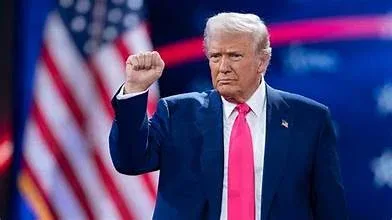
The US president, however, made it clear that the possibility of further military action had not been completely ruled out, stressing that Iran would have to agree to what he described as a strong deal.
Trump said the decision would depend on whether Tehran accepted the terms being proposed by Washington. He also maintained that the United States had already inflicted significant damage on Iran through previous military operations.
His comments followed weeks of warnings that the US could resume strikes after the November 3 midterm elections. The conflict, which began with US and Israeli strikes against Iran in late February, has remained a major source of tension across the Middle East.
Trump is scheduled to meet Qatar’s Prime Minister and Foreign Minister, Sheikh Mohammed bin Abdulrahman Al Thani, at the White House on Monday, November 9. The meeting is expected to focus on efforts to secure a ceasefire and restart negotiations over Iran’s nuclear programme and the reopening of the Strait of Hormuz.
Qatar has played a central role in facilitating indirect discussions between the two countries, working alongside other regional powers, including Pakistan, Saudi Arabia, Egypt and Turkey.
The diplomatic push comes amid uncertainty over the future of negotiations following the Republican Party’s poor performance in the US midterm elections, in which Democrats secured majorities in both chambers of Congress.
Iranian Foreign Minister Abbas Araghchi said on Sunday that mediation efforts had experienced a pause in recent days because of the political developments in the United States.
Speaking on Iranian state television, Araghchi said mediators had temporarily stopped travelling as parties assessed the implications of the election results. He added that Tehran would wait to see how Washington responded before deciding how to proceed.
Araghchi also reiterated Iran’s position in a message posted on X, saying the country’s proposal for a two-day arrangement to address the crisis remained available. The proposal includes demands for an end to hostilities, measures to ease the economic pressure on Iran and arrangements to reopen the Strait of Hormuz.
Despite the diplomatic uncertainty, Qatar has continued engaging with both sides. Reports indicate that mediators and officials are discussing a proposed framework involving steps to reduce tensions, address the naval restrictions and return to nuclear negotiations.
Trump has also argued that economic pressure is weakening Iran’s ability to resist an agreement. During his CNN interview, he claimed that inflation in the country had reached 301 per cent and suggested that the economic situation would push Iranian leaders towards accepting Washington’s demands.
However, Iran’s Statistical Center reported that year-on-year inflation stood at 89.8 per cent in September 2026, making Trump's 301 per cent figure inconsistent with the official inflation measure cited in the available data.
Meanwhile, tensions remain around the Strait of Hormuz, a strategic shipping route through which a significant share of the world's energy supplies passes.
Iran has continued restricting maritime traffic through the waterway, while the United States maintains restrictions on Iranian ports. The standoff has disrupted shipping and raised concerns about the wider impact on global energy markets.
Reports also emerged of explosions on Qeshm Island in southern Iran over the weekend. Iranian media reported the incidents, but their cause remained unclear, with no confirmed evidence establishing that they were fresh US attacks.
Although large-scale fighting has largely subsided, the continued maritime restrictions, competing demands and uncertainty surrounding negotiations mean that the possibility of renewed confrontation remains.
Trump’s latest comments suggest a preference for a diplomatic settlement, but the outcome will depend on whether Washington and Tehran can bridge their differences over security, sanctions, nuclear activities and control of the Strait of Hormuz.
Reporting by TalkNaijaMedia




Reader Comments (0)
No comments yet. Be the first to share your perspective on this report.