

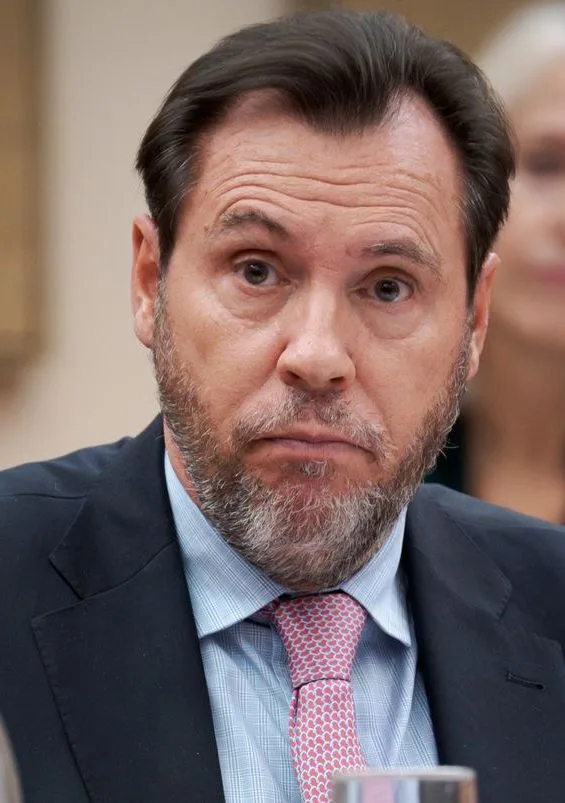
Although Puente was not identified as the driver of either train, he accepted political responsibility as the minister overseeing the country's transport system. He explained that a minister could not remain in office after two accidents of such severity within less than a year, regardless of whether he bore direct responsibility for them.
He also announced that he would not seek a place on the Socialist Workers' Party's candidate list for the forthcoming November 29 general election.
Puente's decision attracted attention because voluntary resignation by a senior political office holder following a major public disaster is often viewed as an expression of institutional accountability. Rather than wait for his political opponents to force his departure, he said his decision was based on political dignity, consistency and consideration for the victims.
Spanish Prime Minister Pedro Sánchez accepted the resignation and praised Puente for addressing the crisis, providing explanations and proposing measures before stepping aside. Sánchez said the decision demonstrated respect for the victims and could help restore public confidence in the country's rail system and political institutions.
Puente's resignation was formally effected on November 4, 2026, when Spain published the royal decree ending his tenure. Deputy Prime Minister Carlos Cuerpo was subsequently assigned temporary responsibility for the transport ministry until the November 29 election.
The development offers an opportunity to examine the relationship between political leadership and public accountability in Nigeria and other African countries.
Across the continent, critics have repeatedly questioned why public officials often remain in office after major failures in the sectors under their supervision. In many cases, government responses to public disasters include condolences, announcements of investigations and the establishment of committees, while questions about the political responsibility of those in charge remain unresolved.
The argument for voluntary resignation is not necessarily that every public official should leave office whenever an accident or policy failure occurs. Rather, it is that leaders should be prepared to examine their responsibility, acknowledge institutional failures and consider whether remaining in office serves the public interest.
Nigeria's political history provides examples of ministers who were removed during cabinet reshuffles rather than voluntarily stepping aside.
On October 23, 2024, President Bola Tinubu approved the removal of five ministers as part of a restructuring of the Federal Executive Council. Those affected included former Education Minister Tahir Mamman, former Women Affairs Minister Uju Kennedy-Ohanenye, former Tourism Minister Lola Ade-John and former Youth Development Minister Jamila Bio Ibrahim. The government's announcement also listed Abdullahi Muhammad Gwarzo, then Minister of State for Housing and Urban Development.
Earlier, former President Muhammadu Buhari removed Sabo Nanono as Minister of Agriculture and Saleh Mamman as Minister of Power in September 2021. Their departures formed part of a cabinet reshuffle announced by the administration.
Another notable case was that of former Humanitarian Affairs Minister Betta Edu, who was suspended in January 2024 following public controversy surrounding an alleged ₦585 million payment into a private account. Her suspension was not a voluntary resignation, and the subsequent cabinet restructuring in October 2024 brought an end to her ministerial tenure.
These examples demonstrate that Nigerian presidents have exercised their authority to remove ministers, but they also raise a broader question about the culture of accountability within public institutions: should responsibility depend mainly on the decision of the appointing authority, or should office holders also be willing to take the initiative when serious failures occur under their watch?
The distinction between political responsibility and criminal liability is particularly important. A minister's resignation does not automatically establish that the individual committed an offence or was personally responsible for every operational failure within the ministry. Equally, the absence of criminal wrongdoing does not necessarily remove the political responsibility that comes with overseeing a public institution.
Puente's case illustrates this distinction. His resignation followed the disasters, but it should not be interpreted as a judicial finding that he caused either accident. Investigations into the circumstances surrounding the rail disasters remain separate from the political decision to leave office.
Institutional accountability also requires more than the resignation of one official. Effective oversight, independent investigations, transparent reporting, enforcement of regulations and appropriate consequences for proven misconduct are all necessary to prevent similar failures.
Political appointments should ultimately be understood as responsibilities entrusted by the public, not simply rewards granted by political leaders. Loyalty to an appointing authority should not take precedence over the interests of citizens who depend on public institutions for safety, education, electricity, transportation and other essential services.
Theodore Roosevelt, the 26th President of the United States, once emphasised the importance of public integrity and personal dignity in building a sound political system. The principle remains relevant: public office demands more than occupying a position; it requires accountability for the responsibilities attached to it.
Puente's departure may not, by itself, solve Spain's railway challenges, but it has renewed an important debate about leadership and public trust. For Nigeria and other African countries, the lesson is not that resignation should become an automatic response to every failure, but that public officials must be willing to accept responsibility, submit to scrutiny and place institutional credibility above personal political survival.
Until accountability becomes a stronger expectation of public service, citizens will continue to question why some office holders remain in positions of authority even when confidence in the institutions they oversee has been seriously weakened.
Reporting by TalkNaijaMedia



Reader Comments (0)
No comments yet. Be the first to share your perspective on this report.