

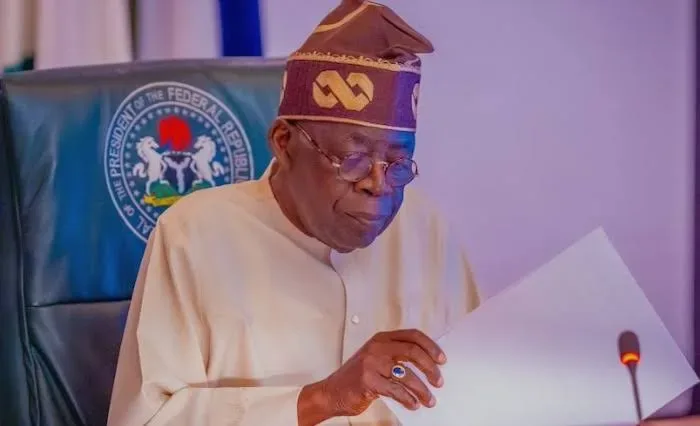
The request was presented during Wednesday’s plenary and referred to the Senate Committee on Local and Foreign Debts for detailed consideration. Senate President Godswill Akpabio directed the committee to examine the proposal and submit its report as soon as practicable.
The proposed borrowing is intended to help finance the country’s 2026 budget deficit, estimated at ₦31.4tn, and forms part of the government’s wider borrowing plan approved in the 2026 Appropriation Act.
Tinubu’s letter, dated October 26, 2026, seeks approval to raise $7.707bn, or ₦10.79tn, using the exchange rate of ₦1,400 to the dollar adopted in the budget. The amount represents the external borrowing component of the ₦29.2tn borrowing provision in the 2026 budget, which also includes ₦18.4tn in domestic borrowing.
The President said the funds would be used to support projects and programmes captured in the budget, particularly in defence and security, transportation, agriculture, electricity, education and healthcare.
The President outlined several possible sources of financing, including Eurobond issuance, concessional and commercial loans from multilateral and bilateral institutions, facilities from the International Monetary Fund, syndicated loans and other international financing arrangements.
However, Tinubu indicated that the government would give particular attention to Eurobonds, arguing that they could be concluded more quickly and potentially raise substantial funds. He acknowledged that the final interest rates, repayment periods and other conditions would depend on market conditions at the time the transactions are completed.
He said the Federal Ministry of Finance and the Debt Management Office would work together to secure favourable terms and avoid borrowing arrangements that could place unnecessary pressure on the country’s finances.
Tinubu also told lawmakers that the proceeds would be received by the Central Bank of Nigeria on behalf of the Federal Government and could contribute to the country’s external reserves. He argued that stronger reserves would help improve Nigeria’s external position and support the naira.
The request is being considered against the background of concerns about Nigeria’s rising public debt and the growing cost of servicing government loans. While the administration maintains that borrowing is necessary to fund the budget and critical development projects, questions remain about the country’s capacity to repay its obligations and the economic returns expected from the borrowed funds.
Senate President Godswill Akpabio stressed that the government must negotiate carefully and ensure that any eventual borrowing agreement offers favourable conditions for Nigeria. He cautioned against accepting financing arrangements without properly considering their costs and repayment implications.
The latest proposal also replaces an earlier external borrowing request involving $20.52bn and €1.05bn, which Tinubu had submitted under the 2026–2027 Supplementary External Borrowing Plan. The revised request provides a more specific financing proposal for the external borrowing component of the 2026 budget.
The Senate committee is expected to examine the proposal before the upper chamber takes a final decision. The referral does not amount to approval of the loan, as the request must still pass through the legislative review process.
Reporting by TalkNaijaMedia


Reader Comments (0)
No comments yet. Be the first to share your perspective on this report.