

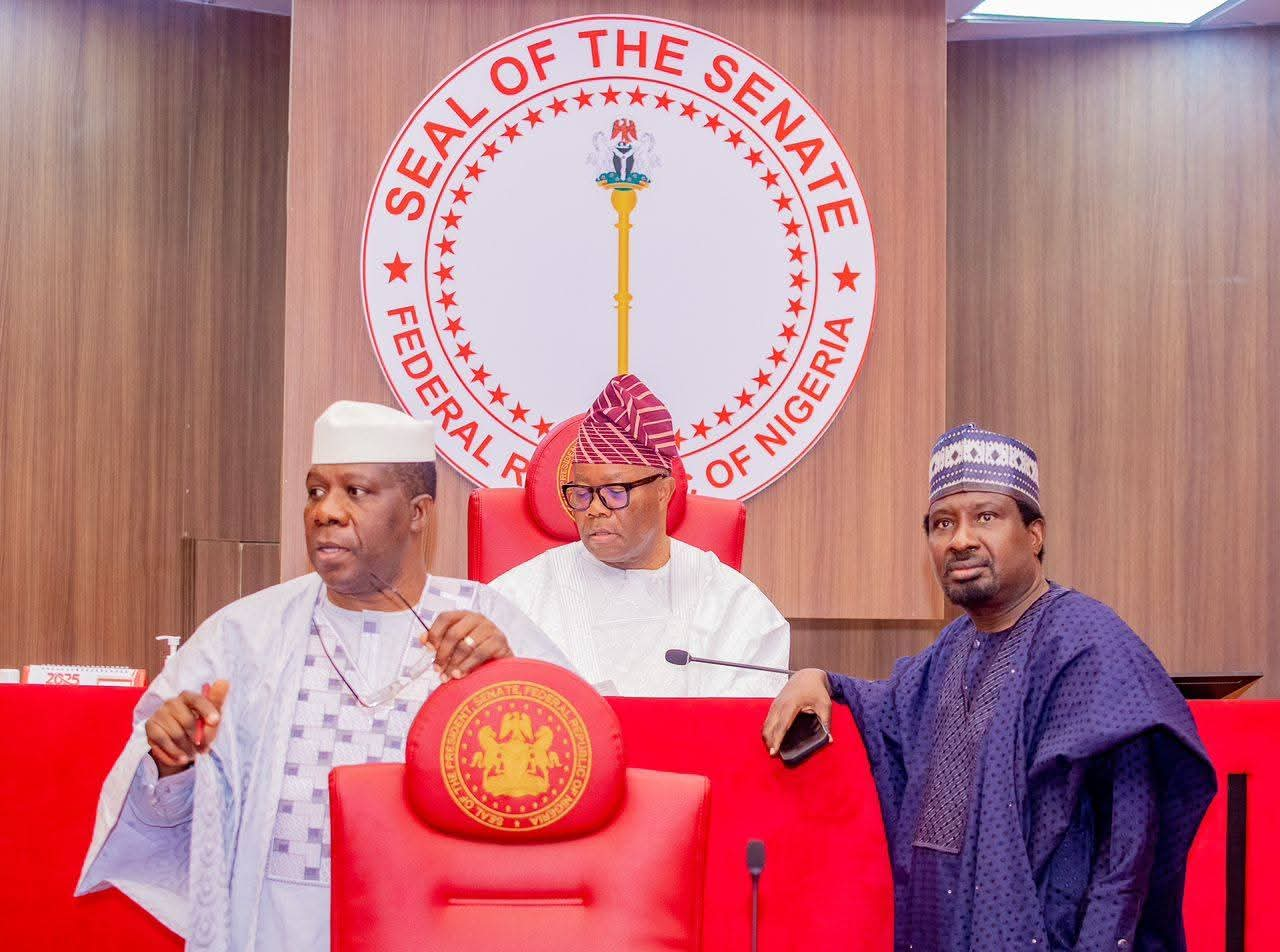
The resolutions were adopted on Tuesday, November 17, 2026, following a motion sponsored by Senator Abdul Ningi, representing Bauchi Central, on the growing incidence of political intolerance and attacks on political leaders and their supporters.
Lawmakers expressed concern over the reported attack on Tinubu’s convoy on Friday, November 13, shortly after the President attended Jumu’ah prayers at the Shehu Shagari Central Mosque in Garki, Abuja.
According to the motion, the departing convoy was allegedly pelted with stones and other objects, resulting in damage to vehicles and injuries to security personnel.
Ningi also drew attention to other reported incidents involving political figures and their supporters, including an attack on Nigeria Democratic Congress (NDC) presidential candidate Peter Obi and other stakeholders during a political gathering in Edo State.
He further cited the disruption of a political procession involving NDC and Obidient Movement supporters in Delta State on November 7, which reportedly left one person dead and five others injured. An alleged attack on the convoy of African Democratic Congress (ADC) presidential candidate and former Vice-President Atiku Abubakar was also raised during the debate.
The senator warned that repeated attacks on political leaders and supporters could weaken public confidence in the electoral process, discourage political participation and threaten the peaceful conduct of the 2027 elections.
Following deliberations, the Senate called on the Inspector-General of Police, Olatunji Disu, and other security agencies to strengthen protection for political leaders, candidates, supporters and campaign gatherings across the country.
It also directed security agencies to conduct impartial investigations into the reported incidents, identify those responsible and prosecute anyone found culpable, including alleged sponsors, in accordance with the law.
The lawmakers urged INEC to apply relevant electoral provisions against candidates linked to political violence. They also appealed to state governors to provide equal access to public facilities for political parties organising rallies and campaigns.
To strengthen oversight, the Senate mandated its Committees on National Security and Intelligence, Police Affairs, and INEC to engage relevant institutions and submit a report within one week on measures to prevent political violence and protect the 2027 elections.
Senate President Godswill Akpabio condemned the attack on Tinubu’s convoy and commended the President for forgiving those reportedly apprehended in connection with the incident.
Akpabio described the alleged attack as a serious offence, using the term treasonable during his remarks. His comments followed reports that the President had chosen to forgive those involved.
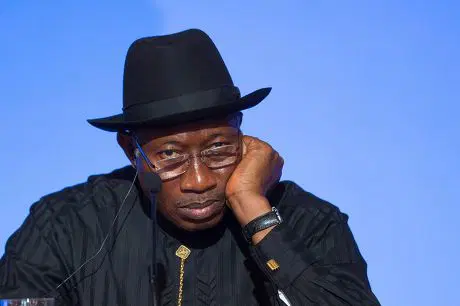
Meanwhile, former President Goodluck Jonathan has separately warned that political intolerance, thuggery and the deliberate promotion of ethnic and religious divisions could threaten Nigeria’s stability ahead of the 2027 elections.
Jonathan spoke on Tuesday in Abuja at the third National Peace and Awareness Conference organised by the Goodluck Jonathan Foundation. The 2026 edition was themed, “Safeguarding Trust and Strengthening Social Cohesion in a Politically Competitive Environment.”
The former President expressed concern that political actors were increasingly treating opponents as enemies rather than legitimate competitors. He compared the growing hostility among political groups to rival cult organisations and warned against using young people as instruments of electoral violence.
Jonathan said political competition should not be reduced to intimidation and attacks, stressing that every Nigerian should have the opportunity to contest elections, regardless of political affiliation.
He also raised concerns about conflicting judicial pronouncements in electoral disputes, warning that politicians seeking favourable court decisions could undermine public confidence in the judiciary.
He called on the National Judicial Council to examine the situation and promote consistency in judicial proceedings, cautioning that citizens who lose confidence in the courts could resort to self-help.
Using football as an analogy, Jonathan described political parties as competing teams, INEC as the referee and the judiciary as the Video Assistant Referee. He urged citizens, traditional rulers and religious leaders to demand fairness and reject political excesses.
The former President also warned against the exploitation of ethnic and religious differences for electoral advantage, saying deliberate attempts to promote rivalry could endanger national unity.
He called for reforms in political recruitment and urged Nigerians to prioritise competence, national interest and public service when choosing leaders.
Earlier, the Executive Director of the Goodluck Jonathan Foundation, Ann Iyonu, called for urgent action to rebuild public confidence in democratic institutions and strengthen social cohesion.
Iyonu identified political realignments, insecurity, economic pressures and declining institutional trust as factors contributing to uncertainty ahead of the 2027 elections.
She cited an Afrobarometer survey released on November 11, 2026, which found that only 37 per cent of Nigerians expected the next general elections to be largely free and fair, while 48 per cent believed they would be neither free nor fair.
The survey also found that 79 per cent of respondents considered political violence likely during the elections, while 89 per cent anticipated vote-buying.
Despite these concerns, 64 per cent of Nigerians said they were likely to vote in 2027, including 48 per cent who described themselves as very likely to participate. Among potential voters, 92 per cent said they intended to support a presidential candidate whose policies they agreed with.
Iyonu warned that a disputed or violence-marred election in Nigeria could have consequences beyond the country's borders, particularly at a time when several West African countries are facing political instability and democratic challenges.
She said the conference brought together political leaders, security experts, civil society organisations, development partners, traditional rulers and religious leaders to develop practical approaches to peaceful elections.
Both the Senate's resolutions and Jonathan's intervention come amid growing concerns about political violence, public trust and the conduct of the 2027 general elections. Their calls underscore the importance of protecting political participation, strengthening democratic institutions and ensuring that disagreements are resolved through lawful processes.
Reporting by TalkNaijaMedia



Reader Comments (0)
No comments yet. Be the first to share your perspective on this report.