

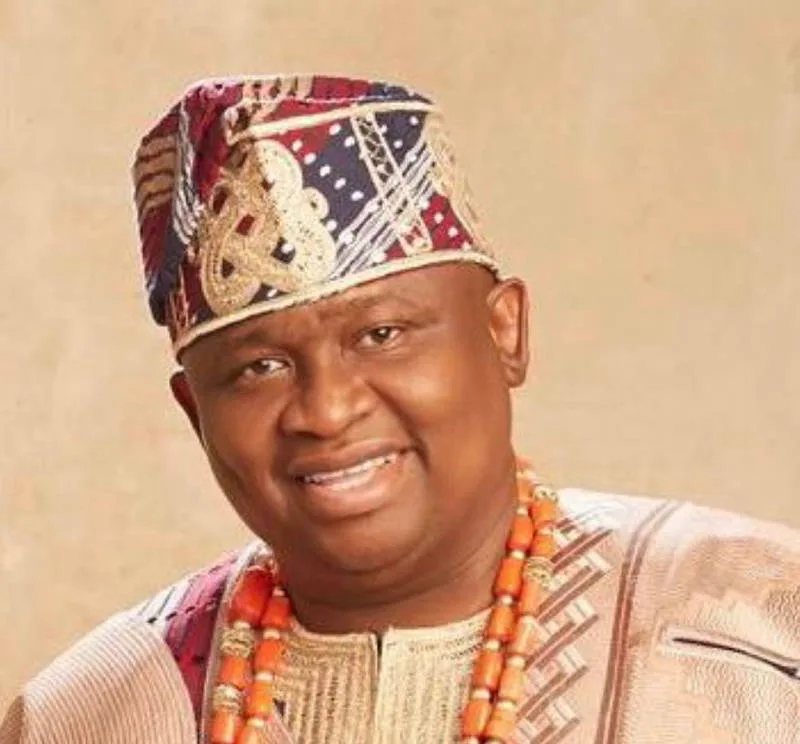
Senator Solomon Olamilekan Adeola, representing Ogun West in the National Assembly, is attracting attention in discussions surrounding the 2027 Ogun State governorship election, with supporters pointing to his legislative experience, infrastructure projects and empowerment initiatives as key parts of his political profile.
Adeola, a member of the All Progressives Congress (APC), is widely known by the nickname Yayi. The campaign slogan “Yayi ni, Yayi ni jọ̀ọ́” has become part of the political messaging associated with his growing visibility in the state.
However, beyond campaign enthusiasm and public endorsements, questions remain about how his record in the Senate would translate into a statewide development programme if he seeks and secures the governorship.
Adeola’s political career includes service in the Lagos State House of Assembly, the House of Representatives and the Senate. He also chairs the Senate Committee on Appropriations, a position that places him within the legislative process for examining and approving federal spending plans.
His supporters regard this experience as relevant to discussions about public finance, infrastructure and development. Nevertheless, the responsibilities of a senator differ from those of a governor, who must oversee a state’s budget, civil service, public institutions and implementation of policies across the state.
One of the principal arguments advanced by Adeola’s supporters concerns the number of constituency projects they say he has facilitated since entering the Senate.
Speaking at the Iganmode Cultural Festival in Ota in December 2025, Adeola said he had facilitated approximately 300 infrastructure projects in Ogun West and other parts of Ogun State. Reports of his remarks listed roads, school buildings, primary healthcare centres, markets, town halls, information and communication technology centres, libraries, intensive care units and police stations among the projects.
According to figures attributed to the senator, the projects included more than 115 road construction and rehabilitation interventions, 30 school buildings, 32 primary healthcare centres, 25 modern markets, 13 town halls, 10 ICT centres, two libraries, two intensive care units and eight police stations.
He also cited the donation and installation of more than 200 electricity transformers, alongside solar streetlighting projects and interventions involving major electricity infrastructure affecting about 100 communities.
These figures form an important part of the case his supporters make for his political ambition. However, the figures originate from claims attributed to Adeola and should not automatically be interpreted as an independently audited record of completed projects. A comprehensive assessment would require details on project locations, funding, completion status, commissioning dates and the respective roles of federal and state authorities.
Road infrastructure is another prominent feature of the senator’s reported interventions. Projects cited by his supporters include roads linking farming communities with markets and settlements around Ilaro, Ayetoro, Imeko-Afon and other parts of Ogun West.
Such infrastructure can be important to rural commerce, agricultural transportation and access to public services. Its long-term value, however, depends on construction quality, maintenance and the extent to which communities can use the roads reliably.
Adeola’s supporters have also highlighted his empowerment programmes, particularly cash grants for traders and assistance for farmers and artisans.
The initiatives associated with his political network include the Oloja Yayi Market Support Fund, which has reportedly provided grants to traders in Ogun West and other parts of the state. Other interventions cited in reports include agricultural machinery and farm inputs, as well as equipment such as sewing machines, grinding machines and vehicles intended to support small businesses.
The senator has also been associated with scholarship and bursary programmes for tertiary students, vocational training and the provision of ICT facilities. Supporters say these measures are intended to help beneficiaries sustain their livelihoods, improve access to education and acquire skills that can support employment.
The scale and impact of these programmes would be clearer with publicly available beneficiary records, funding details and follow-up assessments showing whether recipients have been able to maintain or expand their businesses.
Education is another area featured in the account of Adeola’s constituency activities. His supporters have pointed to classroom construction, ICT centres and scholarship assistance as efforts to improve educational opportunities.
They have also credited him with supporting the transition of the Federal Polytechnic, Ilaro, into a federal university of technology. The precise extent of his role in that process should be distinguished from the formal decisions and actions of the Federal Government and relevant education authorities.
In healthcare, the reported interventions include primary healthcare facilities, medical outreaches and support for vulnerable residents. The practical effect of such projects depends not only on construction but also on staffing, equipment, medicines, maintenance and reliable funding.
Adeola’s supporters have further cited interventions in electricity infrastructure, including transformers and solar streetlights, as evidence of efforts to address challenges affecting households and businesses. Independent records of installations, functionality and the number of communities benefiting would help establish the scale of the impact.
As discussions about the 2027 governorship election develop, Adeola’s political challenge will extend beyond demonstrating what he has facilitated as a federal legislator. Governing Ogun State would require a clear programme covering infrastructure maintenance, industrial development, agriculture, healthcare, education, job creation, security and public financial management.
The state also contains communities with different priorities across Ogun West, Ogun Central and Ogun East. Any statewide programme would need to explain how resources and public services would be distributed, how projects would be selected and funded, and how residents could hold the administration accountable for its commitments.
The slogan “Yayi ni, Yayi ni jọ̀ọ́” may help define Adeola’s public identity, but its political significance will ultimately depend on the support he can demonstrate and the substance of the proposals he presents to voters.
For now, the infrastructure and empowerment figures promoted by his supporters provide one part of the discussion about his political record. Independent verification of those claims, alongside a detailed policy agenda for the entire state, would give residents a stronger basis for assessing his governorship ambition.
Reporting by TalkNaijaMedia



Reader Comments (0)
No comments yet. Be the first to share your perspective on this report.