

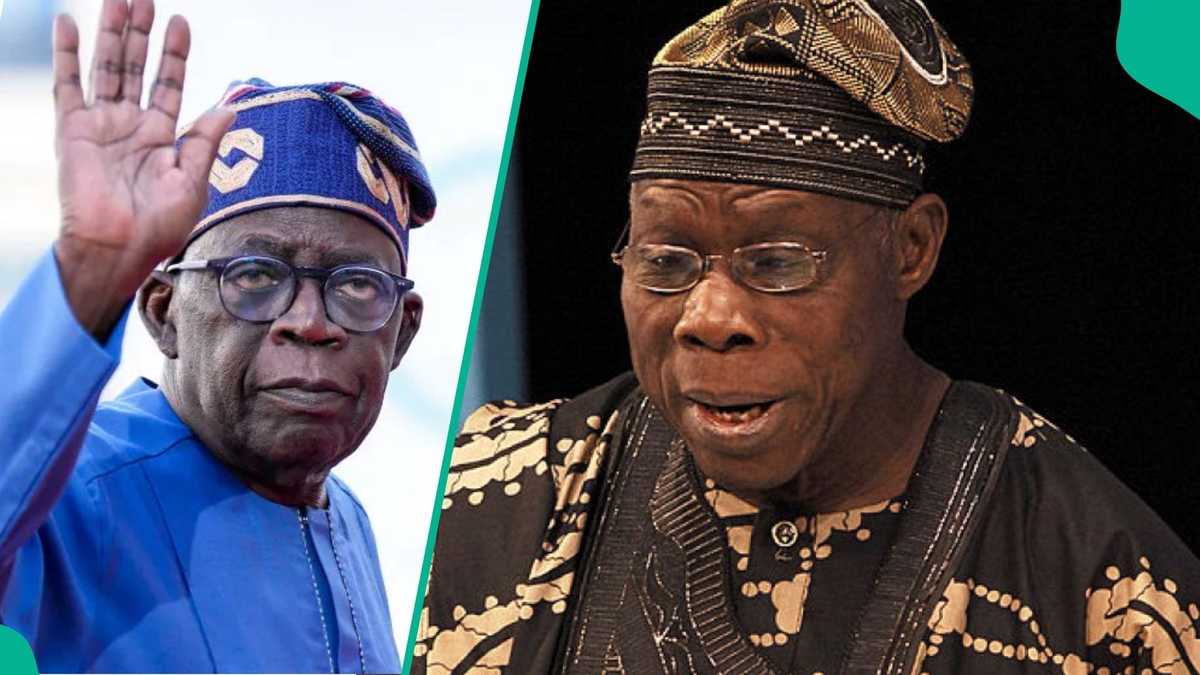
The former President made the remarks on Friday, October 30, 2026, while speaking at the third edition of the Ajíbọ̀ṣìn Symposium held at the Olusegun Obasanjo Presidential Library in Abeokuta, Ogun State.
The event, themed Leveraging Artificial Intelligence to Solve Grassroots Problems and Accelerate National Development, brought together stakeholders to discuss technology, governance and national development.
Reacting to Tinubu’s earlier defence of the Federal Government’s borrowing strategy, Obasanjo said the consequences of accumulating debt could extend beyond the present generation.
He declared that while leprosy affects an individual, national debt could place financial obligations on generations yet unborn.
The former President’s comments followed Tinubu’s statement in April 2026, when the President defended his administration’s borrowing policy, saying Nigeria would continue to take loans when necessary, provided there were efforts to repay them.
Tinubu had maintained that borrowing was not inherently harmful and could support national development if properly managed.
The President has also defended fresh external loans, arguing that the funds would support major infrastructure projects and help Nigeria achieve its ambition of building a $1 trillion economy by 2030.
In a separate essay published on October 30, Tinubu maintained that the country should focus on the value generated from borrowed funds rather than the amount borrowed, identifying highways, electricity infrastructure and port development among the priority areas for investment.
Obasanjo also questioned the economic leadership of the country, expressing concern about whether those in positions of authority understand the challenges facing ordinary Nigerians and possess the capacity to address them.
He challenged political leaders to demonstrate how their knowledge and decisions were translating into better living conditions for citizens.
The former President further criticised Nigeria’s dependence on international financial institutions, particularly the World Bank and the International Monetary Fund (IMF), arguing that their policies and recommendations were not necessarily designed around the realities of African countries.
According to Obasanjo, both institutions were established before many African countries gained independence, raising questions about the extent to which their policies reflect the continent's development priorities.
He cited the agricultural sector as an example, recalling how Nigeria was advised against subsidising agriculture despite the substantial financial support farmers receive from governments in developed countries.
Obasanjo also cautioned against relying excessively on economic advice from foreign-trained experts without considering Nigeria's unique circumstances and development needs.
The former President further recalled the significant changes in the value of the naira over the decades, noting that when he established his farm 47 years ago, one naira exchanged for approximately $1.85.
He questioned the country's economic management over the years, contrasting the historical exchange rate with the much weaker value of the naira today.
His comments come amid an ongoing national debate over Nigeria's growing public debt, borrowing requirements and the increasing proportion of government revenue allocated to debt servicing.
While Tinubu maintains that borrowing can support economic transformation when directed towards productive investments, Obasanjo has warned about the long-term implications of accumulating debt.
The differing positions have added to discussions about fiscal responsibility, economic management and the financial obligations Nigeria may leave for future generations.
Reporting by TalkNaijaMedia

Reader Comments (0)
No comments yet. Be the first to share your perspective on this report.