

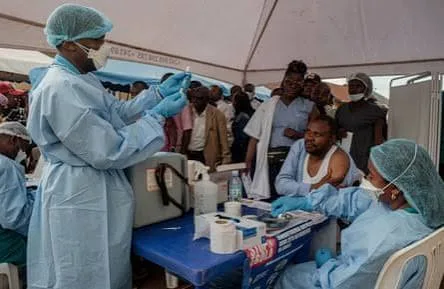
According to the ministry, the patient developed symptoms on October 7 and sought treatment at a private health facility in Abuja on October 11. The infection was confirmed through laboratory tests on October 20. She has since been isolated and is receiving medical care.
Health authorities have identified 44 contacts so far and are working to trace and monitor additional people who may have been exposed. Those being assessed include healthcare workers, patients, caregivers and people connected to the woman’s travel.
The Federal Ministry of Health and Social Welfare, the Nigeria Centre for Disease Control and Prevention (NCDC), the FCT Health Services Secretariat and other relevant agencies are coordinating the response to limit the risk of further transmission.
Surveillance has been intensified, and the hospital where the patient received treatment is receiving support to strengthen infection prevention and control measures. The federal government has also urged public and private healthcare facilities nationwide to remain alert for possible cases.
Healthcare professionals have been advised to identify and isolate suspected cases promptly, follow infection prevention protocols and report suspected infections to the appropriate public health authorities without delay.
Members of the public are urged to seek guidance from health authorities if they develop symptoms consistent with Ebola, particularly if they have had possible exposure to an infected person. Symptoms can include fever, headache, weakness, vomiting and diarrhoea, although these symptoms can also occur with other illnesses.
Ebola spreads primarily through direct contact with the blood or other body fluids of an infected person who is showing symptoms, or through contact with contaminated materials. It is not generally spread through the air in the way that measles or influenza can be transmitted.
The World Health Organization confirmed that Nigeria’s case is an imported infection involving the Bundibugyo virus, a type of Ebola virus. Investigations are continuing to establish the likely source of infection and reconstruct the patient’s travel and exposure history.
The confirmation comes amid a wider regional outbreak that has prompted neighbouring and other affected countries to strengthen surveillance and preparedness. Nigeria had already increased its Ebola preparedness measures following the detection of imported cases elsewhere in the region.
Health authorities are continuing contact tracing and monitoring as they work to contain the infection. The identification of contacts does not mean that all those individuals are infected; monitoring is a precaution to detect possible transmission early.
Reporting by TalkNaija Media



Reader Comments (0)
No comments yet. Be the first to share your perspective on this report.