

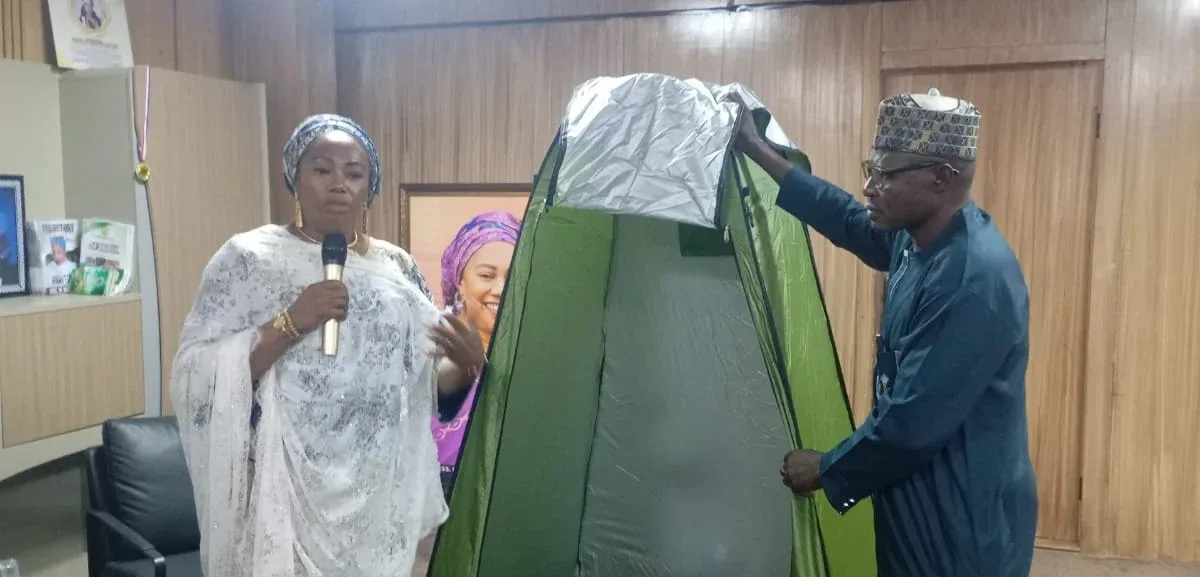
Elayo described open defecation as a serious public health concern and an embarrassment to the state, declaring that the government would not tolerate the practice.
She said sanitation remained a priority of Governor Abdullahi Sule's administration, adding that the government was working towards making communities across the state open defecation-free through collaboration with local government authorities, traditional rulers and community leaders.
According to the commissioner, the proposed intervention will focus on locations where access to toilet facilities is limited, including markets, motor parks, schools and other public spaces. She also stressed the need for facilities that adequately consider the needs of women, children and persons with disabilities.
Elayo explained that poor sanitation exposes communities to preventable diseases, including cholera, typhoid and diarrhoea, particularly where human waste contaminates water sources.
She called on traditional rulers and community leaders to support the enforcement of sanitation regulations, while urging schools and teachers to make hygiene education and proper toilet maintenance part of their priorities.
The commissioner also encouraged residents to take responsibility for keeping their surroundings clean, noting that access to safe toilets is essential to protecting public health and preserving human dignity.
To demonstrate the government's commitment, Elayo unveiled a mobile toilet and recycling materials, explaining that the initiative would be extended to schools and other public facilities facing sanitation challenges.
She said the intervention was particularly important for female students, who should have access to safe and appropriate toilet facilities rather than being exposed to uncomfortable or unsafe conditions because of inadequate sanitation infrastructure.
Elayo further appealed to businesses and development partners to support efforts to improve sanitation infrastructure across the state.
The sanitation challenge extends beyond Nasarawa. According to the latest UNICEF and World Health Organization Joint Monitoring Programme figures, 3.4 billion people globally lacked safely managed sanitation services in 2024, while 354 million continued to practise open defecation.
In Nigeria, UNICEF identifies poor access to safe water, sanitation and hygiene as a major contributor to preventable illnesses and child deaths. The agency's current country information estimates that more than 70,000 children under five die from diarrhoea annually.
As World Toilet Day approaches, the Nasarawa Government says it intends to strengthen public awareness and improve access to sanitation facilities, while encouraging communities to abandon practices that expose residents to health and environmental risks.
Reporting by TalkNaijaMedia



Reader Comments (0)
No comments yet. Be the first to share your perspective on this report.