

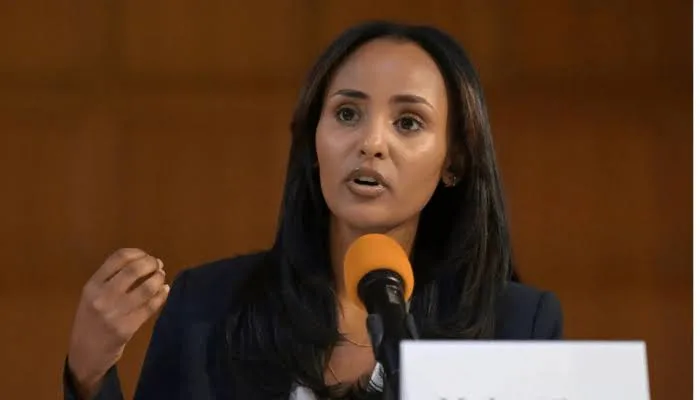
Her victory follows an upset in the Democratic primary earlier this year, when she defeated longtime incumbent Diana DeGette, who had represented the district since 1997 and served 15 terms in Congress.
The result marks a significant shift in the district’s political representation and reflects growing support among some Democratic voters for younger, progressive candidates challenging the party’s established leadership.
Kiros was also among at least five House candidates endorsed by the Democratic Socialists of America (DSA) or its local chapters who won their elections on Tuesday. Their victories are expected to significantly increase the movement’s representation in Congress.
Her campaign focused on expanding social welfare programmes, including Medicare for All and universal childcare. She also advocated abolishing Immigration and Customs Enforcement (ICE) and ending US military assistance to Israel.
Her position on Israel and the conflict in Gaza generated controversy during the campaign. Independent candidate Shimon Blau accused her of using antisemitic rhetoric, an allegation she rejected, maintaining that her criticism was directed at the Israeli government and its policies rather than Jewish people.
Beyond her policy proposals, Kiros presented her candidacy as part of a broader demand for generational change in American politics.
In an interview with NPR in February, she argued that younger voters were increasingly interested in candidates willing to pursue ambitious reforms rather than maintain existing political arrangements.
Her election will expand the presence of Generation Z in the US House, where Florida Democrat Maxwell Frost became the first member of the generation elected to Congress in 2022.
Kiros will also become the first Gen Z woman to serve in the chamber, adding a new dimension to ongoing discussions about age, representation and the future direction of the Democratic Party.
Her background has also attracted attention, with her family having moved from Ethiopia to Denver when she was a baby. Her election adds to the growing visibility of people with immigrant backgrounds in American political life.
She is expected to take office in January 2027 when the new Congress begins its term.
However, translating her campaign promises into legislation could prove challenging. Her proposals on healthcare, immigration and US foreign policy will require support within a Congress where major policy changes often face significant political opposition.
For Kiros, the next challenge will be turning the momentum of her historic election victory into meaningful legislative influence.
Reporting by TalkNaijaMedia





Reader Comments (0)
No comments yet. Be the first to share your perspective on this report.