

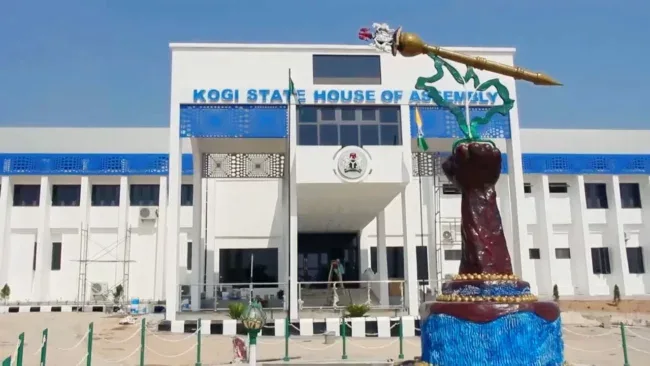
The legislation comprises the Kogi State College of Agriculture, Ochaja-Egume Establishment Bill, 2026 and the Kogi State Free Maternal and Neonatal Healthcare Services Bill, 2025.
Both bills passed their third and final readings on Wednesday, October 7, 2026, following clause-by-clause consideration and approval by the Committee of the Whole.
Speaking after the passage, Speaker of the Assembly, Rt. Hon. Aliyu Umar Yusuf, said the proposed College of Agriculture would give young people and other residents an opportunity to obtain agricultural knowledge and practical skills within the state.
Yusuf said agricultural education has contributed to Kogi’s development over the years and argued that the proposed institution could complement ongoing efforts to diversify the state’s economy through agriculture.
According to the Speaker, a properly funded agricultural college could contribute to increased agricultural productivity, employment creation and revenue generation while supporting broader economic development in Kogi.
The second legislation seeks to remove financial barriers that can prevent pregnant women and newborn children from accessing essential healthcare services at government-owned facilities.
Yusuf expressed concern that some women had struggled to obtain necessary treatment because they could not afford relatively small medical expenses.
He said pregnant women and newborns should not be denied essential healthcare because of financial difficulties and appealed to the executive arm of government to give assent to the bill.
The Speaker said implementation of the legislation would expand access to maternal and newborn healthcare and allow more residents to benefit from government intervention in the health sector.
The passage of the maternal and neonatal healthcare bill, however, does not by itself mean the proposed free services are already in operation across Kogi. The legislation still requires the necessary executive assent before its provisions can take effect.
Yusuf commended lawmakers for their participation in the debates and public hearings that preceded the passage of both bills, describing the measures as significant steps towards strengthening agricultural development and improving healthcare outcomes in the state.
The proposed College of Agriculture and the maternal and neonatal healthcare legislation now move to the next stage of the legislative process, with attention expected to focus on executive assent and eventual implementation.
For residents, the impact of both measures will ultimately depend on how effectively the proposed institutions and healthcare provisions are funded and implemented after the legislative process is completed.
Reporting by TalkNaijaMedia




Reader Comments (0)
No comments yet. Be the first to share your perspective on this report.