

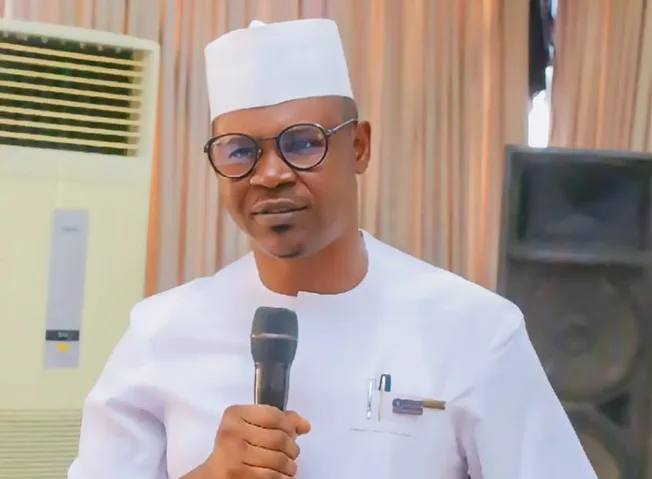
Amb. Idris Ozovehe Muraina, Executive Director of the Renaissance Care and Empowerment Foundation (RECEF), made the call while presenting a paper at the stakeholders’ town hall meeting on the preparation of the 2027 Kogi State budget, held at Edge Drive Hotels in Lokoja on October 9, 2026.
His presentation, titled “From Budgeting as an Annual Ritual to Budgeting for Transformation,” urged the government to ensure that citizens’ recommendations influence the final budget rather than remain part of consultation meetings without clear implementation.
Muraina argued that Kogi does not necessarily need a larger budget as much as it needs one that connects available resources to clearly identified development needs, measurable targets and accountable institutions.
He described the town hall as an opportunity for meaningful engagement between the government and the people, stressing that its success should be assessed by how much credible public input is reflected in the Appropriation Bill and subsequently implemented.
A major part of his proposal centred on the Kogi State Development Plan 2024–2056, the state’s long-term framework for economic growth, infrastructure, human capital development and governance. Muraina said the plan must be translated into practical sector priorities, annual spending commitments and measurable implementation targets.
He called for properly costed and time-bound sector implementation plans, supported by councils involving government officials, civil society organisations, academics and private-sector representatives. Such arrangements, he argued, would help clarify responsibilities and make it easier to track progress.
Muraina also proposed that major capital projects in the 2027 budget should be assessed against basic questions: What development problem will each project solve? Who stands to benefit? When should it be completed? What measurable result should residents expect? And which institution will be held responsible for delivery?
On essential services, the RECEF director identified water supply, public transportation, sanitation and affordable housing as areas requiring more visible attention in the state’s fiscal priorities.
He called for an audit of existing public water infrastructure before rehabilitation and expansion efforts are undertaken. In his view, households should not remain heavily dependent on costly private water supplies when public systems could be assessed and improved.
He also urged the government to develop a sustainable mass transit system, noting that the process should involve more than purchasing buses or other vehicles. Effective route planning, transparent operations, professional management and reliable maintenance arrangements would be necessary to make public transport dependable.
For Lokoja, Muraina advocated a properly funded urban cleanliness programme with clearly defined responsibilities and measurable sanitation standards. He argued that waste management and environmental sanitation should be treated as essential public services rather than occasional interventions.
Housing was another priority in his presentation. He called for a credible affordable housing programme built around realistic income categories, accessible land, private-sector participation and transparent beneficiary selection. Such a framework, he said, could help address housing pressures and make accommodation more accessible to residents with different income levels.
Muraina also raised concerns about the coordination of development data, particularly information from donor-funded and Official Development Assistance projects across education, agriculture, climate resilience, rural access, social protection and women’s empowerment.
He warned that when project information is scattered across ministries, departments, agencies and implementing partners, the state risks duplicating interventions, misdirecting limited resources and overlooking communities with urgent needs.
He therefore called for a functional ODA coordination mechanism and a harmonised development-data system to help policymakers identify gaps, track spending and make decisions based on evidence.
The RECEF director outlined several recommendations for the 2027 budget process. These included completing sector implementation plans, activating implementation councils, aligning major programmes with the state development plan, and prioritising the completion and maintenance of existing strategic projects where necessary instead of continually adding new ones.
He further called for transparent reporting on budget allocations, fund releases, implementation progress and actual outcomes. According to him, citizens should be able to follow public expenditure and determine whether government commitments are producing the intended benefits.
Muraina maintained that engagement between the government and civil society should continue throughout the budget cycle rather than end after the annual town hall. He said organisations working through the Kogi NGOs Network (KONGONET), alongside individual civil society groups, remained willing to provide technical support and constructive recommendations.
He also suggested exploring a legal framework to protect the continuity of the state’s 2024–2056 development plan across successive administrations, given that its 32-year timeline extends well beyond the tenure of any single government.
The call comes as Kogi advances preparations for its 2027 budget. At the same town hall, Commissioner for Finance, Budget and Economic Planning Asiwaju Asiru Idris urged stakeholders to participate meaningfully in the process, stressing that public spending should reflect citizens’ priorities and deliver tangible results.
The government’s consultation process and RECEF’s recommendations both highlight a central challenge in public finance: translating policy commitments and budget allocations into functioning services and completed projects.
For residents, the impact of the 2027 budget will ultimately depend not only on the amount approved but also on whether funds are released on time, projects are completed to the required standards and public institutions are held accountable for results.
Muraina’s message was that Kogi already has a long-term development framework. The task ahead, he argued, is to ensure that the 2027 budget provides the resources, coordination and discipline needed to turn that vision into measurable improvements in people’s lives.
Reporting by TalkNaijaMedia

Reader Comments (0)
No comments yet. Be the first to share your perspective on this report.