

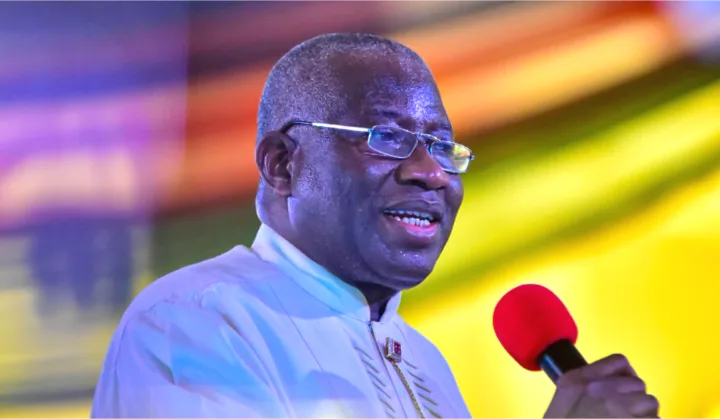
The former president said the two initiatives introduced during his administration were intended to address socio-economic challenges that could leave young people vulnerable to criminal recruitment.
According to Jonathan, the Almajiri schools programme was designed to extend educational opportunities beyond religious instruction by equipping young people with practical skills to improve their livelihoods and contribute to national development.
He maintained that revisiting the initiative could help address educational exclusion and reduce the vulnerability of disadvantaged youths to recruitment by violent groups.
Jonathan also urged the government to review the Great Green Wall project, which he said could help combat desertification, support farming and livestock production, and create employment opportunities for communities affected by environmental degradation.
He stressed that tackling terrorism required a sustained national effort rather than policies limited to the tenure of individual administrations. He called for continuity in security strategies, institutional learning and cooperation between successive governments.
The former president further noted that the title of Abubakar’s book highlighted the need to look beyond the use of force when confronting terrorism, with social and economic interventions playing an important role in addressing the conditions that enable insecurity to persist.
Speaking at the event, President of Dangote Industries Limited, Aliko Dangote, also emphasised the importance of job creation and economic growth in the fight against terrorism and banditry.
Dangote argued that military operations alone would not be sufficient to resolve the country’s security challenges without measures to expand employment and improve economic opportunities.
He urged businesses and entrepreneurs to work with the government by investing in productive activities capable of generating jobs, stimulating growth and improving living standards.
The industrialist maintained that economic development and security operations should work together, while encouraging Nigerians to see the fight against insecurity as a shared responsibility.
Dangote also referred to the economic consequences of the conflict in Nigeria’s North-East, citing an estimated loss of about $100 billion attributed to a UNICEF report. He suggested that the wider impact on agriculture and other economic activities could make the overall cost even greater. The estimate was presented at the event and should not be treated as an independently verified figure for this report.
Abubakar, the author of the book, warned that efforts to combat terrorism must remain consistent with democratic principles, human rights and the rule of law.
The former police chief said security agencies must protect citizens without treating entire communities as suspects, cautioning that discriminatory practices and excessive use of power could undermine public confidence and weaken counterterrorism efforts.
He also stressed that democratic institutions, including the judiciary, legislature, media and civil society, should be recognised as important parts of an effective security framework rather than obstacles to it.
According to Abubakar, successful counterterrorism requires coordination among security agencies, credible intelligence, accountability and respect for due process. He argued that investigations must be evidence-based, victims must be heard, and security measures must preserve human dignity.
The discussions at the book presentation highlighted a broader argument shared by the speakers: Nigeria’s response to terrorism and banditry must combine effective security measures with education, employment, economic development and respect for the rule of law.
Reporting by TalkNaija Media





Reader Comments (0)
No comments yet. Be the first to share your perspective on this report.