

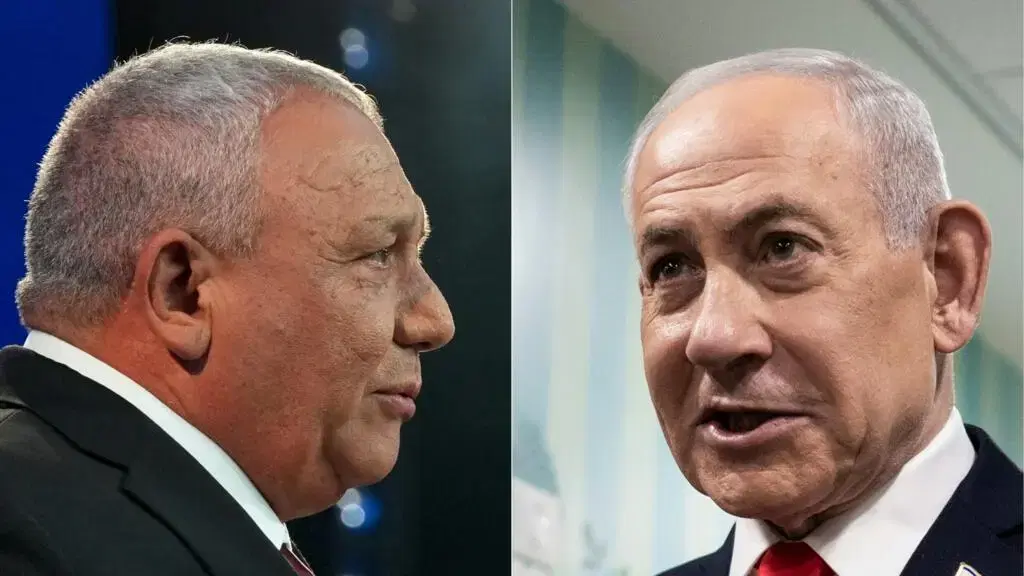
The inauguration follows the October 27 general election, which failed to produce an outright parliamentary majority for either of the two main political blocs.
Official results show that Netanyahu’s political camp secured 53 seats, while the opposition bloc led by Eisenkot holds 48. Arab-led parties won the remaining 19 seats, leaving all sides short of the 61 lawmakers required to command a parliamentary majority.
Although Netanyahu’s Likud party emerged as the largest single party with 27 seats, the results have created an opportunity for Eisenkot to negotiate a possible change of government.
Herzog formally assigned Eisenkot the responsibility of forming the next government on Sunday, November 8, after consultations with political parties.
A total of 67 lawmakers recommended Eisenkot for the assignment, compared with 46 who supported Netanyahu. However, the recommendations do not automatically translate into a functioning parliamentary coalition.
Under Israeli law, Eisenkot has 28 days to assemble a government, with the possibility of receiving an additional 14 days if necessary.
As negotiations continue, opposition leaders have also reached an agreement on key parliamentary positions ahead of the new Knesset’s opening.
Eisenkot’s Yashar party and its opposition partners have agreed to nominate Matan Kahana, a former minister and incoming lawmaker, as their candidate for Knesset Speaker.
Former Defence Minister Avigdor Lieberman, leader of Yisrael Beiteinu, has been selected to head the powerful Foreign Affairs and Defence Committee under the arrangement.
The opposition bloc has also agreed to nominate Roy Folkman of Yashar for the Arrangements Committee, while Liran Avishar Ben-Horin of the Together party is its choice for the Finance Committee.
The proposed appointments are expected to go through the relevant parliamentary procedures before receiving formal approval.
The opposition is also seeking to replace incumbent Speaker Amir Ohana, a member of Netanyahu’s Likud party. Ohana has indicated that he would schedule a vote on a successor within a week if the required number of lawmakers formally request one.
Beyond the struggle for parliamentary positions, Eisenkot’s allies are expected to prioritise an investigation into the security failures surrounding the October 7, 2023, Hamas-led attack on Israel.
Opposition figures have argued that a state commission of inquiry is necessary to establish responsibility for the intelligence and security lapses that preceded the attack.
However, forming a stable government remains Eisenkot’s biggest challenge.
His 48-member opposition bloc would need additional support from lawmakers outside its existing alliance. The 19 seats held by Arab-led parties could provide the numbers required to cross the 61-seat threshold, but cooperation with those parties remains politically sensitive.
Lieberman has repeatedly opposed relying on Arab parties to establish a government, complicating efforts to build a coalition around their support.
Another possible route would involve attracting members of the ultra-Orthodox parties, which collectively hold 13 seats through Shas and United Torah Judaism. Their long-standing relationship with Netanyahu, however, makes such a political shift uncertain.
The dispute over exemptions from compulsory military service for ultra-Orthodox men remains one of the major issues dividing the political camps. Eisenkot has advocated a broader system of military or national service, while Netanyahu's political alliances have been closely connected to parties seeking to preserve exemptions.
Policy differences over the war in Gaza and the treatment of Palestinians could also complicate any arrangement involving Arab lawmakers.
Eisenkot, a former chief of staff of the Israel Defence Forces, has supported several of Netanyahu’s major military decisions but has also called for stronger action against extremist Israeli settlers accused of attacking Palestinians in the occupied West Bank.
With the new Knesset beginning its work, attention will now turn to whether Eisenkot can convert the support he received during the presidential consultations into a stable governing coalition.
Until a new government is approved, Netanyahu remains prime minister in a caretaker capacity, leaving Israel facing another period of political uncertainty.
Reporting by TalkNaijaMedia


Reader Comments (0)
No comments yet. Be the first to share your perspective on this report.