

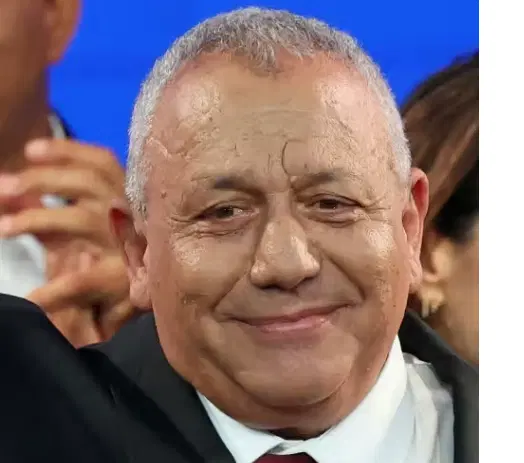
The president informed Eisenkot, leader of the Yashar party, of his intention to assign him the responsibility of forming a government. The formal presentation of the mandate was scheduled to take place at the President’s Residence in Jerusalem on Sunday, November 8.
Reacting to the announcement, Eisenkot said he was ready to work towards establishing what he described as a national emergency government.
The election results show that Netanyahu’s political bloc secured 53 seats in the 120-member Knesset, while the opposition bloc led by Eisenkot won 48 seats. Arab-led parties secured the remaining 19 seats, leaving no single bloc with the 61 lawmakers required for an outright parliamentary majority.
During consultations with political parties, 67 lawmakers recommended Eisenkot for the mandate, compared with 46 who backed Netanyahu. The United Torah Judaism faction, which holds seven seats, did not recommend either candidate.
The support from Arab-led parties has strengthened Eisenkot’s position in the process, although building a working relationship with them remains politically complicated.
Netanyahu has opposed the prospect of an administration relying on Arab-party support and has criticised the idea of forming a government with parties he accuses of being sympathetic to terrorism. He has also advocated a broad national unity arrangement.
Eisenkot, however, has faced questions over how far he would be willing to cooperate with the Arab-led factions. Although their recommendations helped him emerge as the preferred candidate during consultations, he has previously ruled out including parties that do not accept his stated security and political principles in a government he leads.
His political position also differs from that of some international partners on the Palestinian question. Eisenkot has rejected the establishment of a Palestinian state, while pledging to take a tougher approach against extremist Israeli settlers accused of attacking Palestinians in the occupied West Bank.
He has also maintained that Hamas must lose its governing and military capabilities in Gaza.
The political developments come as Israel continues to deal with the consequences of the war in Gaza and wider regional tensions, issues that have become central to debates over the country’s security and political direction.
Eisenkot is a former Chief of General Staff of the Israel Defense Forces, a position he held from 2015 until 2019. He had a lengthy military career before entering politics and became one of the leading figures challenging Netanyahu’s leadership.
His selection now places him at the centre of a difficult coalition-building process. Under Israel’s parliamentary system, he has 28 days to assemble a government capable of securing majority support in the Knesset. The president may grant an additional 14 days if more time is needed.
If Eisenkot fails, the mandate could be handed to another lawmaker. Should no candidate succeed in forming a government within the constitutional process, Israel could face another election.
The country has experienced repeated political deadlocks in recent years, including five general elections between 2019 and 2022.
Although Herzog’s decision gives Eisenkot the first opportunity to form the next administration, it does not guarantee that he will succeed. Negotiations with rival political groups are expected to determine whether he can secure the numbers needed to replace Netanyahu.
Reporting by TalkNaijaMedia



Reader Comments (0)
No comments yet. Be the first to share your perspective on this report.