

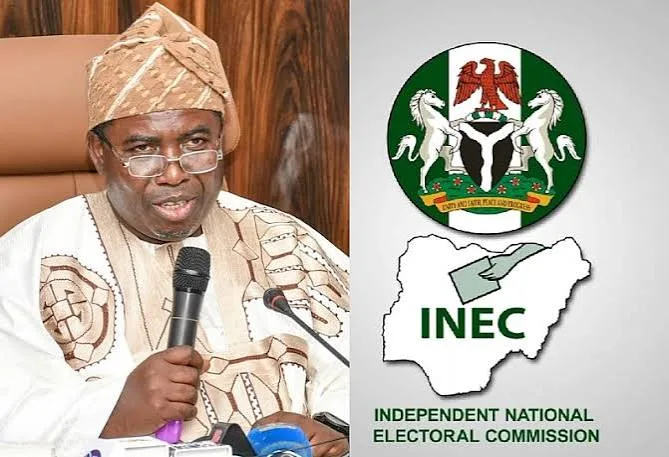
Bayode said the commission was reviewing all 268 entries to determine which ones contained irregularities and required corrective action.
He explained that some of the questionable records allegedly involved the misuse of a special registration arrangement designed for persons with disabilities who have incomplete fingers or no fingers.
According to him, the provision was allegedly exploited to create suspicious voter profiles, prompting the commission to investigate how the records entered its database.
Bayode confirmed that INEC had started removing records found to be irregular, but clarified that the use of artificial intelligence in processing a photograph would not automatically disqualify a registered voter.
He distinguished between genuine photographs enhanced by artificial intelligence features on mobile phones and images generated entirely through AI.
The ICT director explained that voters whose original photographs were merely improved using phone-based AI tools would remain on the register, while photographs confirmed to have been generated artificially would be removed.
The development follows public criticism that greeted INEC’s publication of its preliminary Register of Voters online on October 26, 2026.
Screenshots circulating on social media, particularly those reportedly linked to parts of Edo State, raised concerns over unusual photographs attached to some voter records.
Other complaints included alleged duplicate registrations, names believed to belong to deceased persons and reports from some registered voters who could not find their details on the online platform.
INEC has maintained that the published document is a preliminary register and not the final certified list of voters. The commission explained that it is the same register physically displayed across Registration Areas nationwide between October 9 and 15 to enable voters to inspect their information and submit claims or objections.
The commission’s Commissioner for Voter Education and Publicity, Mohammed Kudu Haruna, said INEC had commenced an investigation into the reported discrepancies to establish their causes and ensure that affected records were corrected.
Haruna said the exercise would be conducted in line with due process, adding that the commission would address identified anomalies before making the final register available to political parties.
He also cautioned against drawing conclusions about possible involvement of INEC officials, explaining that the investigation was still at an early stage.
INEC is expected to complete its verification, adjudication and data-cleanup processes before certifying and publishing the final Register of Voters on December 15, 2026.
The controversy has attracted reactions from political groups, opposition figures and civil society organisations, with calls for a transparent investigation and stronger safeguards to protect the credibility of the electoral register.
Among those raising concerns are the Nigeria Democratic Congress (NDC), former Kano State governor Rabiu Musa Kwankwaso and the Socio-Economic Rights and Accountability Project (SERAP).
The commission has assured Nigerians that the ongoing review will address confirmed irregularities, stressing that the preliminary register remains open to scrutiny and correction before final certification.
Reporting by TalkNaijaMedia




Reader Comments (0)
No comments yet. Be the first to share your perspective on this report.