

The results have raised concerns about the effectiveness of supervision, local government leadership and accountability in managing primary healthcare services at the grassroots.
Reacting to the performance, Deputy Governor Manassah Daniel Jatau, who chairs the state taskforce, expressed dissatisfaction with the results and urged local government chairmen and healthcare administrators to take greater responsibility for improving service delivery.
He called for more frequent visits to primary healthcare facilities, stronger monitoring of health workers and better documentation of official activities, decisions and follow-up actions.
Jatau also emphasised the need for practical interventions and evidence-based monitoring, noting that local government authorities must demonstrate greater commitment to improving healthcare outcomes in their communities.
At the meeting, the state government approved ₦46 million in counterpart funding to support the November and December 2026 immunisation exercises, as well as maternal, newborn and child health programmes.
The Executive Secretary of the Gombe State Primary Health Care Development Agency, Dr Abdulrahman Shuaibu, disclosed the funding approval and said the intervention would help protect vulnerable residents and strengthen healthcare delivery.
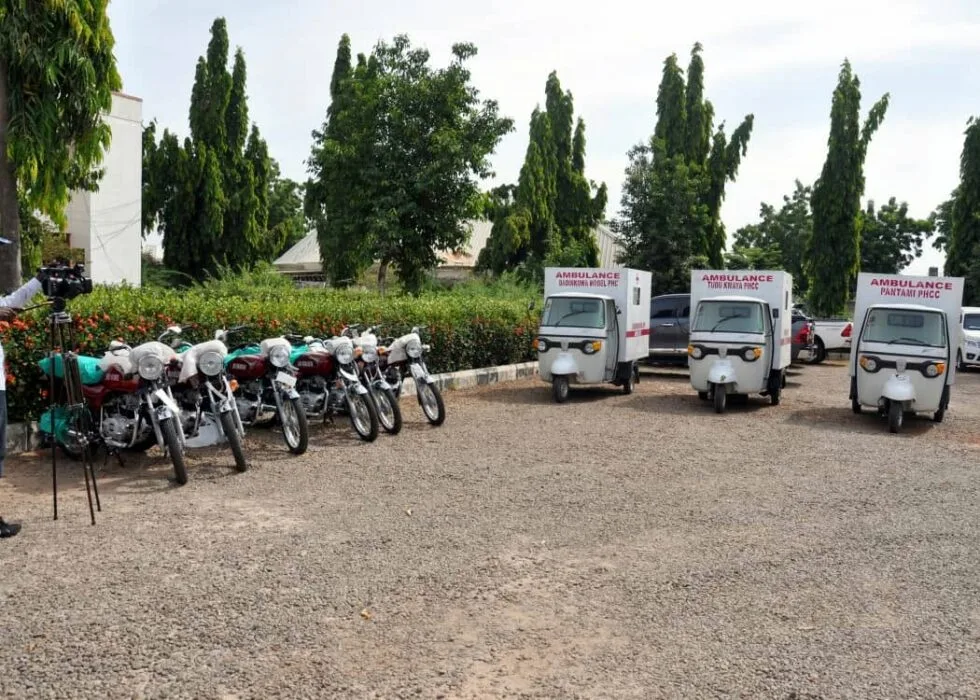
The government also announced plans to provide three tricycle ambulances, six motorcycles and three laptop computers to support emergency referrals, field supervision and health data management. The proposed distribution of the equipment is expected to benefit the state's three senatorial districts and selected local government areas.
The latest performance concerns come against the background of previous research identifying weaknesses in Gombe's healthcare administration.
A study published in the Pan African Medical Journal in January 2026, titled Transforming the Health System in Gombe State: Accomplishments, Challenges and the Next Frontier, acknowledged improvements in healthcare infrastructure and workforce development but also identified persistent challenges.
These included shortages and uneven distribution of health workers, particularly in rural communities, limited local government capacity in planning and budgeting, inadequate supervision and difficulties sustaining some healthcare interventions.
The study also highlighted infrastructure and service delivery gaps, including inadequate equipment, unreliable electricity and internet connectivity in some facilities, as well as occasional shortages of essential medicines and medical supplies.
Financial accountability has also emerged as an area requiring attention. A separate 2025 public expenditure tracking survey conducted in partnership with UNICEF examined healthcare spending across 114 facilities in Gombe's 11 local government areas.
The survey reported a 47 per cent reduction in routine immunisation funding between the central and local levels. It also identified an 88.4 per cent discrepancy between funds reported as disbursed by the State Primary Healthcare Development Agency and amounts recorded as received by local government authorities.
Fund transfer delays ranged from four to 35 days, while the survey also identified differences in the number of routine immunisation visits reported at local government and health facility levels.
Although these findings do not establish the reasons behind the latest performance scores, they point to longstanding concerns about funding documentation, financial management and monitoring of healthcare activities.
Meanwhile, the Gombe State Government has continued to report investments aimed at improving healthcare delivery. At its August 2026 Joint Annual Review, the government said it had revitalised more than 100 primary healthcare centres and recruited over 1,200 health professionals.
The review also acknowledged continuing challenges, including declining routine immunisation, shortages of essential tuberculosis commodities, inadequate domestic financing, weak commodity security and data management problems.
The January 2026 health system study separately documented the revitalisation of 228 primary healthcare centres across the state. The two reports use different figures and reporting periods, and the available information does not fully reconcile the difference.
Gombe has also received recognition through the national Primary Healthcare Leadership Challenge, including awards for its performance and health innovations. However, the latest local government assessment suggests that sustaining improvements at the state level will require stronger management and more consistent performance across individual councils.
The challenge now facing the state is to ensure that investments in facilities, personnel and health programmes translate into measurable improvements in service delivery, particularly in rural and underserved communities.
The latest assessment has therefore renewed calls for local government chairmen, healthcare administrators and other stakeholders to strengthen supervision, improve accountability and address the operational gaps affecting primary healthcare services across Gombe State.
Reporting by TalkNaijaMedia



Reader Comments (0)
No comments yet. Be the first to share your perspective on this report.