

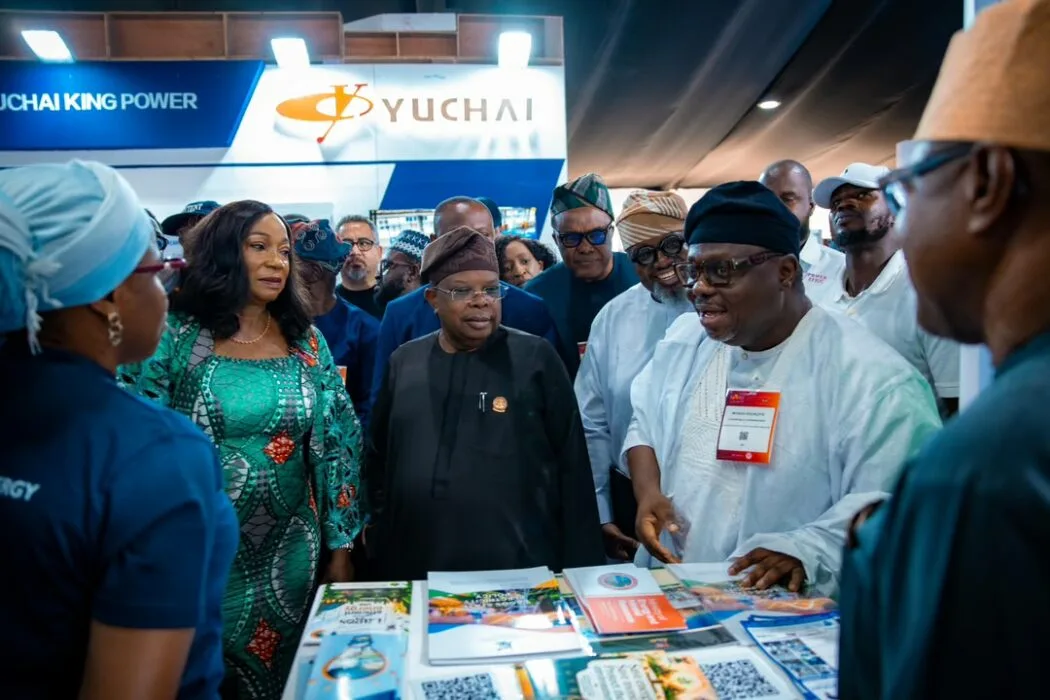
Tegbe said the government must move beyond policy development and focus on practical implementation that produces measurable improvements in electricity supply, grid performance and the financial sustainability of the power sector.
He identified gas supply shortages, inadequate transmission capacity, electricity distribution losses and accumulated industry debts as major challenges affecting the entire power value chain.
According to the minister, addressing these problems requires better coordination among generation companies, transmission operators and distribution companies to ensure that investments deliver more dependable electricity to homes, businesses and industries.
As part of the strategy, Tegbe identified three priority economic energy corridors: Lagos–Ogun, Benin–Enugu–Port Harcourt, and Abuja–Kaduna–Kano.
He explained that the approach would bring electricity generation, transmission infrastructure, distribution capacity and demand planning into closer alignment within the designated corridors. The goal is to improve electricity delivery to major economic centres and support industrial activities.
On transmission, the minister stressed the importance of making better use of existing infrastructure while expanding network capacity to accommodate increasing electricity demand.
He also highlighted the need to reduce technical and commercial losses within the distribution segment. Initiatives identified for this purpose include the Presidential Metering Initiative (PMI), the Distribution Sector Recovery Programme (DSRP) and the Meter Acquisition Fund (MAF). Tegbe said implementation of the presidential metering initiative was continuing.
Addressing the sector’s financial challenges, the minister said the government had paid ₦1.23 trillion towards legacy liabilities estimated at ₦3.3 trillion. He added that measures were being taken to prevent financial leakages and stop additional debts from accumulating.
The government’s four-pronged approach, he said, is intended to improve the overall performance of the electricity market while ensuring that existing and future investments contribute to a more sustainable power sector.
Tegbe added that the reforms align with President Bola Ahmed Tinubu’s Renewed Hope Agenda and should produce tangible economic benefits, including increased industrial productivity, business expansion, investment and job creation.
The Nigeria Energy Leadership Summit and Exhibition 2026 brings together energy companies, technology providers and other industry stakeholders to discuss challenges, showcase solutions and explore investment opportunities across Nigeria’s power and broader energy sectors. The event is scheduled to run from October 27 to 29.
Reporting by TalkNaijaMedia

Reader Comments (0)
No comments yet. Be the first to share your perspective on this report.