

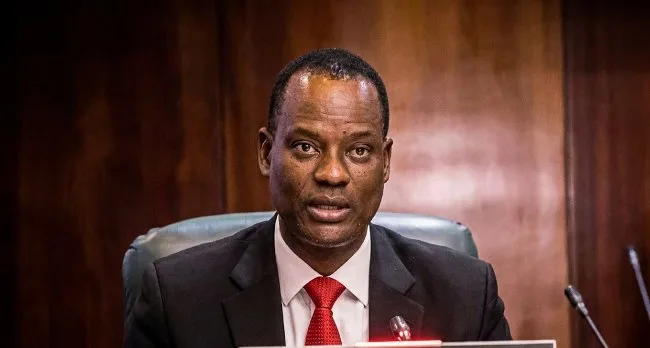
Oyedele said the proposal, submitted by President Bola Tinubu to the National Assembly, was a multi-year financing plan covering projects expected to be implemented over approximately five years. He stressed that the proposal did not mean the entire amount had already been borrowed or would necessarily be accessed in full.
According to the minister, about $10.6 billion is earmarked for transportation infrastructure, including the Sokoto–Badagry Superhighway, Lagos–Calabar Coastal Highway and the Kano–Kaduna rail project.
He added that approximately $7.9 billion would come from multilateral and bilateral development partners, including a proposed $5 billion facility from the World Bank. The government says the development financing would carry an average interest rate of about 2.1 per cent.
The plan also includes funding for projects involving state governments and the Federal Capital Territory, with Oyedele identifying about $3.3 billion for state-level projects and $1.45 billion for the FCT.
Defending the economic rationale behind the proposal, the minister argued that borrowing to finance consumption differs from borrowing to build infrastructure and other assets capable of generating long-term economic value.
He maintained that the government intended to apply fiscal discipline while ensuring that investments contributed to economic growth, employment and improved living conditions.
Oyedele also highlighted government interventions aimed at cushioning the effects of economic reforms on households, students and small businesses. He said the Nigerian Education Loan Fund (NELFUND) had disbursed ₦372.6 billion to more than 1.5 million students, while cash transfers exceeding ₦600 billion had reached 10 million households.
He further said more than 800,000 micro, small and medium-sized enterprises had benefited from single-digit interest-rate financing through the Bank of Industry. The government, he added, was seeking to expand support for vulnerable households.
The minister also disclosed that the Federal Executive Council had adopted the National Economic Council’s 90-day execution framework, which is intended to improve coordination among levels of government and accelerate measures to ease economic pressures.
Separately, the council approved 10 memoranda presented by the finance ministry, covering financing arrangements and projects in electricity transmission, railway infrastructure, road development and customs modernisation.
Among the approvals was a €155.9 million credit facility arranged through Deutsche Bank to support the construction of five 132/33kV substations under Phase One of the Presidential Power Initiative. The project is intended to strengthen electricity transmission and improve power supply.
The council also approved a $970 million syndicated 10-year financing facility led by Standard Chartered Bank and the Africa Finance Corporation for rolling stock on the Kano–Maradi railway line. The investment is expected to support regional trade and reduce freight and transportation costs.
Another approval was a €76.8 million credit facility from the ECOWAS Bank for Investment and Development for Bauchi State’s urban and rural road projects, including routes connecting farming communities to markets.
In addition, the council approved investment in non-intrusive cargo inspection scanners for the Nigeria Customs Service. The equipment is expected to speed up cargo clearance, strengthen border controls and improve the detection of prohibited goods.
Despite the government’s defence of the borrowing proposal, the plan still requires legislative approval. Its overall economic impact will depend on the financing terms, the projects eventually funded, implementation and the benefits delivered to Nigerians.
Reporting by TalkNaijaMedia


Reader Comments (0)
No comments yet. Be the first to share your perspective on this report.