

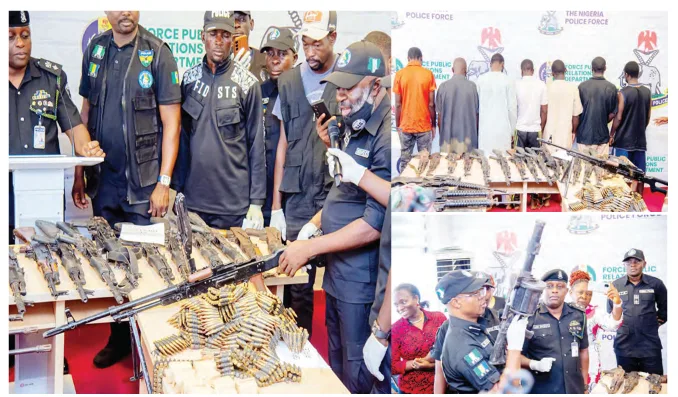
While some administrations are prioritising mediation and engagement with traditional institutions, others are strengthening enforcement of grazing regulations, restoring cattle routes and exploring livestock management reforms.
The conflict has complex causes, including competition over land and water, pressure on agricultural resources, changing weather patterns, population growth and weaknesses in traditional dispute-resolution systems. In some communities, insecurity and criminal activities have further complicated the situation, making it difficult to distinguish resource-related disagreements from wider communal violence.
The scale of the crisis remains a major concern. Although estimates of fatalities vary depending on the period and methodology used, research by Nextier recorded at least 2,347 casualties from 359 farmer-herder-related violent incidents between 2020 and 2024. The organisation's findings also identified North-Central Nigeria as the region most affected during the period.
In Kaduna State, representatives of farming and pastoralist communities have emphasised the importance of sustained dialogue, respect for land rights and greater involvement of traditional rulers.
The national president of the Southern Kaduna Peoples Union, Dr Samuel Tabara Kato, and the president of the Gan Allah Fulani Development Association of Nigeria, Dr Ibrahim Abdullahi, offered differing accounts of the security situation but agreed that engagement between communities was important.
Abdullahi attributed the relative improvement in some areas to stakeholder engagement and peaceful dispute resolution, including the involvement of the Kaduna State Peace Commission.
Kato, however, raised concerns about attacks on farming communities, destruction of crops and displacement. He also questioned whether affected communities had been adequately involved in mediation efforts.
Both perspectives highlight the need for peace initiatives to include the people directly affected by the disputes, rather than relying solely on agreements between government officials and selected representatives.
In Plateau State, disagreements over grazing routes, land ownership and the implementation of previous peace agreements continue to complicate efforts to restore confidence.
The state chairman of the Miyetti Allah Cattle Breeders Association of Nigeria, Yusuf Babayo, said the obstruction of traditional cattle routes had contributed to tensions and called for fairness in resolving disputes.
The president of the Berom Youth Moulders, Barrister Solomon Nwatiri, raised concerns about alleged violations of peace agreements and called for stronger security measures and restrictions on open grazing.
Governor Caleb Mutfwang has also argued that some attacks in the state should not be treated as ordinary farmer-herder disagreements, describing them instead as organised criminal activities and terrorism.
Security agencies, operating under Operation Enduring Peace, have continued deploying personnel to vulnerable communities to prevent further violence.
The importance of implementing agreements is particularly evident in Plateau, where previous peace arrangements have sought to address crop destruction, compensation, access to cattle routes and other sources of tension.
In Borno State, the government has turned to a committee established to investigate recurring disputes and recommend solutions.
The chairman of the All Farmers Association of Nigeria in the state, Alhaji Allamin Umara Lawan, said the committee had engaged farmers and herders in affected communities, including parts of Askira-Uba and Magumeri Local Government Areas.
The committee reportedly spent several months gathering information before submitting its recommendations to Governor Babagana Zulum.
The state government is expected to consider the findings as part of efforts to protect agricultural activities and prevent further disagreements between farmers and pastoralists.
In Imo State, government intervention and security operations have reportedly helped reduce tensions in some communities, although farmers continue to call for stronger protection of their livelihoods.
The President-General of Amulu Ihitte, Chief Austin Egejuru, urged authorities to address complaints about cattle entering farmlands and ensure that relief and other interventions reach affected residents.
Farmers in Agwa also expressed concern that insecurity and disputes over land had discouraged some residents from returning to their farms. They called for measures that would restore confidence and protect access to agricultural land.
In Delta State, authorities have pursued mediation and anti-grazing regulations, while government officials have proposed ranching and stronger monitoring of livestock movement.
The state government's special adviser on Peacebuilding and Conflict Resolution, Chief Edwin Uzor, has advocated stricter enforcement of grazing regulations and the establishment of monitoring structures to address unlawful activities.
The special adviser on Livestock and Inter-Ethnic Relations, Chief Jeffrey Azagba, has also proposed a dialogue platform where farmers and herders can resolve disagreements before they escalate.
Police authorities have similarly urged both groups to respect the law and the rights of host communities.
However, an earlier incident in January 2025 demonstrated how quickly disputes can escalate. Two farmers were reportedly killed in Mbiri, Ika North-East Local Government Area, while a subsequent reprisal attack in neighbouring Umunede led to the destruction of property at a herders' settlement. Police statements at the time described the attackers as unidentified hoodlums, while residents alleged that suspected herders were responsible.
The incident underlined the importance of impartial investigations and preventing retaliation against entire communities.
In Benue State, the police command says it is strengthening engagement with farmers, herders and community leaders to prevent disagreements from turning violent.
The state police spokesperson, DSP Peter Orchia Aondongu, said officers had been sensitising residents on the need to report trespassing and destruction of crops through lawful channels.
The engagement covers communities in several local government areas, including Agatu, Gwer West, Gwer East, Guma, Logo, Ukum, Katsina-Ala and Kwande, as well as areas bordering Nasarawa and Taraba states.
According to the police spokesperson, herders have been warned against entering farmlands without permission, while farmers have been encouraged to avoid taking the law into their own hands.
In Cross River State, the challenge is increasingly centred on enforcing existing livestock and grazing regulations.
The state's livestock management legislation provides for designated ranching areas, penalties for cattle straying into farms and restrictions on the movement of livestock through agricultural communities.
However, complaints about crop destruction and disputes involving cattle have continued in communities including Odukpani, Bekwarra, Biase and Yala.
The Cross River State Government has also pursued livestock development initiatives involving ranching, pasture production and the proposed Border Animal Holding and Quarantine Facility at Mfum-Ajassor in Etung Local Government Area.
The state House of Assembly has called for stronger implementation of the grazing law following complaints from affected communities.
Farmers have argued that legislation alone cannot resolve the problem without effective enforcement and adequate arrangements for livestock management.
Other states are also exploring similar reforms. Ebonyi has been associated with plans for a ranching facility at Izziangbo, while Enugu is developing an integrated livestock centre at Owo.
In Gombe State, the government has introduced tighter controls on cattle movement during the harvest period, with restrictions expected to remain in place until January 2027.
The measures include monitoring livestock movement at designated entry points, discouraging night grazing and preventing children from being left in charge of cattle.
The state is also working to resurvey and restore 37 cattle routes and eight grazing reserves, an initiative previously announced under the Livestock Productivity and Resilience Support project.
Conflict-resolution committees have been established across the state's 11 local government areas, with traditional institutions, farmers' associations and pastoralist representatives expected to support implementation.
The government has also cautioned farmers against practices that could create additional disputes, including burning crop residues and transporting agricultural produce at night.
In Niger State, the government has begun efforts to restore 23 grazing routes following deadly disputes in communities including Baji, Rafi and Agwara.
Governor Mohammed Umaru Bago has engaged traditional rulers and community leaders, stressing the need for proper land demarcation and responsible allocation of land.
The governor has argued that clearly identified grazing routes could reduce confrontations if farmers and herders respect agreed boundaries.
However, the effectiveness of the initiative will depend on whether the routes are properly identified, restored and monitored, alongside a clear framework for resolving complaints.
Osun State has placed greater emphasis on regular dialogue and early-warning mechanisms.
A senior special adviser to Governor Ademola Adeleke, Adebisi Moruf Abiodun, said the government had worked with Justice Development and Peace Makers to organise stakeholder meetings involving farmers, herders and other community representatives.
The meetings provide an opportunity for participants to discuss grievances and develop local approaches to preventing disputes.
The state has also appointed liaison officers to alert authorities to possible tensions, allowing intervention before disagreements escalate.
A stakeholders' meeting held in Osogbo on July 29, 2026, reportedly brought together representatives of security agencies, pastoralist associations, farmers' groups and traditional institutions.
In Kebbi State, the government has attributed a reduction in reported clashes to security deployments and prompt intervention in affected communities.
Following a major incident in Alhannare, Bagudo Local Government Area, Governor Nasir Idris reportedly visited the community, sympathised with affected families and ordered additional security measures.
A member of the Miyetti Allah Cattle Breeders Association in the area commended the government's response, while the Director of Security at the Cabinet Office in Birnin Kebbi, Abdulrahman Usman Zagga, said communal disputes and other criminal activities had declined.
Despite the different approaches adopted across the states, the experiences point to a common challenge: temporary calm does not necessarily translate into lasting peace.
Dialogue can help rebuild trust, but agreements must be inclusive and supported by effective monitoring. Grazing restrictions require consistent enforcement, while the restoration of cattle routes must take into account existing settlements, farmland and the rights of affected communities.
The Federal Government has also identified ranching as a major part of its broader response. In August 2026, the Minister of Livestock Development, Idi Mukhtar Maiha, announced that 417 grazing reserves had been identified nationwide and that a pilot ranching programme had commenced in Plateau State.
The initiative is intended to modernise livestock production and reduce the pressure associated with uncontrolled cattle movement.
Ultimately, sustainable peace will require more than government announcements and temporary security deployments. Farmers and pastoralists need clear land-use arrangements, accessible dispute-resolution channels, protection from attacks and confidence that violations will attract consequences regardless of who is responsible.
Without accountability, effective enforcement and genuine participation by affected communities, efforts to end farmer-herder clashes risk producing only temporary relief rather than lasting solutions.
Reporting by TalkNaijaMedia




Reader Comments (0)
No comments yet. Be the first to share your perspective on this report.